

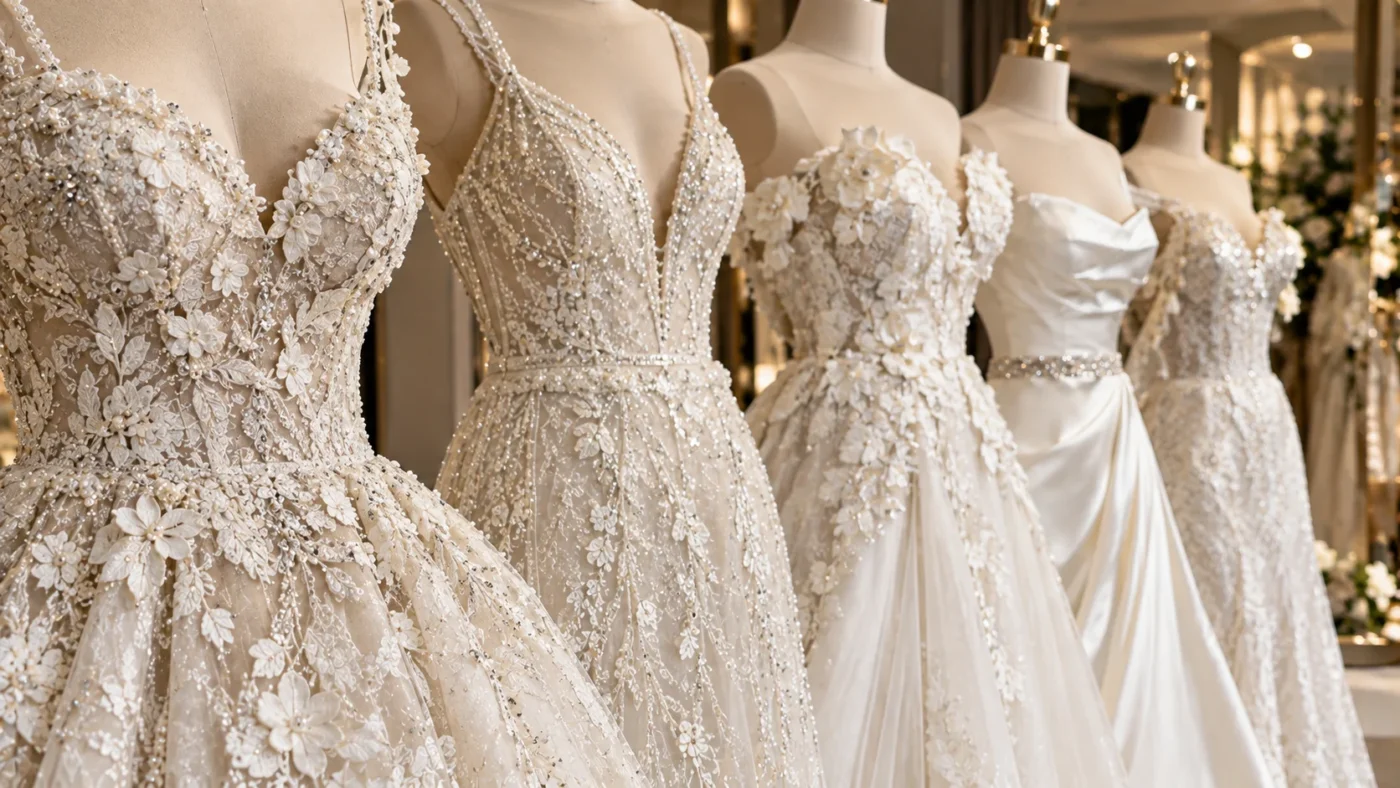
How to Choose a Wedding Dress: A Practical Guide for Brides
Find a wedding dress that works with your personal style, wedding setting, budget, comfort and the overall feel of your celebration.
Choosing a wedding dress can feel overwhelming. There are countless silhouettes, fabrics, necklines, embellishments and designers to consider. The good news is that you do not need to know exactly what you want before your first bridal appointment. A better approach is to narrow your choices step by step, starting with your wedding vision and then considering the silhouette, neckline, fabric, details, fit and practical requirements.
1. Start With Your Wedding Vision
Before looking at individual dresses, think about the wedding you are planning. Your dress should feel like part of the same occasion rather than something chosen separately from it.
Consider your:
- Wedding venue
- Wedding season
- Formality of the celebration
- Personal style
- Overall wedding theme
- Level of comfort you want
A formal indoor celebration may suit a structured gown, while a relaxed outdoor or destination wedding may call for something lighter and easier to move in.
If you are still developing the overall celebration, these wedding reception theme ideas can help you create a dress-and-decor combination that feels cohesive.
2. Set Your Wedding Dress Budget
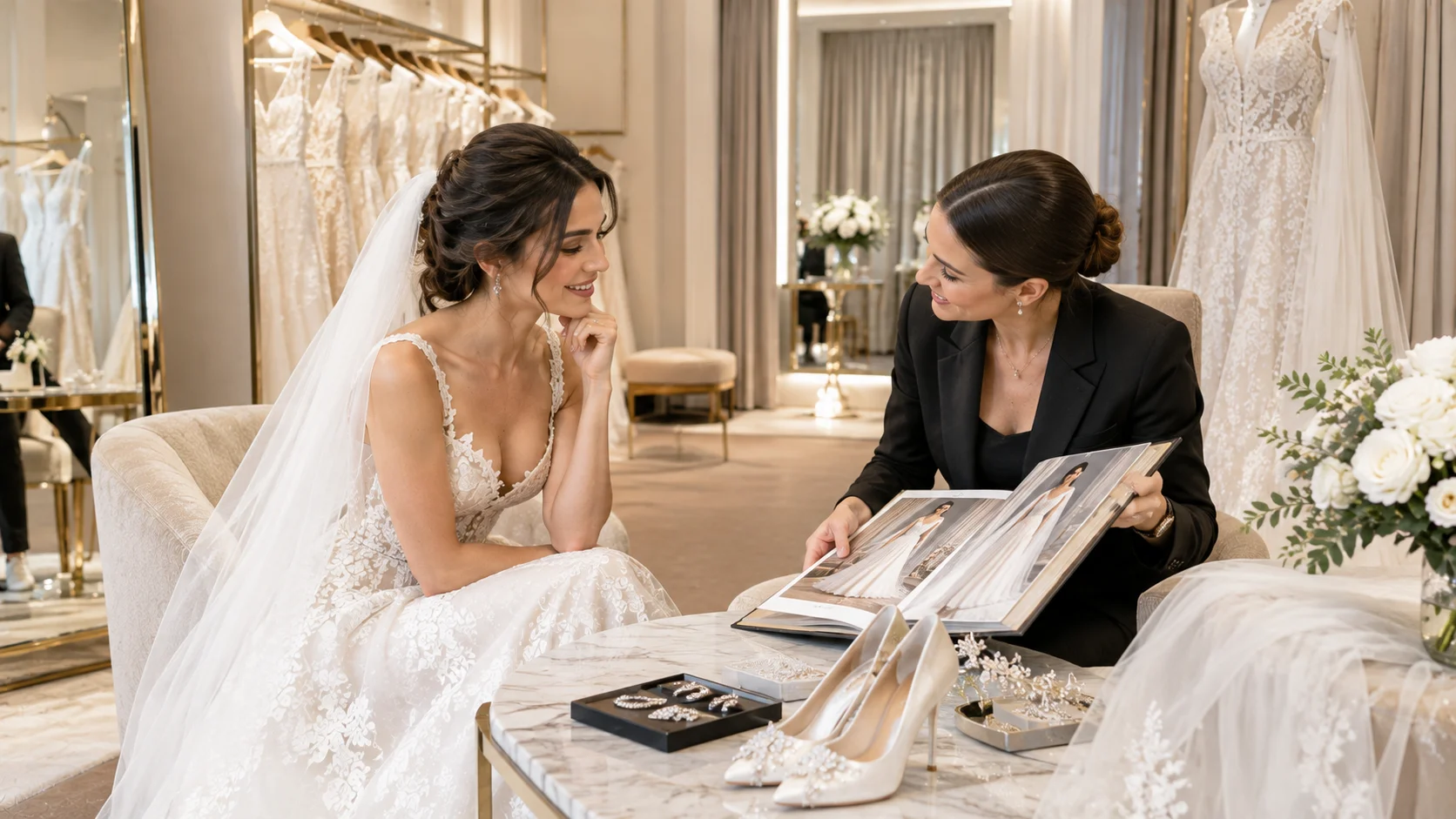
Set a realistic budget before you start trying on gowns. Knowing your spending limit helps your bridal consultant recommend dresses that are genuinely suitable for you.
Your overall bridal clothing budget can also include:
- Alterations
- Veil or other headwear
- Shoes
- Jewelry
- Undergarments
- Additional bridal accessories
Alterations are particularly important because the dress you purchase may need adjustments to achieve the right fit.
If you are planning to shop in the UAE, our Dubai shopping guide can also be useful when planning your wider shopping trip.
3. Understand Wedding Dress Silhouettes
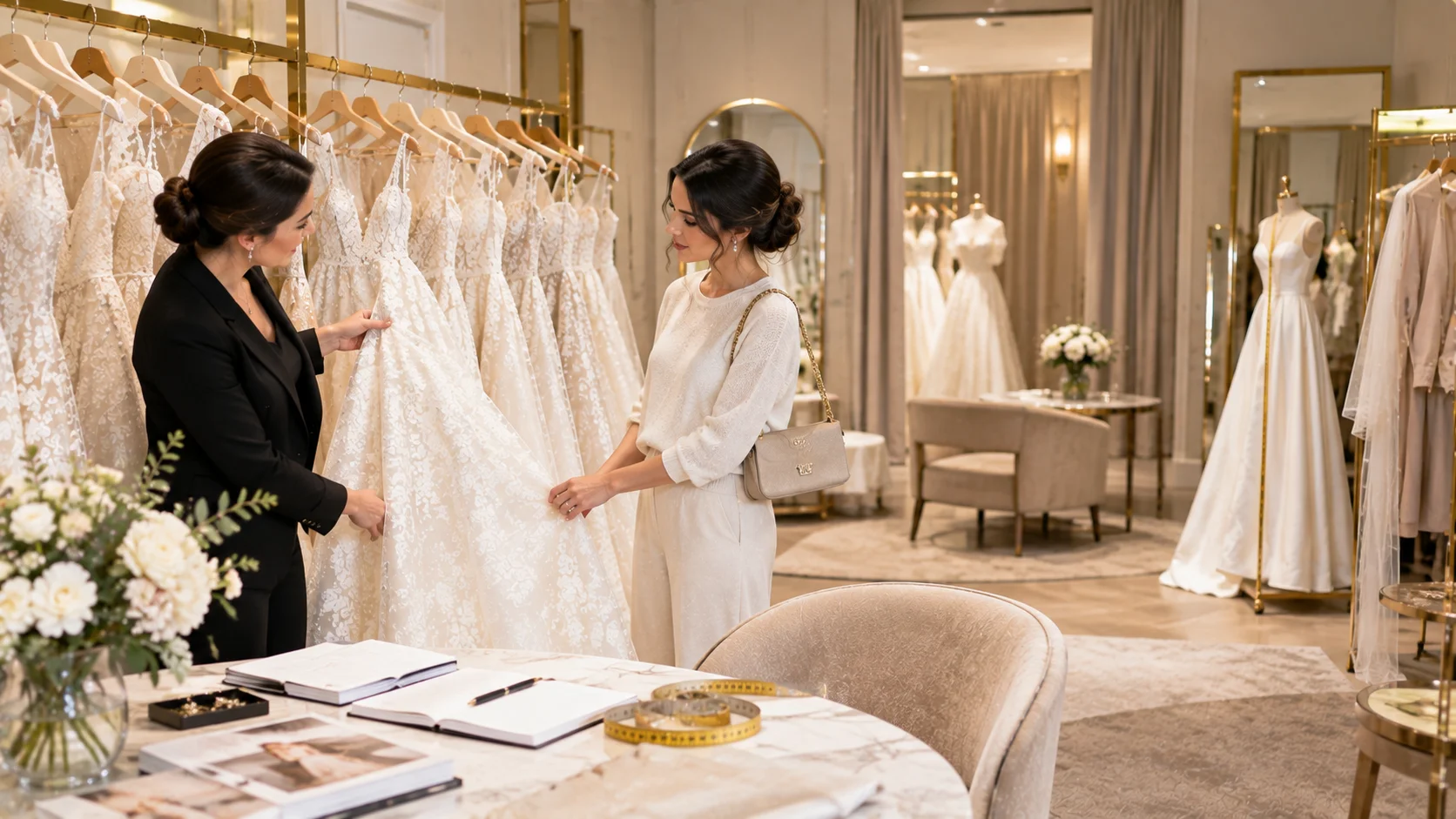
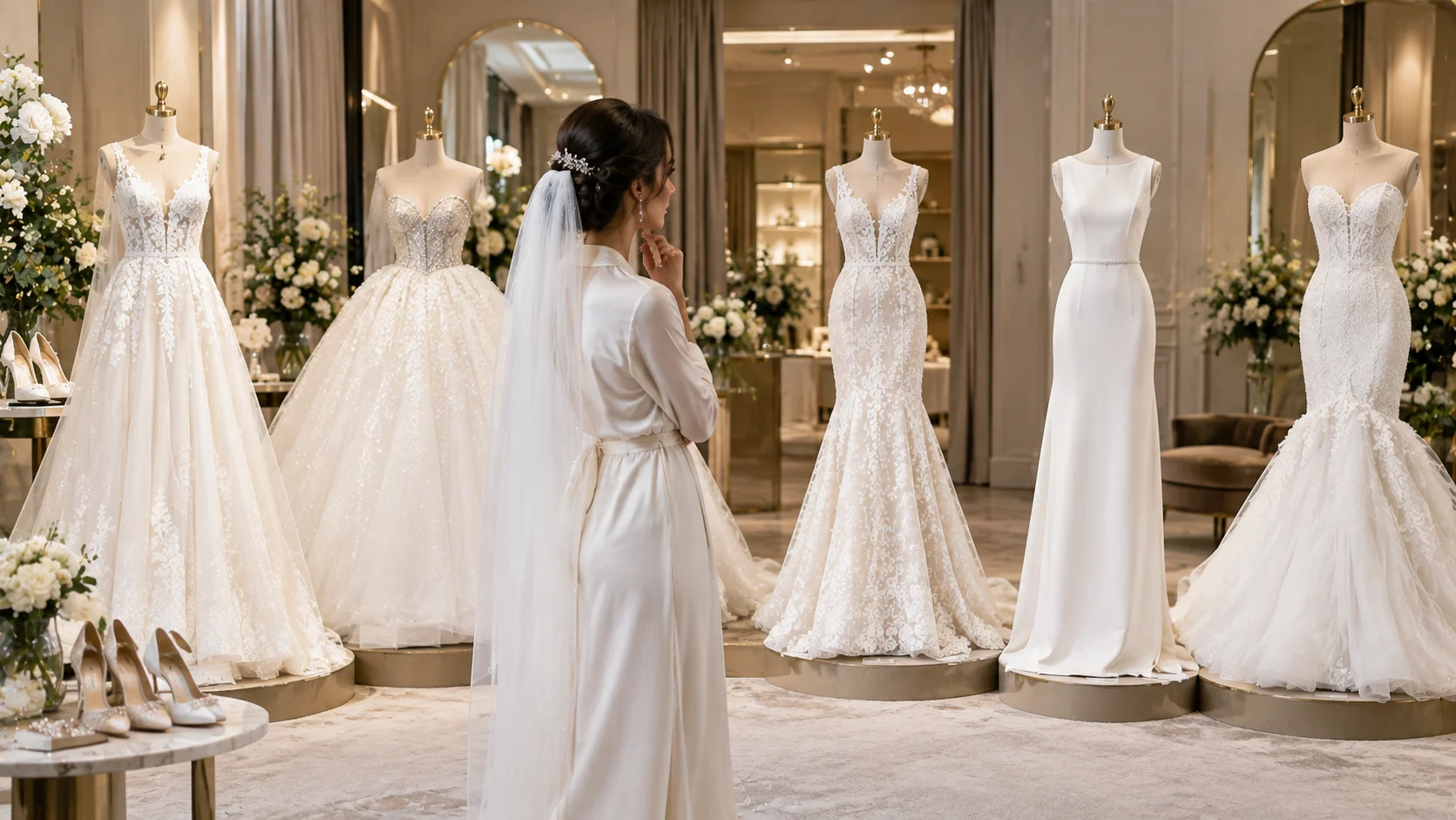
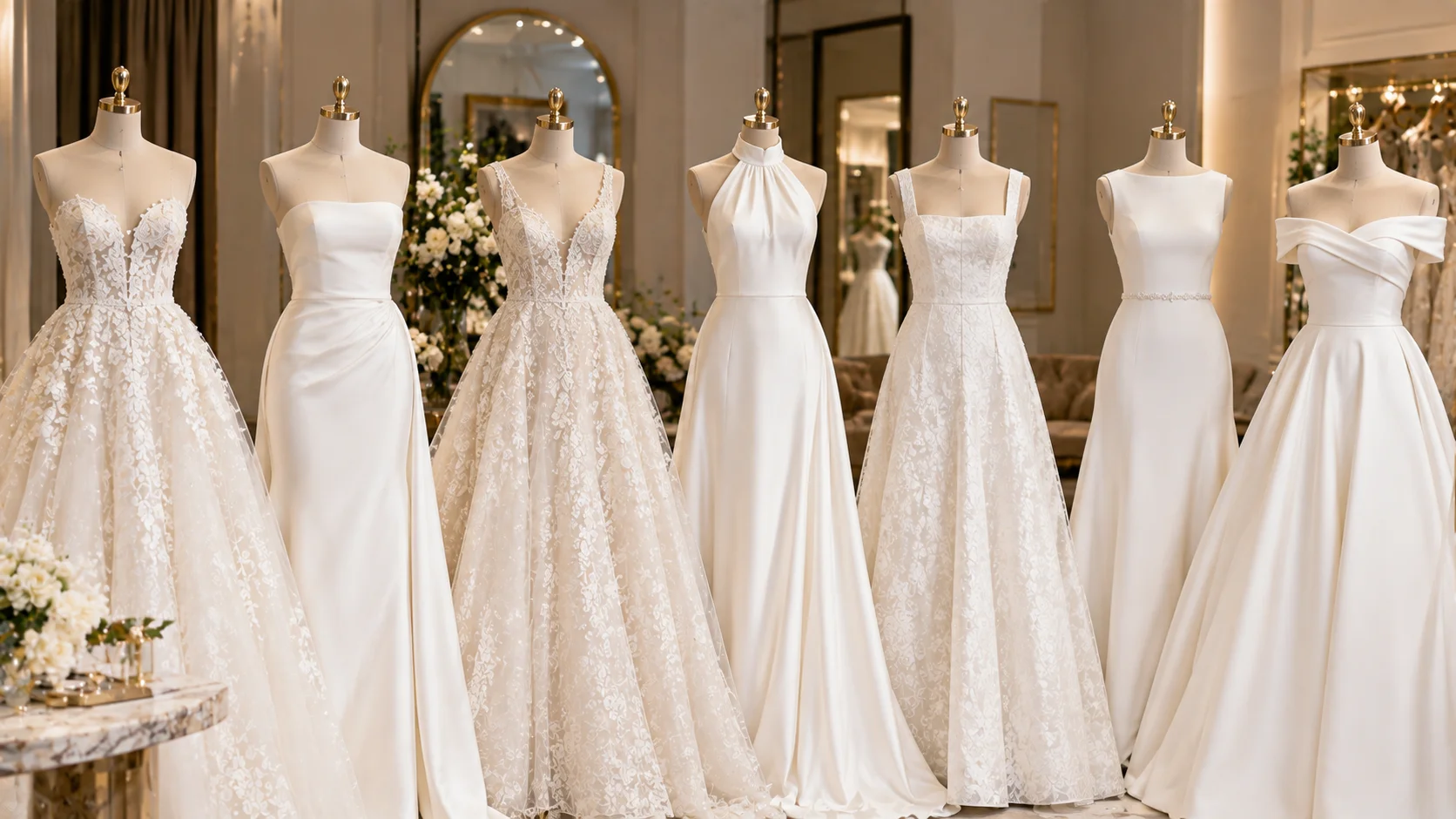
A silhouette is the overall shape of a wedding dress from the bodice through the skirt. Understanding the main silhouettes can make wedding dress shopping much easier.
A-Line Wedding Dress
An A-line wedding dress has a fitted bodice and gradually widens from the waist toward the hem, creating an A-shaped outline. It works across many wedding styles.
Ball Gown
A ball gown has a fitted bodice combined with a full skirt. It creates a dramatic bridal look and can work particularly well for formal celebrations.
Fit-and-Flare
A fit-and-flare dress follows the body through the bodice and hips before becoming wider toward the hem.
Sheath
A sheath wedding dress has a narrow, streamlined shape and is often associated with minimalist and contemporary bridal styles.
Mermaid or Fishtail
A mermaid wedding dress is closely fitted through much of the body before flaring lower on the skirt. Pay attention to walking, sitting and movement.
For more inspiration across bridal clothing, browse the Bridal & Occasion Wear collection on DubaiStyle.
4. Choose a Wedding Dress Neckline
The neckline is one of the most noticeable features of a wedding dress because it frames the face and upper body. It can completely change the overall look of the same silhouette.
5. Consider Wedding Dress Fabric and Texture
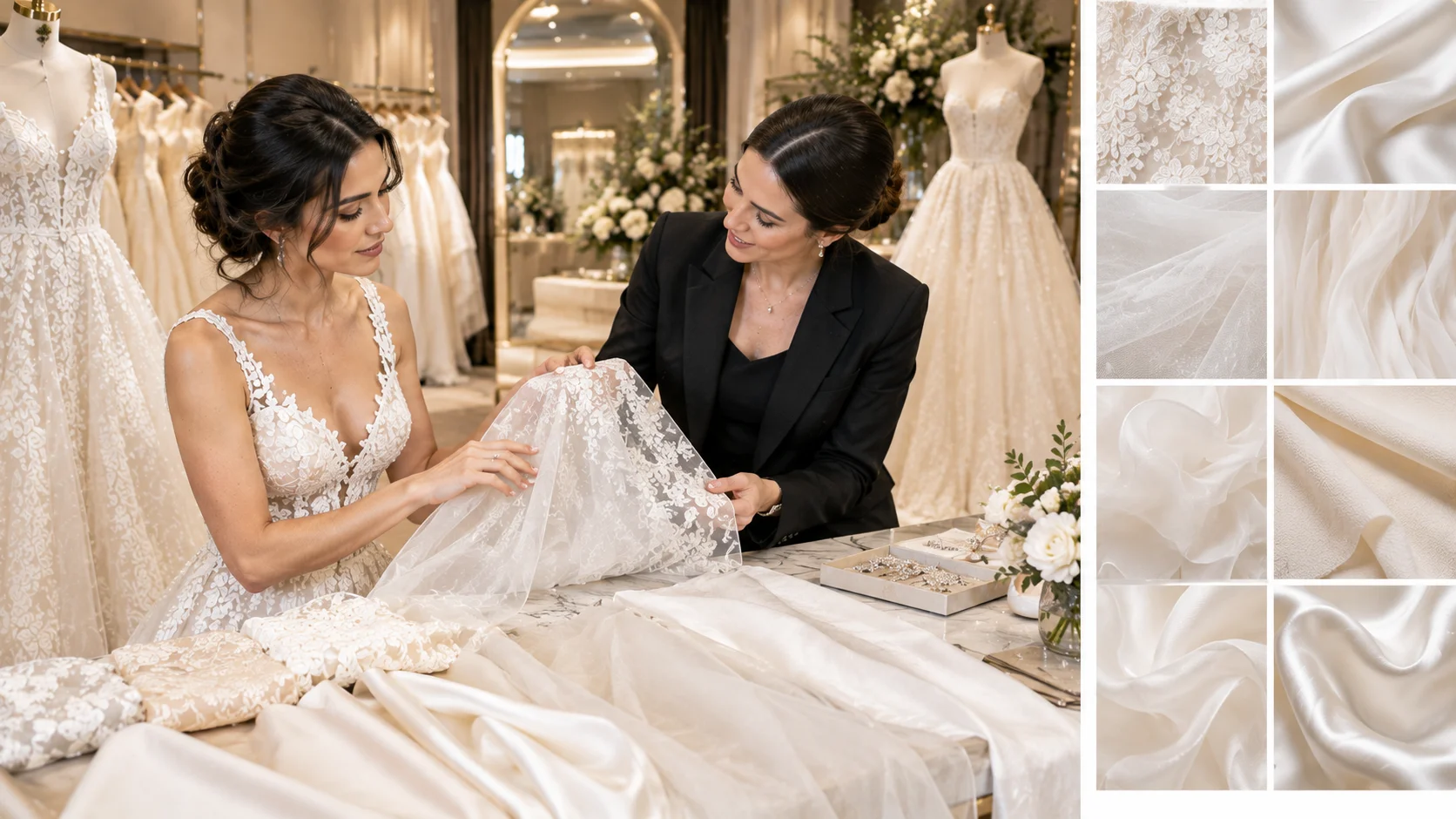
The fabric of a wedding dress affects its appearance, movement and comfort. It can also determine how well the gown suits your venue, season and the conditions of your wedding day.
If you enjoy exploring clothing materials more broadly, you can also browse our other style guides for practical fashion advice.
6. Decide How Much Detail You Want
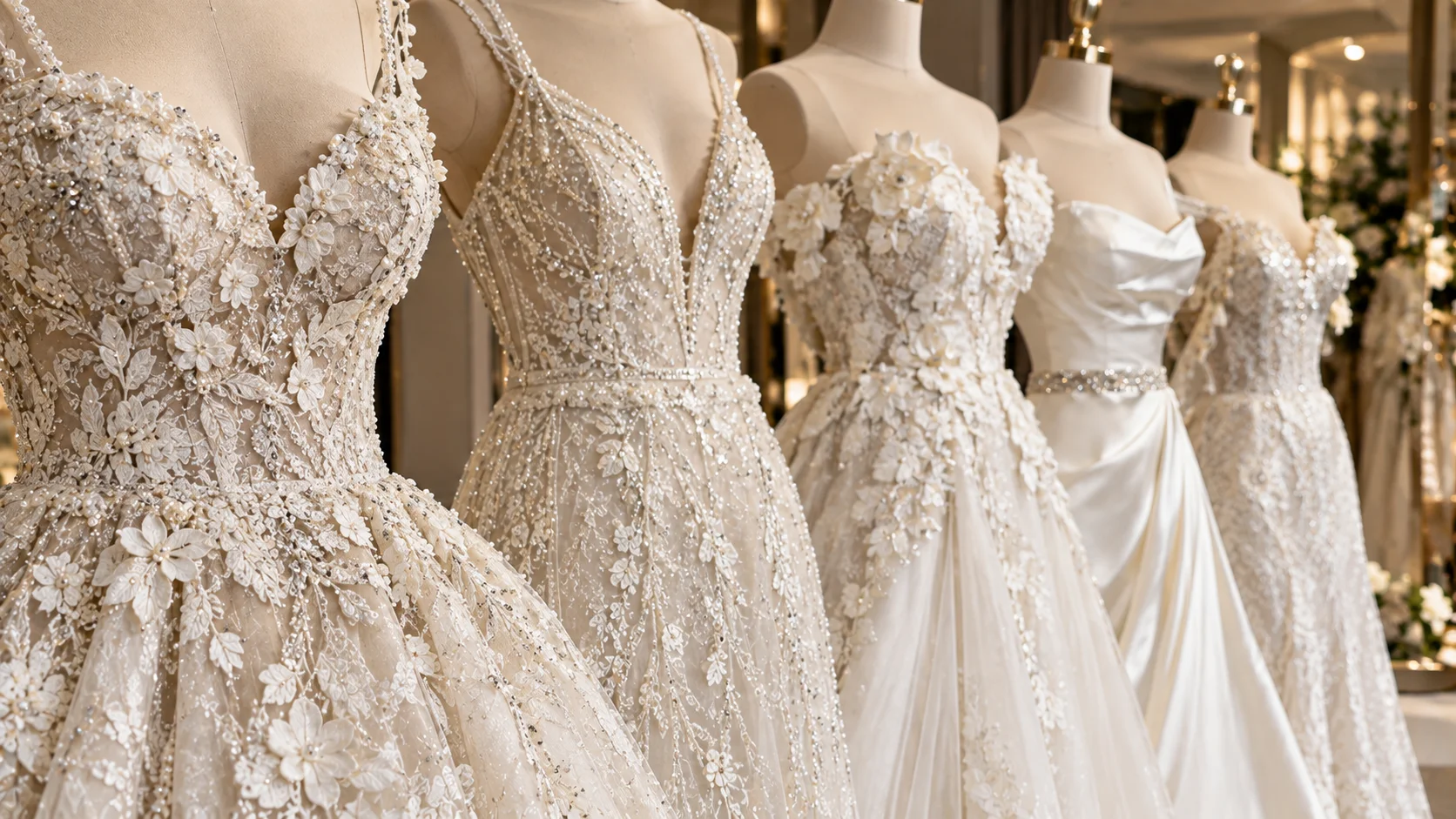
Once you have considered the silhouette, neckline and fabric, think about the decorative details.
Wedding dresses can feature:
- Beading
- Embroidery
- Lace appliqué
- Pearls
- Crystals
- Sequins
- Floral details
- Decorative trims
If you prefer a minimalist bridal look, a clean silhouette and simple fabric may be enough. If you want something more dramatic, embroidery, beading or other embellishments can add visual interest.
7. Focus on Fit and Comfort
Your wedding dress should make you feel confident, but it also needs to work for the practical realities of your wedding day.
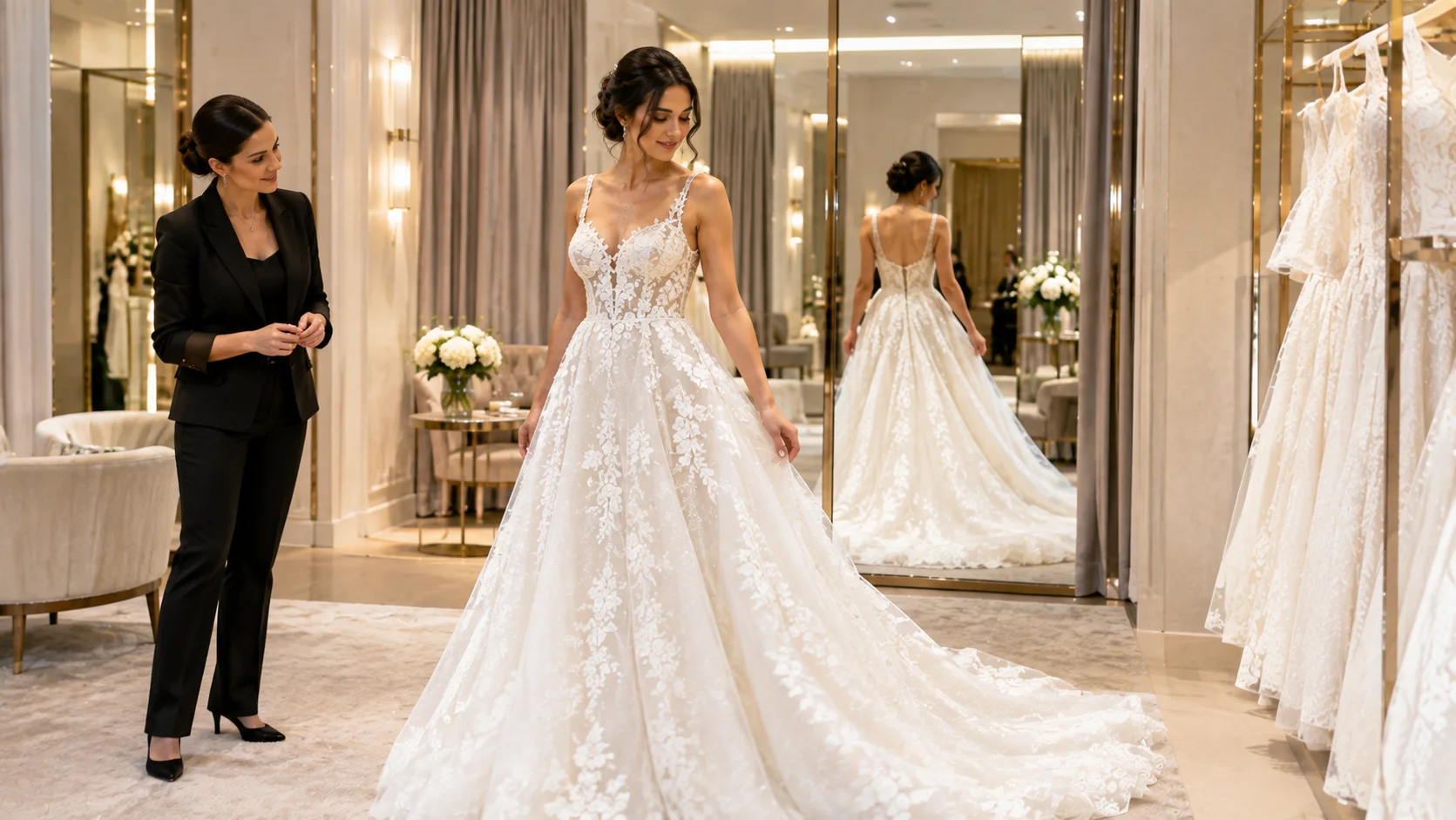
When trying on a gown, walk around in it. Sit down, move your arms and consider how easy it will be to spend several hours wearing it.
Comfort also matters when planning your overall wedding look. If you are thinking about your complete event wardrobe, our guide on what to wear in Dubai can provide additional outfit-planning inspiration.
8. Know What to Wear to Your Bridal Appointment
What you wear to a bridal appointment can make trying on dresses easier.
Choose comfortable clothing and suitable undergarments. A strapless or neutral-colored bra may work with some gowns, although many wedding dresses have built-in support.
If you already know what type of shoes you expect to wear, bringing shoes with a similar heel height can also help you understand how the dress length may work.
You can also bring a few inspiration photos, but avoid limiting yourself to one exact style.
Hair can also affect how you imagine the finished bridal look. If you are considering an updo, see these easy updos for medium hair for ideas.
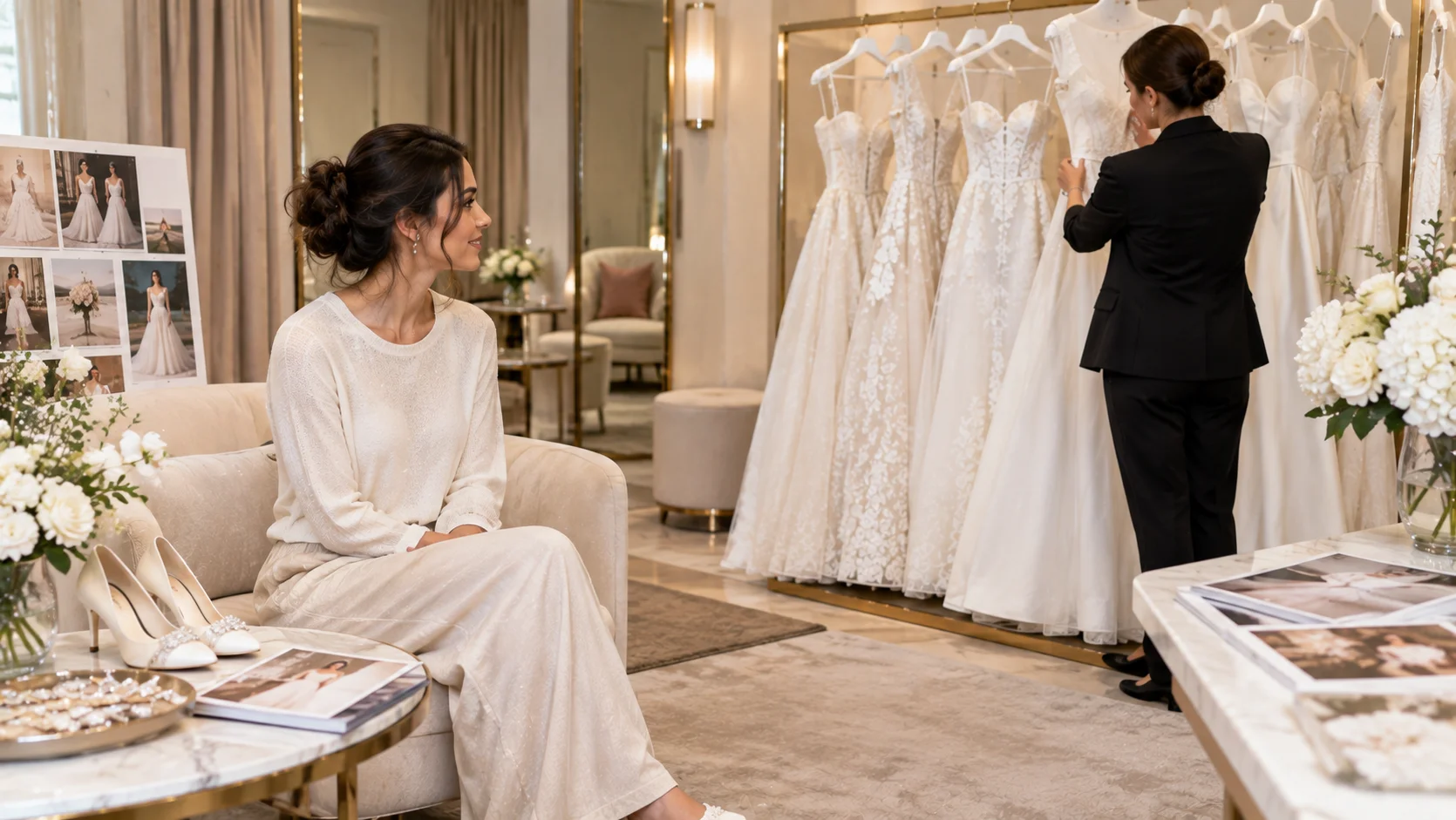
9. Start Wedding Dress Shopping Early
Give yourself enough time to find the dress, order it if necessary, complete alterations and attend final fittings.
The exact timeline varies depending on the boutique, designer, dress availability and whether the gown is made to order.
Starting early gives you more flexibility and reduces the pressure of making a decision quickly.
If your wedding is approaching soon, ask boutiques about dresses that are already available and their alteration timelines.
Planning your wedding wardrobe early also gives you time to coordinate the dress with the rest of your event style and shopping plans.
10. Keep an Open Mind When Shopping

It is completely fine to arrive at your first appointment with a clear idea of what you want. But try not to reject a dress simply because it does not match your original inspiration.
A silhouette can look very different when you actually wear it. You may discover that a neckline you never considered works beautifully, or that a style you loved in photographs is not comfortable in person.
Take a few trusted people with you if their opinions will help rather than overwhelm you. Ultimately, the decision should be yours.
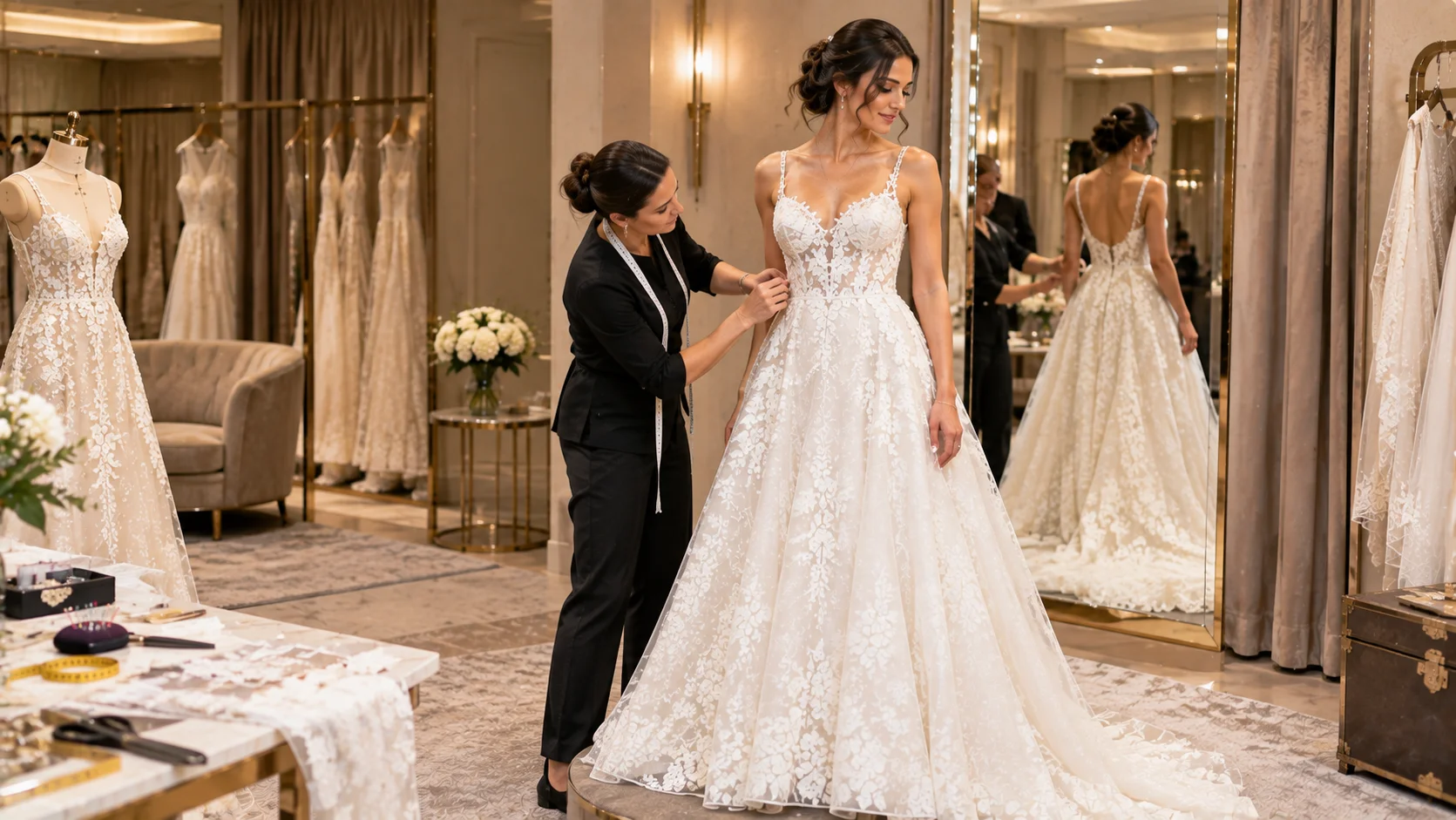
11. Allow Time for Wedding Dress Alterations
Finding a dress is not necessarily the end of the process. Alterations can help adjust the fit so the gown works properly for your body and your chosen shoes and accessories.
The changes needed will depend on the dress and your measurements. A bridal consultant or experienced seamstress can explain what adjustments are practical for your particular gown.
Ask about alteration costs and timing before you commit to the dress so they are part of your planning rather than an unexpected last-minute task.
Frequently Asked Questions
When should I start wedding dress shopping?
Start early enough to allow time for choosing the dress, ordering or sourcing it where necessary, alterations and final fittings. The ideal timeline varies by dress and boutique, so ask about their specific process.
How do I choose the right wedding dress silhouette?
Start by considering your personal style, wedding setting, comfort and how you feel in different shapes. Try several silhouettes rather than relying entirely on online photographs or body-shape rules.
What should I wear when shopping for a wedding dress?
Wear comfortable clothing and appropriate undergarments. A neutral or strapless bra can be useful for some dresses, but your bridal consultant can advise you based on the gowns you try.
How much should I budget for a wedding dress?
Set a maximum amount before shopping and remember to account for alterations, shoes, jewelry, veil or dupatta and other accessories.
How do I choose a wedding dress for my venue?
Consider the venue’s formality, available space, weather and how easily you will need to move. The dress should complement the setting while still reflecting your personal style.
How do I know when I have found the right dress?
Look beyond how the dress appears in the mirror. Consider how you feel wearing it, whether you can move comfortably, whether it suits your wedding vision and whether it fits within your budget.
Final Thoughts
Learning how to choose a wedding dress becomes easier when you break the decision into smaller steps. Start with your wedding vision and budget, explore different silhouettes and necklines, consider the fabric and details, and pay close attention to fit and comfort.
Most importantly, do not feel pressured to follow someone else’s definition of the perfect bridal dress. The right gown is one that suits your wedding, reflects your personality, fits your practical needs and makes you feel confident when you wear it.
For more bridal inspiration, continue exploring DubaiStyle’s Bridal & Occasion Wear section and related style guides.

Pingback: How to Choose Wedding Colors: A Practical Guide
Pingback: Complete Wedding Checklist: Month-by-Month Planning Guide
Pingback: How to Choose Wedding Flowers: Bouquets, Colors & Seasonal Blooms
Pingback: How to Plan a Budget Wedding Without Sacrificing What Matters - Dubai Style
Pingback: What Is Proper Wedding Gift Etiquette? Complete Guide
Pingback: Color Combinations for Clothes: Easy Matching Guide
Pingback: How to Remove Stains From Clothes in Dubai: Easy Guide
Pingback: What to Wear to a Wedding as a Guest in Dubai: Complete Guide