

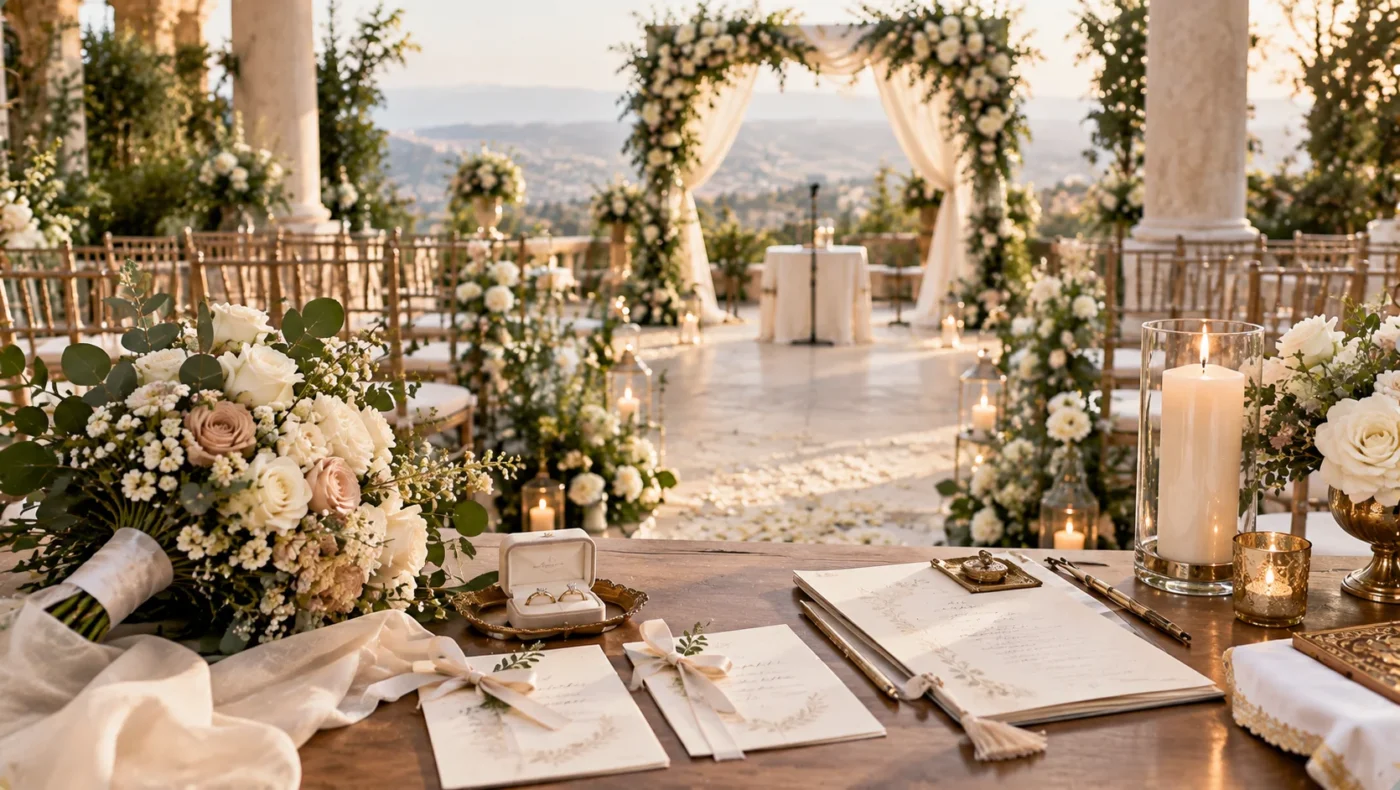
Complete Wedding Checklist: A Month-by-Month Planning Guide
Planning a wedding becomes much easier when the decisions are organized in the right order. Instead of trying to arrange everything at once, this wedding checklist breaks the process into manageable stages — from setting the budget and choosing the venue to final fittings, guest arrangements and the wedding day itself.
Build the Wedding Around What Matters to You
A wedding checklist should give you direction, not make the celebration feel like a collection of deadlines. Start by deciding what matters most: the people attending, the venue, the food, photography, clothing, traditions, atmosphere or the experience you want guests to remember.
Your visual choices will become easier once you have a clear direction. If you are still deciding on your palette, explore How to Choose Wedding Colors to think about colors in relation to your venue, season, flowers, stationery and overall wedding mood.
Know your limits
Set the amount you are comfortable spending before individual purchases begin.
Know your guests
A realistic guest count affects the venue, catering, seating and invitations.
Know your direction
Choose a visual and emotional direction before getting lost in small details.
Set the Foundation First (12–10 Months Before)
The earliest stage is about decisions that influence everything else. Once the budget, guest count, date and venue are clear, the rest of the planning becomes much easier to organize.
Start With the Budget
Divide your expected spending into major areas such as venue, food, clothing, photography, décor, entertainment, stationery, beauty and transportation. Leave some room for unexpected expenses instead of allocating every amount to a planned purchase.
Next, create a preliminary guest list. You do not need every name finalized yet, but you should have a realistic idea of the size of the celebration.

MONTHS
Choose Your Date and Venue
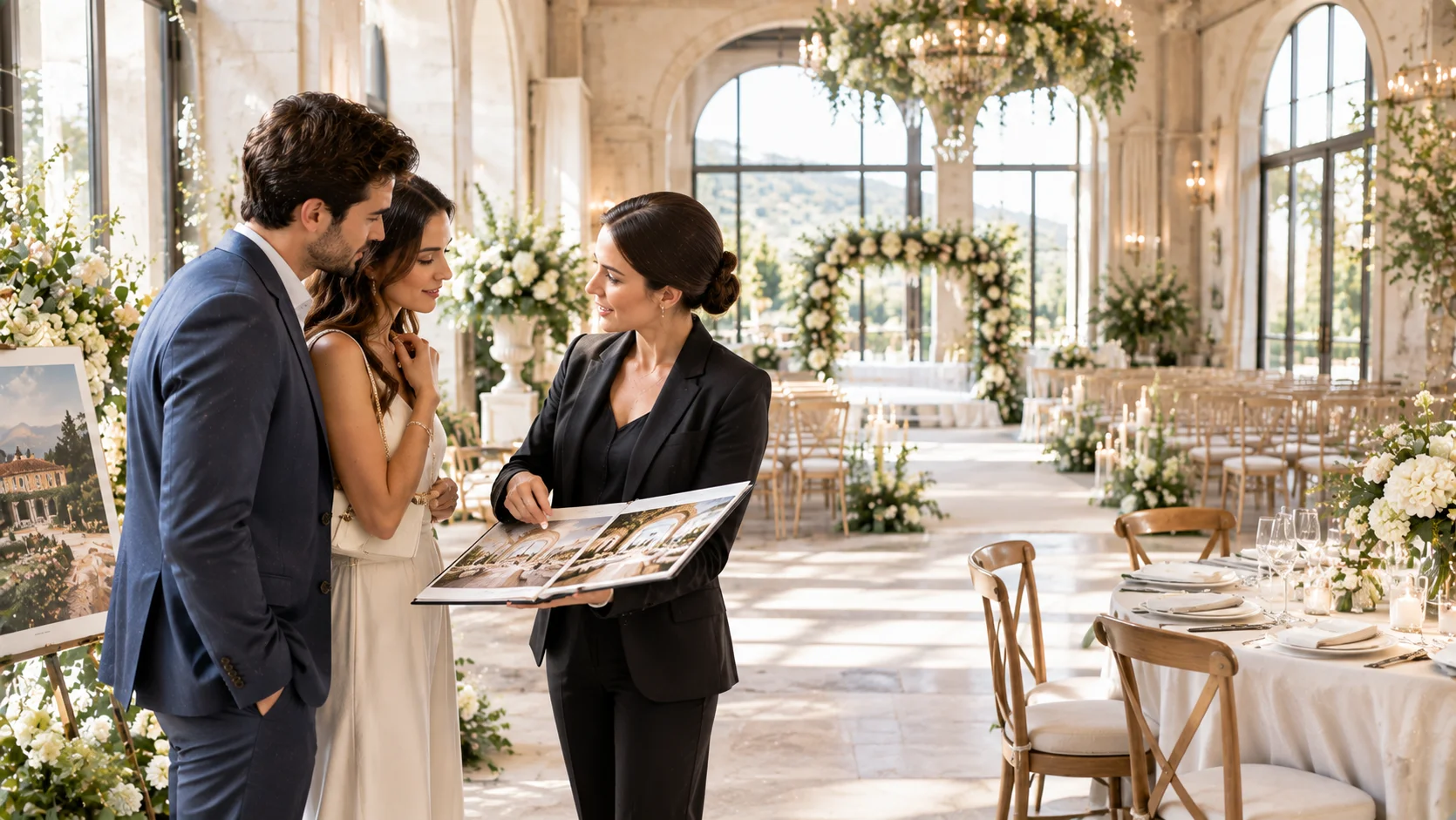
Compare venues based on capacity, location, availability, ceremony options, reception layout and the type of celebration you want. Once the venue and date are confirmed, many other decisions can follow.
Start Your Wedding Wardrobe Early
Wedding clothing often requires fittings, alterations and time for accessories. Start exploring silhouettes, fabrics, necklines and overall proportions rather than waiting until the final months.
For a practical starting point, read How to Choose a Wedding Dress, then explore Bridal & Occasion Wear for additional styling inspiration.
MONTHS
Book the Key Vendors
Research photographers, videographers, planners, caterers, entertainment, florists and décor teams. Compare availability, packages and contracts before making commitments.
Turn Ideas Into Confirmed Plans (9–6 Months Before)
By this stage, the major structure should be established. Now you can focus on guest communication, attire, traditions, honeymoon arrangements and the details that make the wedding feel personal.
Save-the-dates
Prepare the information guests need and send save-the-dates once the main date and location are confirmed.
Wedding wardrobe
Continue fittings and coordinate bridal-party clothing with the overall wedding direction.
Reception direction
Think about the room as one experience rather than choosing décor pieces separately.
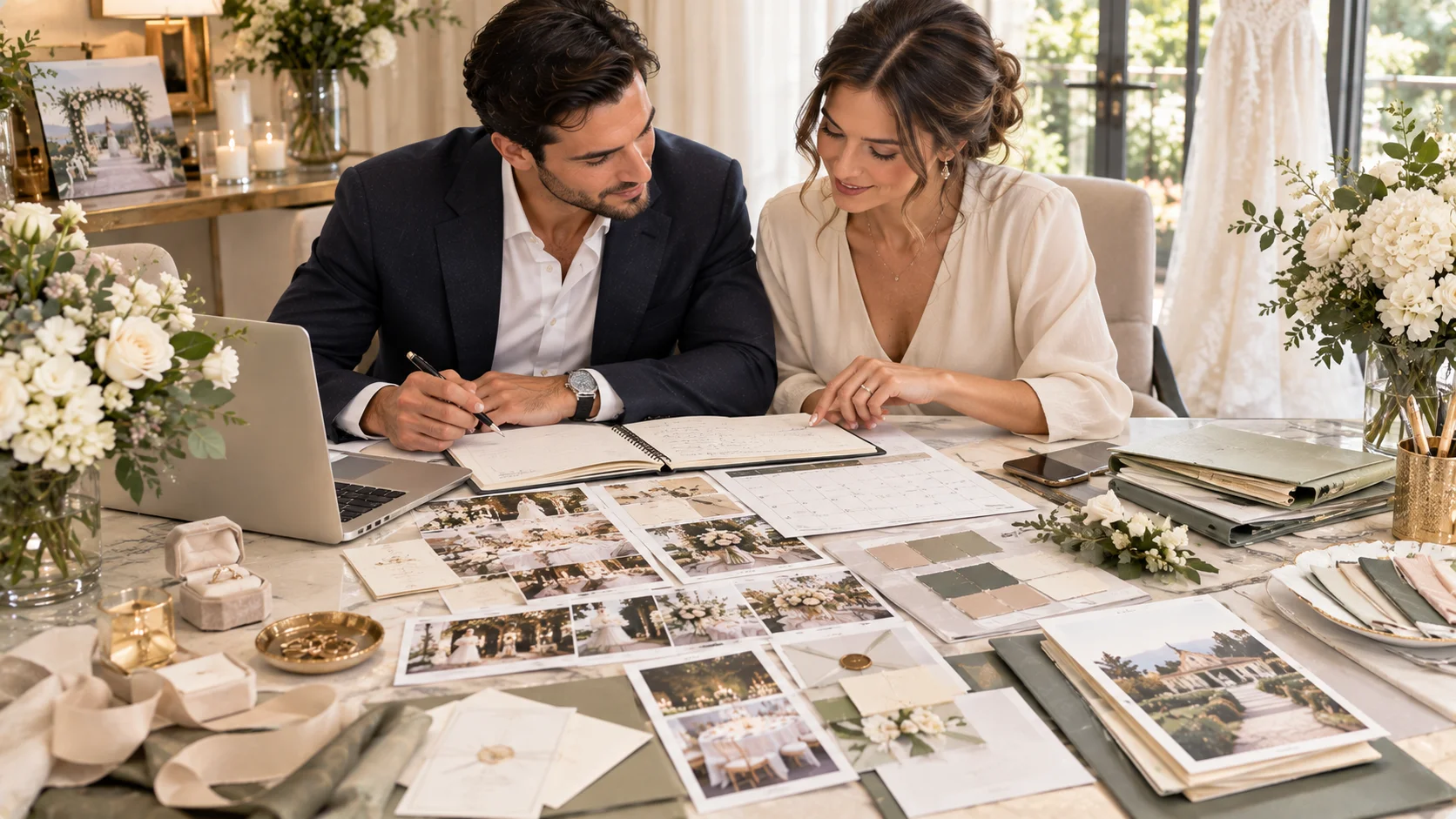
Design the Reception as One Visual Story
Think about what guests see when they enter, where they sit, how the tables look, how lighting changes through the evening and how the reception moves from dinner to entertainment.
See wedding reception theme ideas for ways to connect the venue, colors, tables and décor. If you want the celebration to feel more interactive, fun wedding reception ideas can help you add activities without making the evening feel over-planned.
The Details Begin to Come Together (5–3 Months Before)
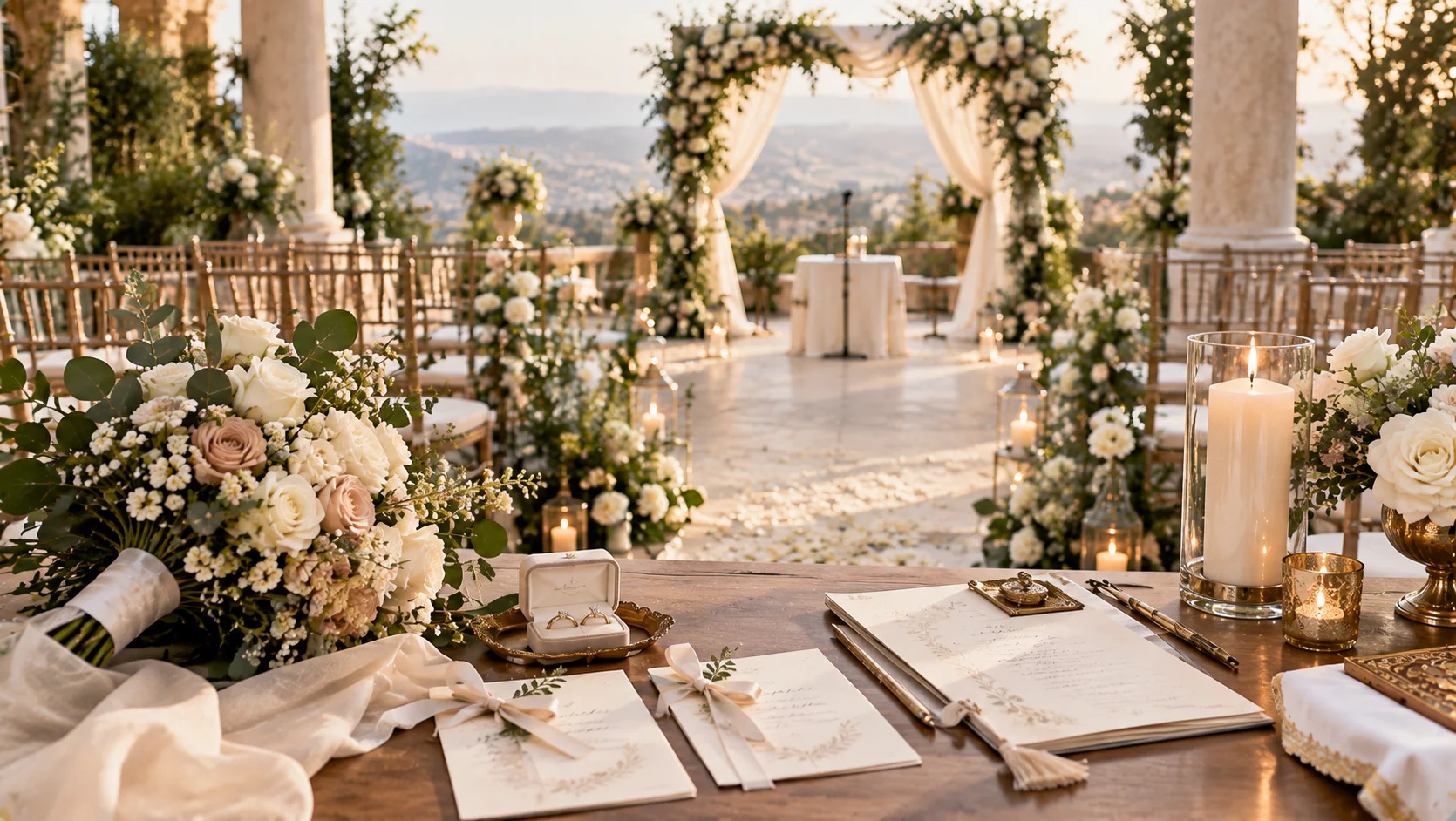
This is when the wedding starts moving from planning to production. Invitations, menu choices, rings, ceremony details and fittings should now receive your attention.
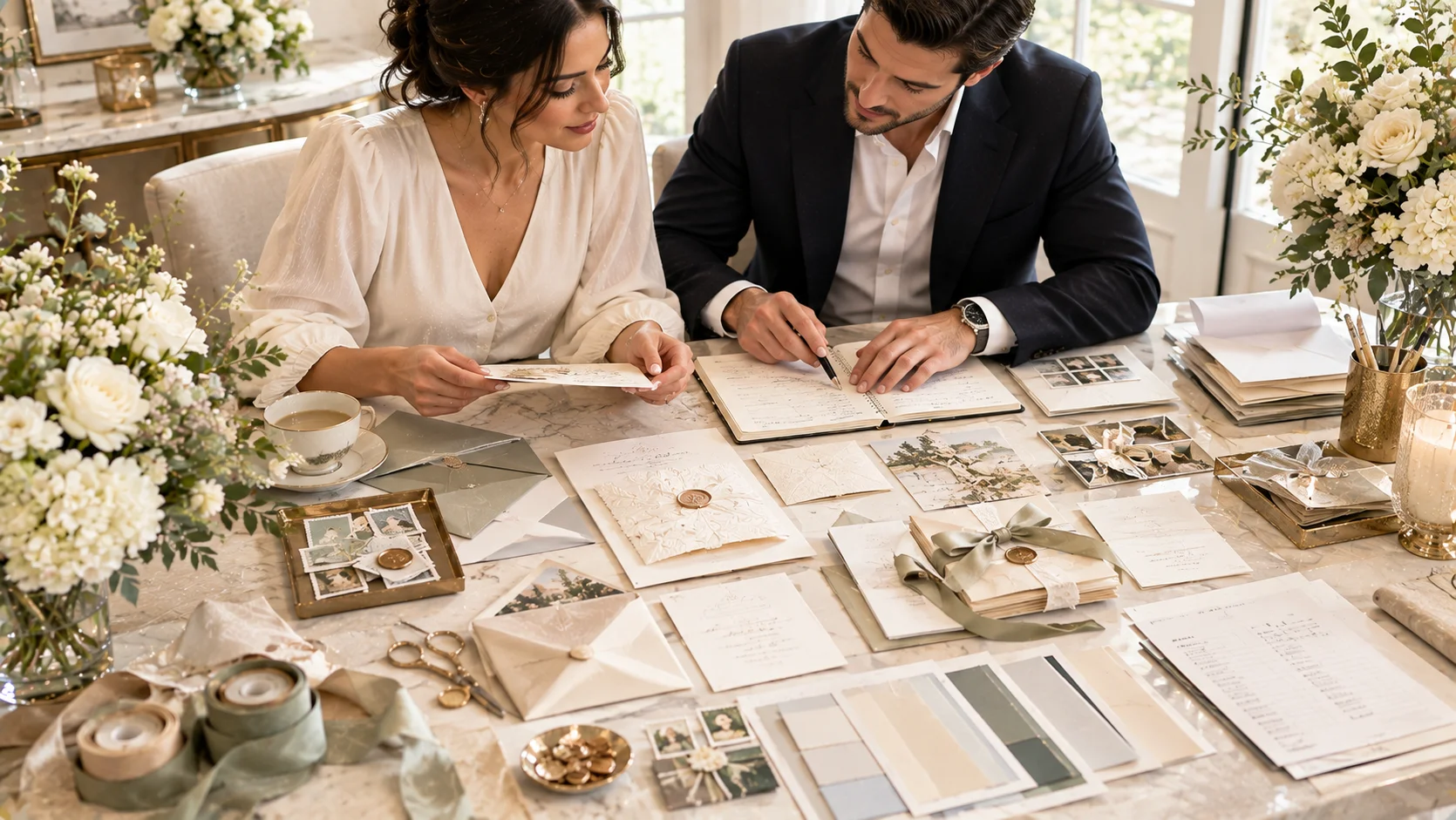
Prepare the Invitations
Finalize invitation wording, guest addresses, RSVP details and the information guests need. Check names and addresses carefully before mailing.
MONTHS
Finalize the Wedding Essentials
Close the Open Loops (2–1 Months Before)
The closer you get to the wedding, the less you should be adding. This period is about confirmations, final fittings, guest arrangements and turning your plans into one clear wedding-day schedule.

Give Everyone the Information They Need
Create one master wedding-day schedule and give relevant sections to your coordinator, photographer, venue team, transportation provider and wedding party.
For your photography planning, review wedding photo ideas and identify the family combinations and important moments you do not want to miss.
Prepare Now So the Wedding Day Feels Lighter (One Week Before)
The final week should be about preparation rather than major decisions. Put important items together, confirm timings and make sure responsibilities are assigned.
Collect everything
Pick up wedding clothing, accessories and shoes. Keep everything together so nothing needs to be searched for on the wedding morning.
Confirm arrivals
Check vendor arrival times, transportation, venue access and the people responsible for key tasks.
Pack ahead
Prepare the overnight bag, honeymoon luggage, personal items and anything needed immediately after the celebration.
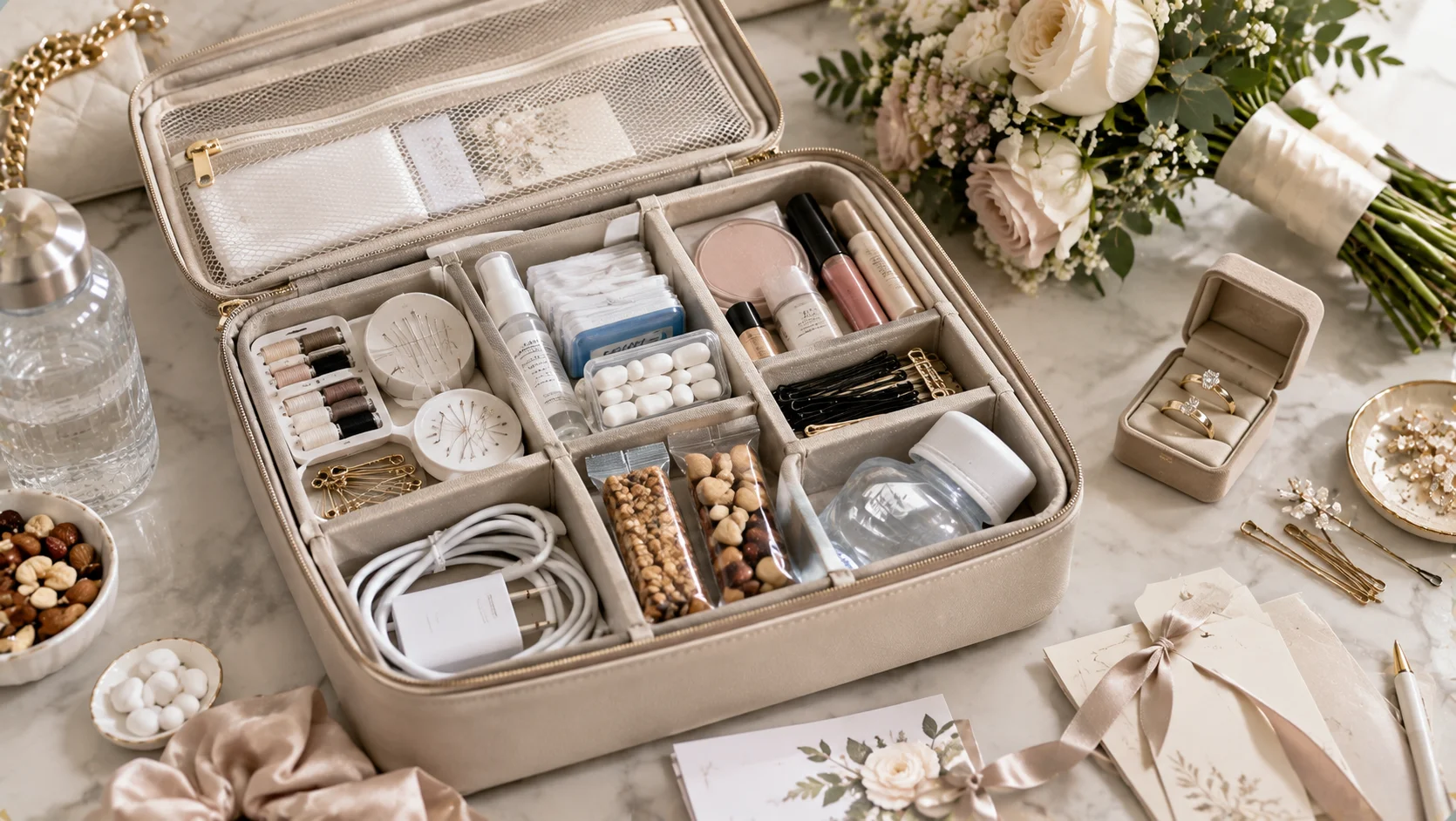
Prepare a Small Emergency Kit
Keep useful items together rather than searching for them when something unexpected happens. Sewing supplies, fashion tape, tissues, beauty items, a charger, water and snacks can all have a place in the kit.
Keep the Day Organized, Not Overloaded (Wedding Day)
Your wedding day should not feel like another planning session. Assign responsibilities beforehand so you can focus on getting ready, enjoying the ceremony and spending time with the people around you.
Start calmly
Allow time for hair, makeup, dressing, photography and transportation. Keep rings, accessories and important personal items together. For hairstyle inspiration, see easy updos for medium hair.
Keep essentials ready
Make sure the rings, vows, documents, programs and key participants are ready before guests are seated.
Follow the flow
Move through entrance, dinner, speeches, cake, dancing and other activities while leaving room for natural moments.
Not Every Wedding Detail Deserves Equal Attention
A checklist can become overwhelming when every item feels urgent. Separate the decisions that affect the whole wedding from details that can be adjusted later.
Protect the budget
Know what you can comfortably spend and keep track of commitments as they are made.
Protect your time
Delegate tasks instead of carrying every responsibility yourself.
Protect what feels personal
Choose traditions, details and experiences because they matter to you, not simply because they are expected.
Wedding Checklist FAQs
When should you start planning a wedding?
Starting around 10–12 months before the wedding gives you enough time to establish the budget, choose the venue, book important vendors and complete the remaining details gradually. Smaller celebrations may require less planning time.
What should you book first?
The venue and date are usually among the earliest decisions because they influence guest capacity and the availability of other vendors. After that, prioritize services that have limited availability.
What should you do one month before the wedding?
Focus on final guest numbers, seating, vendor confirmations, final fittings, payments, transportation and the wedding-day schedule.
What should be included in a wedding emergency kit?
Useful items include sewing supplies, fashion tape, tissues, basic beauty items, a phone charger, water, snacks and other small items that suit the wedding party.
How can you make wedding planning easier?
Break the process into monthly stages, maintain one master checklist, delegate responsibilities and avoid treating every decision as equally urgent.
Plan the Celebration, Not Just the Checklist
A good wedding checklist gives you structure without taking away the excitement of the occasion. Start with the decisions that shape everything else — budget, guest count, date and venue — then move gradually into clothing, vendors, invitations, ceremony details, reception planning and final preparations.
The goal is not to create a perfectly controlled day. It is to prepare enough in advance that you can actually enjoy the moments that cannot be planned.
For more wedding styling inspiration, explore DubaiStyle’s Style Guides and Bridal & Occasion Wear.
Continue Exploring DubaiStyle
Keep building your wedding plan with these related guides:
How to Choose Wedding Colors How to Choose a Wedding Dress Wedding Reception Theme Ideas Fun Wedding Reception Ideas Wedding Photo Ideas Easy Updos for Medium Hair
Pingback: How to Plan a Budget Wedding Without Sacrificing What Matters - Dubai Style
Pingback: What Is Proper Wedding Gift Etiquette? Complete Guide