

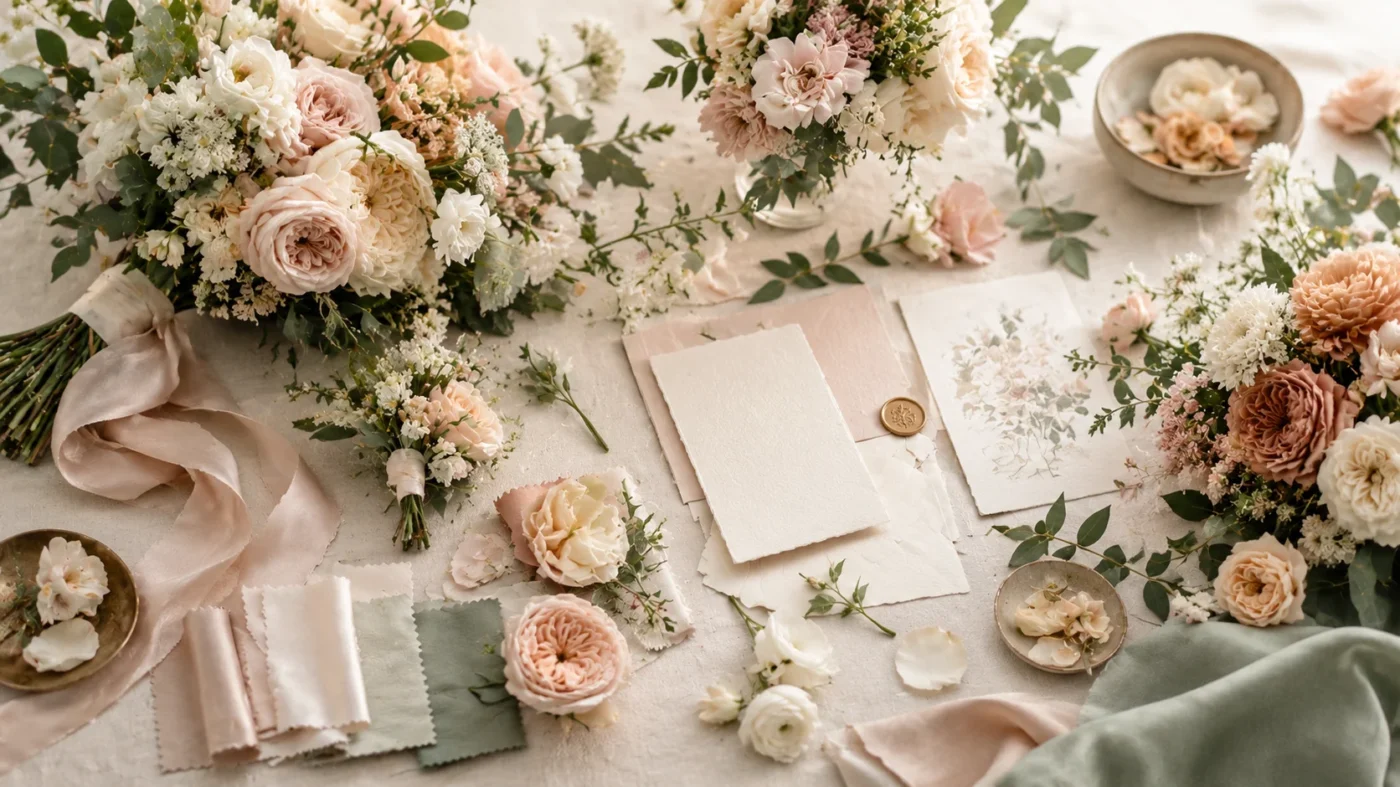
How to Choose Wedding Flowers: Bouquets, Colors & Seasonal Blooms
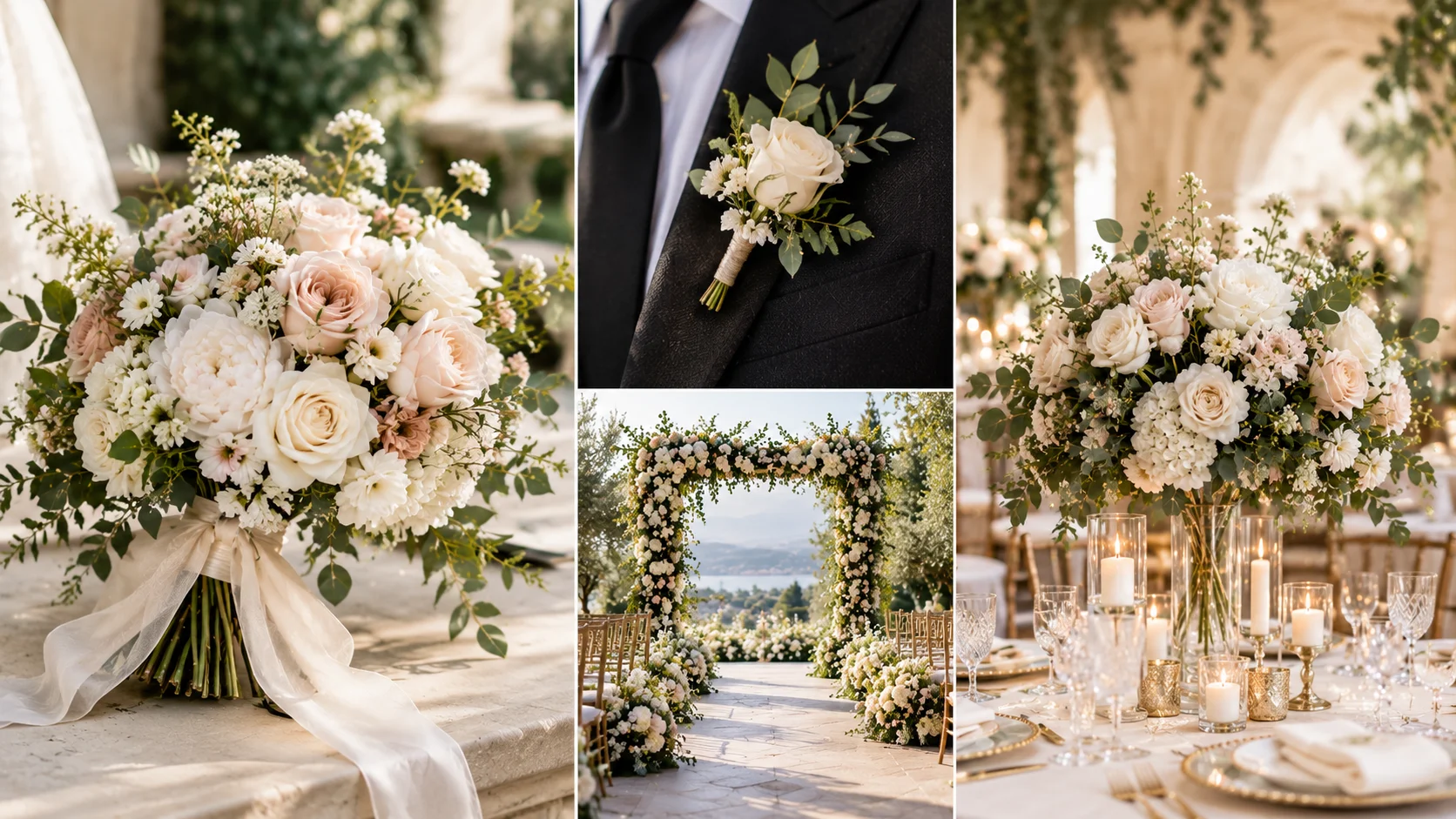
Wedding flowers do more than decorate a venue. They help set the mood, connect your color palette and bring the overall wedding style together. From the bridal bouquet to ceremony arrangements and reception centerpieces, each floral choice should feel intentional rather than added at the last minute.
The easiest way to choose your flowers is to start with your wedding style, then consider your colors, season, venue, floral needs and budget. This guide walks through each step so you can create a floral plan that feels cohesive and personal.
Let Your Wedding Style Lead the Floral Design
Before choosing individual flowers, decide what you want the wedding to feel like. A romantic celebration may suit soft blooms and flowing arrangements, while a modern venue can work beautifully with structured bouquets, clean lines and a restrained color palette.
Your flowers should also work with the rest of the wedding design. If you are still developing your palette, our guide on how to choose wedding colors can help you create a consistent direction before speaking with a florist.
Romantic
Think soft tones, rounded bouquets, delicate textures and flowers arranged with a relaxed, natural movement.
Modern
Focus on a limited palette, sculptural shapes, clean arrangements and fewer carefully selected floral elements.
Classic
Symmetrical arrangements, elegant blooms and timeless shades can create a more traditional wedding atmosphere.
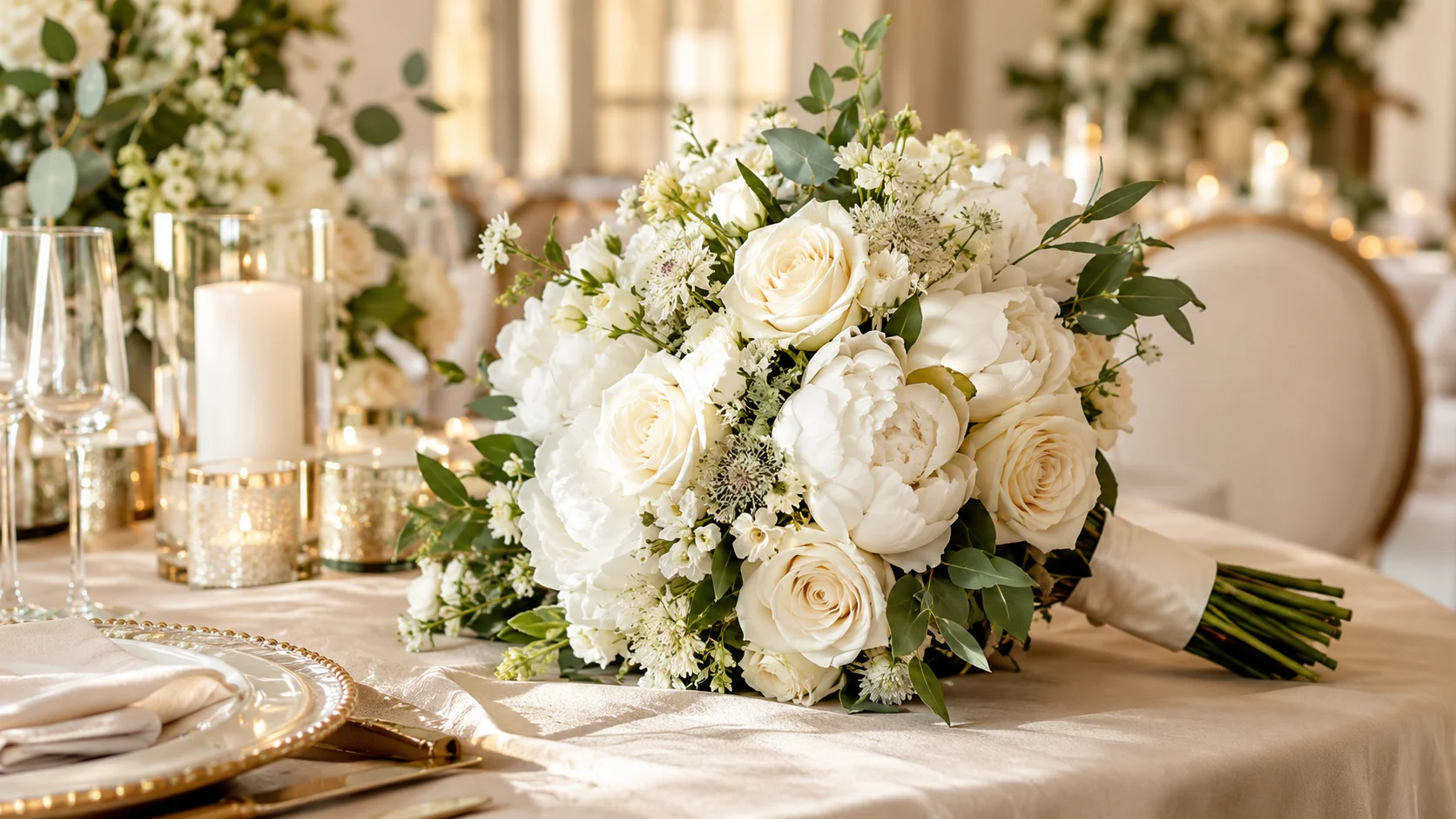
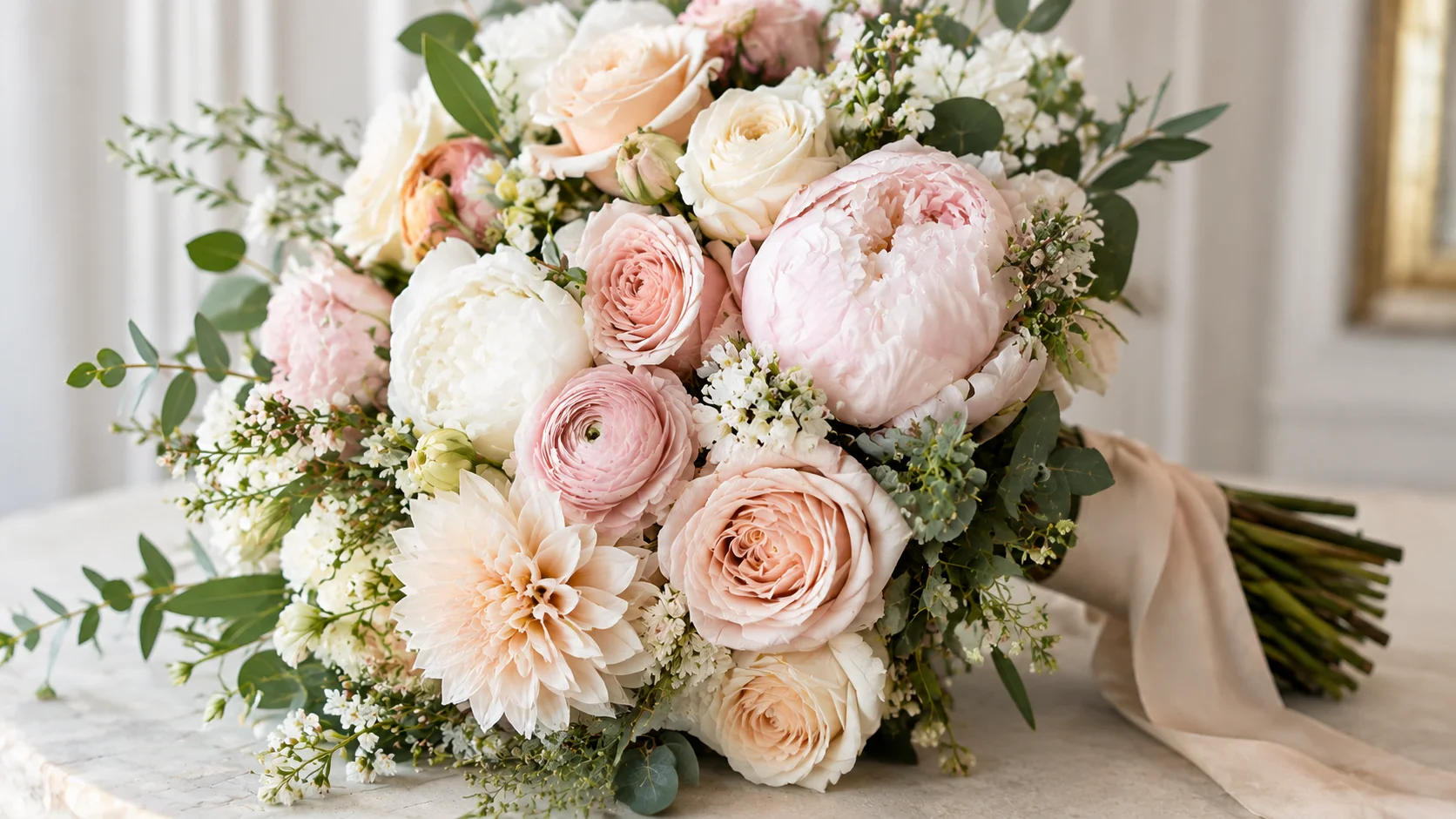
Choose Flowers That Work With Your Wedding Date
Your wedding season can influence which flowers are readily available and how much they may cost. Instead of choosing a flower first and trying to source it later, ask your florist which blooms naturally suit your wedding date.
Seasonal choices can also make the design feel connected to the time of year. Spring weddings may lean toward lighter, delicate arrangements, while autumn celebrations can accommodate warmer tones and richer textures.
Start with availability, then refine the look.
Give your florist your wedding date, preferred colors and overall style. They can help identify flowers that create the look without forcing the design around one unavailable bloom.
Match Flowers to Your Wedding Colors
Flowers should complement your wedding colors rather than compete with them. Start with the main shades already appearing in your dress details, stationery, venue styling or bridesmaid outfits.
Ivory, white, blush, champagne and soft neutral tones create a refined foundation, while deeper shades can be introduced through smaller floral details or seasonal blooms.
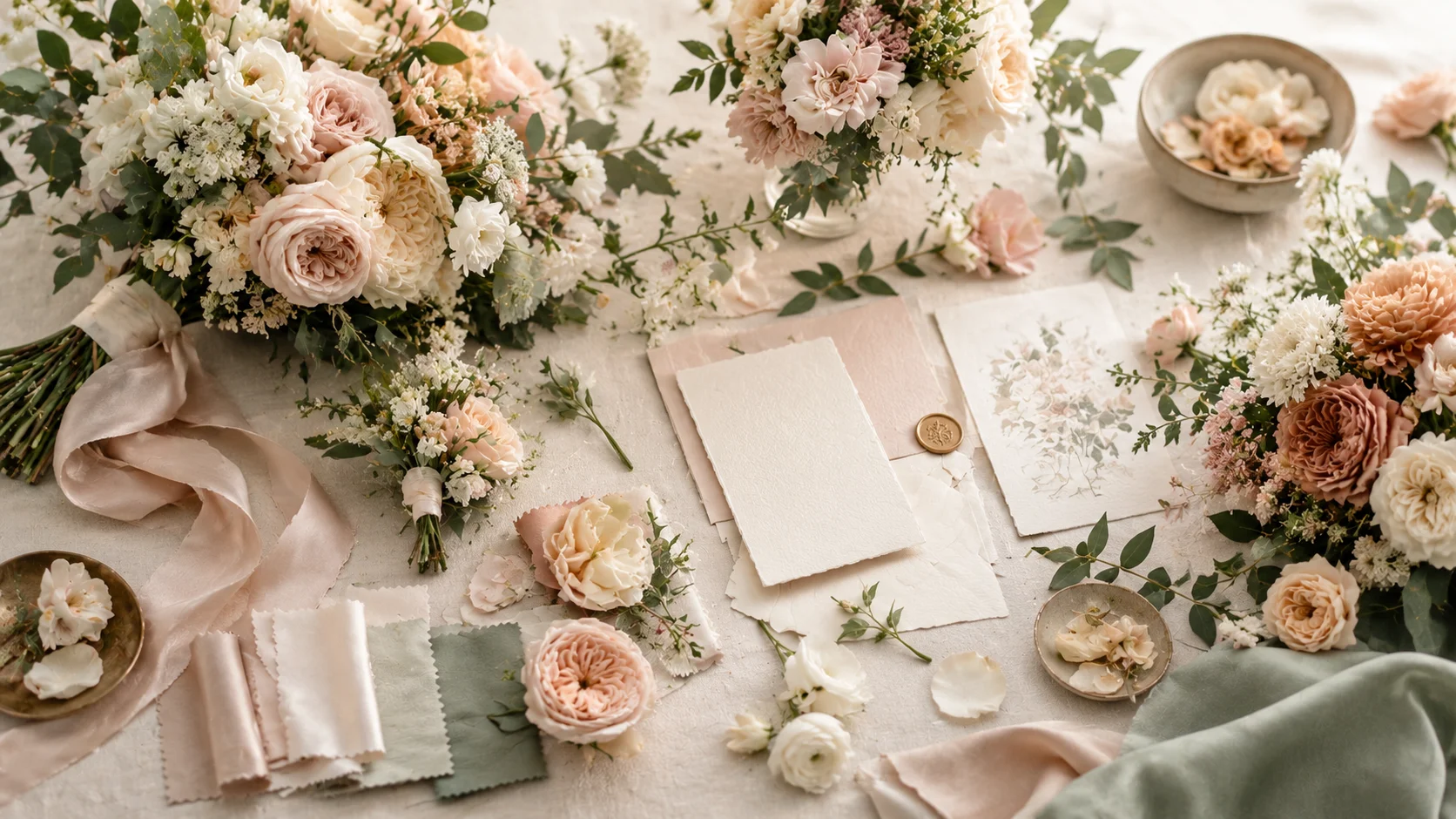
For a soft palette
Combine ivory and white with blush, nude or champagne tones. Keep the number of colors controlled so the flowers maintain a calm visual rhythm.
For a stronger palette
Choose one deeper accent shade and repeat it selectively across bouquets, centerpieces, ceremony arrangements and smaller floral details.

Let the Venue Shape Your Floral Arrangements
A flower design that works beautifully in a small intimate room may look too delicate inside a large ballroom. Look at the ceiling height, table layout, ceremony backdrop, natural light and existing architectural details before deciding how much floral decoration you need.
For reception styling, flowers should also work with the overall theme. If you are still planning your reception concept, explore these wedding reception theme ideas for inspiration.
The goal is not to cover every surface. A few well-positioned arrangements can create stronger visual impact than small floral pieces scattered throughout the venue.
Plan Every Floral Detail Before You Order
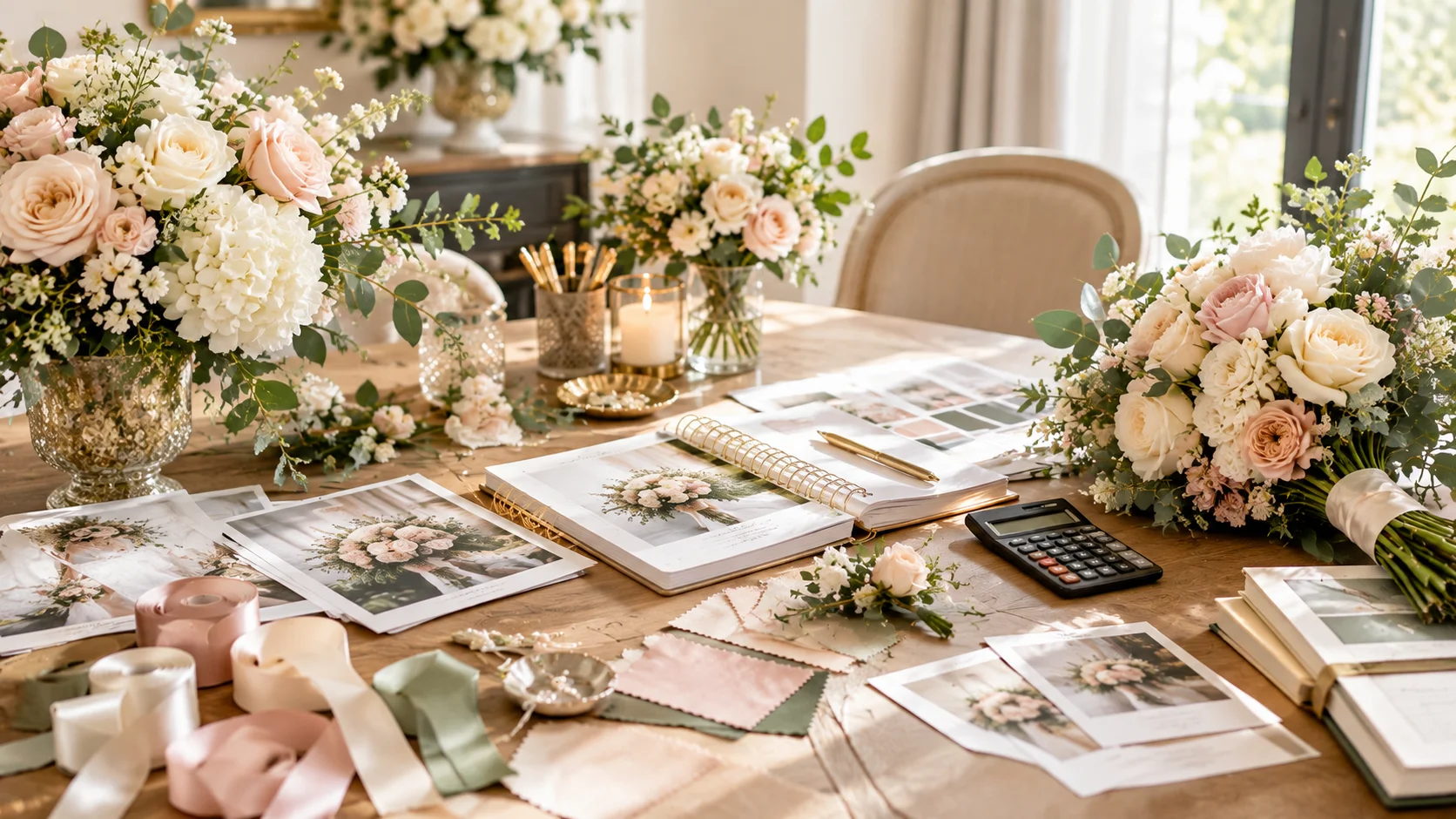
One of the easiest ways to lose control of a wedding flower budget is to keep adding arrangements without a clear list. Decide which floral pieces matter most and allocate your budget around them.
Bring a Clear Vision to Your Florist Consultation
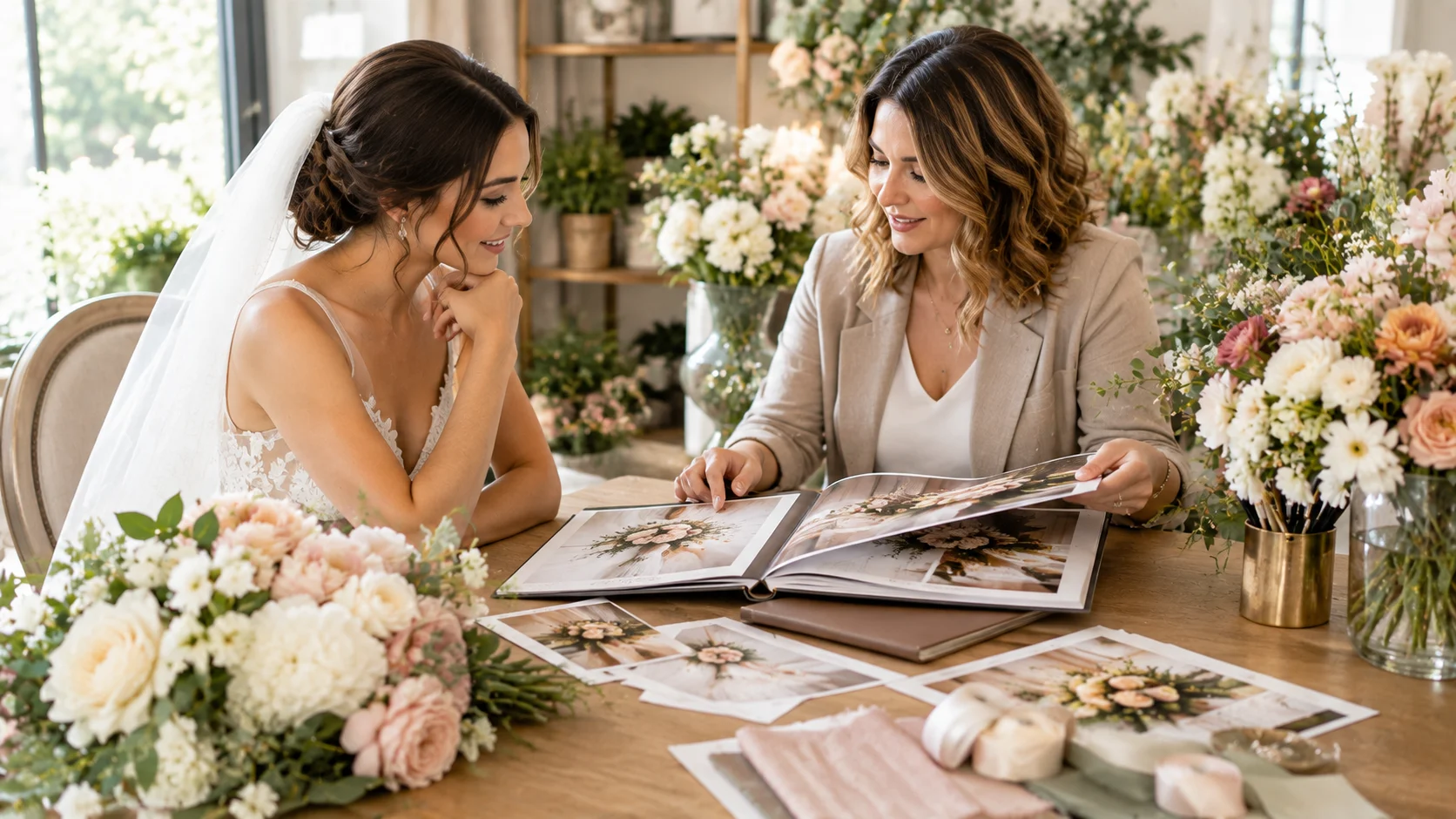
A florist can translate your ideas into arrangements, but the consultation works much better when you arrive with a clear sense of direction.
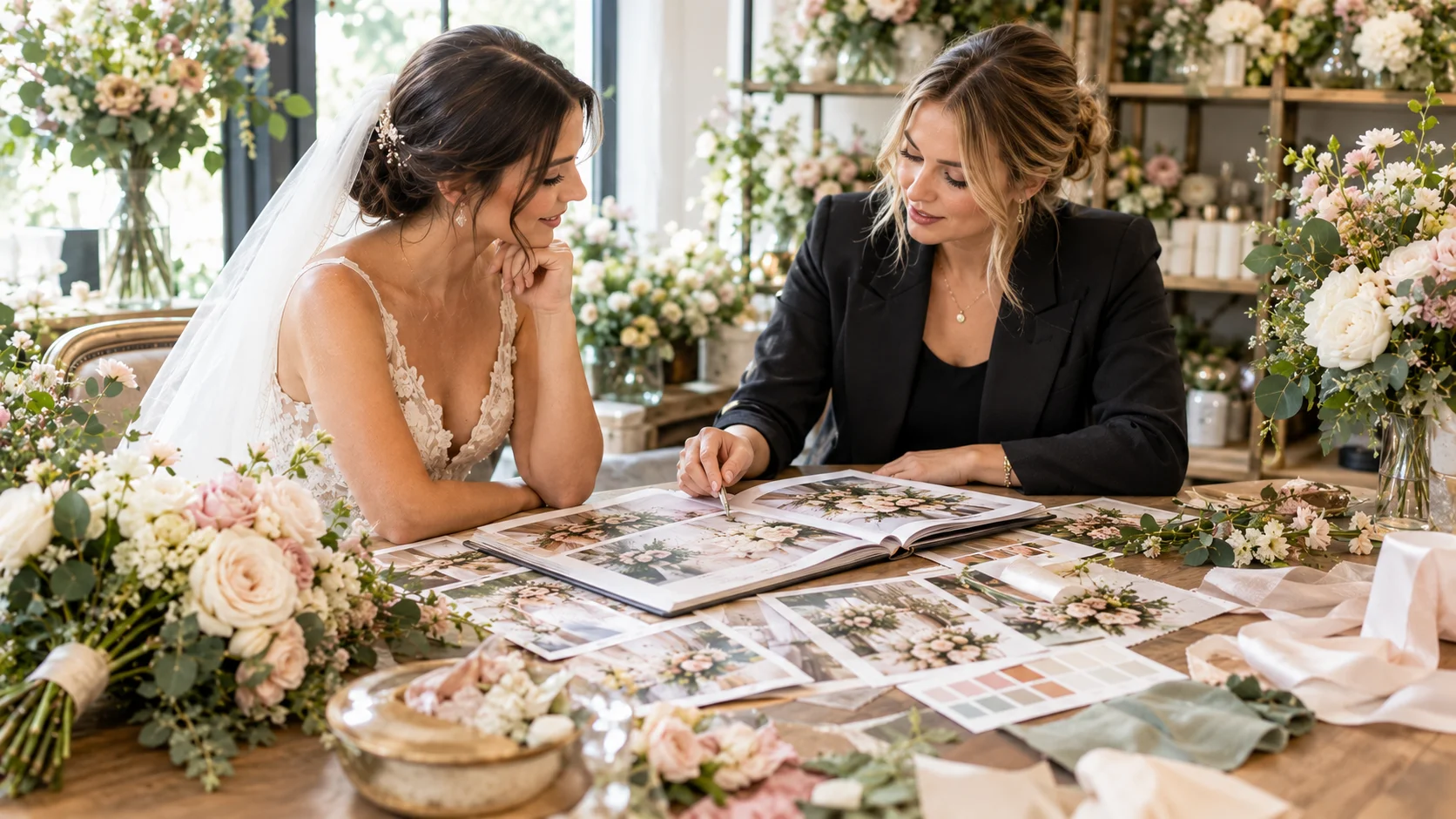
Bring your wedding date, venue details, color palette, dress inspiration and photographs showing the type of arrangement you like. You do not need to know the botanical name of every flower. Focus on the shape, mood, colors and overall feeling you want.
Share your venue
Photos and floor plans help your florist understand scale and placement.
Show references
Visual examples make it easier to explain bouquet shapes and arrangement styles.
Discuss priorities
Tell your florist which floral moments matter most to you.
Spend Your Floral Budget Where It Has the Most Visual Impact
You do not need flowers everywhere to create an elegant wedding atmosphere. Decide which moments will appear most often in photographs or be experienced closely by guests, then prioritize those areas.
For many couples, the bridal bouquet, ceremony focal point and reception centerpieces deserve more attention than decorative flowers in areas where guests spend very little time.
Think in priorities, not quantity.
A smaller number of intentional arrangements can create a more cohesive visual result than filling every available surface with flowers.
Make Sure the Flowers Work With Your Dress and Photos
Your flowers become part of the wedding photographs, so consider how the bouquet will look beside your dress, accessories and overall bridal styling. The bouquet should complement the silhouette rather than hide important dress details.
If you are still choosing your bridal look, our guide on how to choose a wedding dress can help you think about the full styling direction.
It is also useful to plan your flowers around your photography locations. Our wedding photo ideas guide can help you think about the settings where your bouquet and floral details will be most visible.
Create a Simple Wedding Flower Checklist
Once the style, colors, season and venue are decided, write down the final floral requirements. This makes it easier to compare proposals and prevents small details from being forgotten.
The Easiest Way to Choose Wedding Flowers
1. Choose the style
Decide whether your wedding direction is romantic, modern, classic or something more personal.
2. Set the colors
Build a controlled palette that works with your dress, venue and wedding details.
3. Check the season
Ask which flowers are naturally available around your wedding date.
4. Study the venue
Consider room size, architecture, tables, lighting and ceremony locations.
5. Prioritise flowers
Decide which floral moments deserve the largest part of the budget.
6. Confirm the plan
Review quantities, colors, arrangements and timing with your florist.
Wedding Flower Questions
How do I choose wedding flowers?
Start with your wedding style and color palette, then consider the season, venue, floral requirements and budget before selecting individual flowers.
Should wedding flowers match the wedding colors?
They should complement the wedding palette. Using a controlled range of shades usually creates a more connected look than using many unrelated colors.
Does the wedding season matter when choosing flowers?
Yes. Seasonal availability can affect which flowers are accessible and may also influence the overall floral budget.
What wedding flowers should I prioritise?
Common priorities include the bridal bouquet, ceremony focal point and reception centerpieces, although the right priorities depend on your venue and wedding plan.
What should I bring to a florist consultation?
Bring your wedding date, venue information, color palette, dress inspiration and a few visual references showing the arrangements you like.
Can I have elegant wedding flowers on a smaller budget?
Yes. Focus the floral budget on the areas that matter most visually instead of trying to decorate every part of the venue.
Choose Flowers That Feel Like Part of the Wedding
The right wedding flowers are not simply the most elaborate arrangements. They are flowers that fit your style, colors, season, venue and priorities. Start with the overall look, build a practical floral list and let your florist help translate that direction into arrangements.
For more wedding planning inspiration, visit the Bridal & Occasion Wear section and continue with the complete wedding checklist to keep the rest of your planning organised.

Pingback: What Is Proper Wedding Gift Etiquette? Complete Guide