

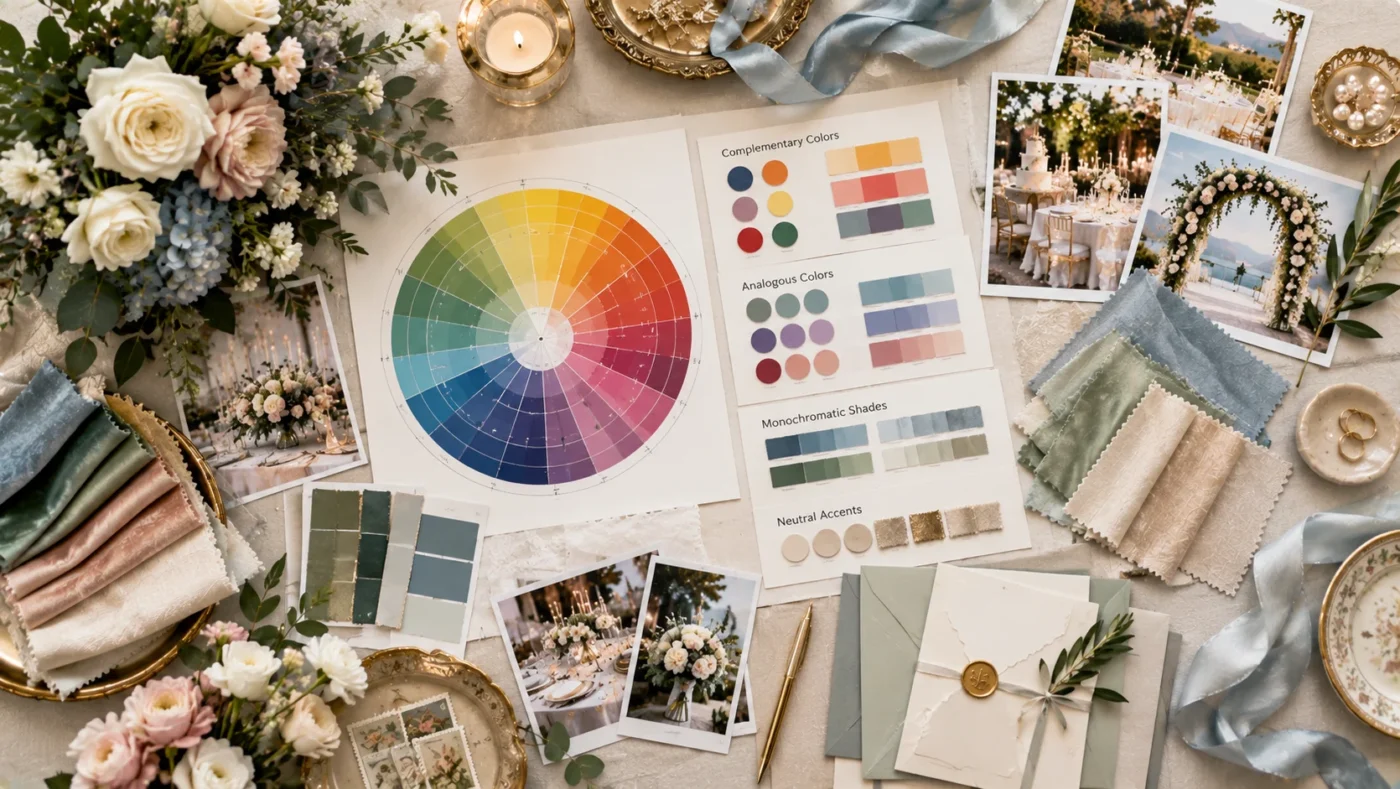
Choosing wedding colors can seem simple until you start comparing dozens of shades, combinations, and decoration ideas. Your color palette can influence everything from flowers and bridesmaid dresses to invitations, table settings, and other wedding details.
The best approach is not to follow a strict formula. Instead, start with the things that already matter to you, such as your venue, wedding season, personal style, and the atmosphere you want to create. From there, you can build a small group of colors that work well together and carry them naturally throughout your celebration.
What Should You Consider When Choosing Wedding Colors?
Before picking specific shades, think about the overall setting and feeling of your wedding. Four factors are particularly useful: your venue, season, personal style, and desired mood.
Consider Your Wedding Venue
Look at your venue before making major color decisions. Permanent features such as walls, flooring, furniture, carpets, curtains, and architectural details will already contribute colors to the space.
You can choose shades that complement these existing elements or deliberately create contrast. For example, if your venue already has strong decorative colors, a simpler palette may help the overall setting feel balanced.
Outdoor venues offer a different starting point because the surrounding landscape can become part of the visual backdrop. Gardens, beaches, vineyards, and other natural settings may already provide colors that can inspire your flowers and décor.
Think About the Wedding Season
The season can help narrow your choices, but it does not need to dictate them.
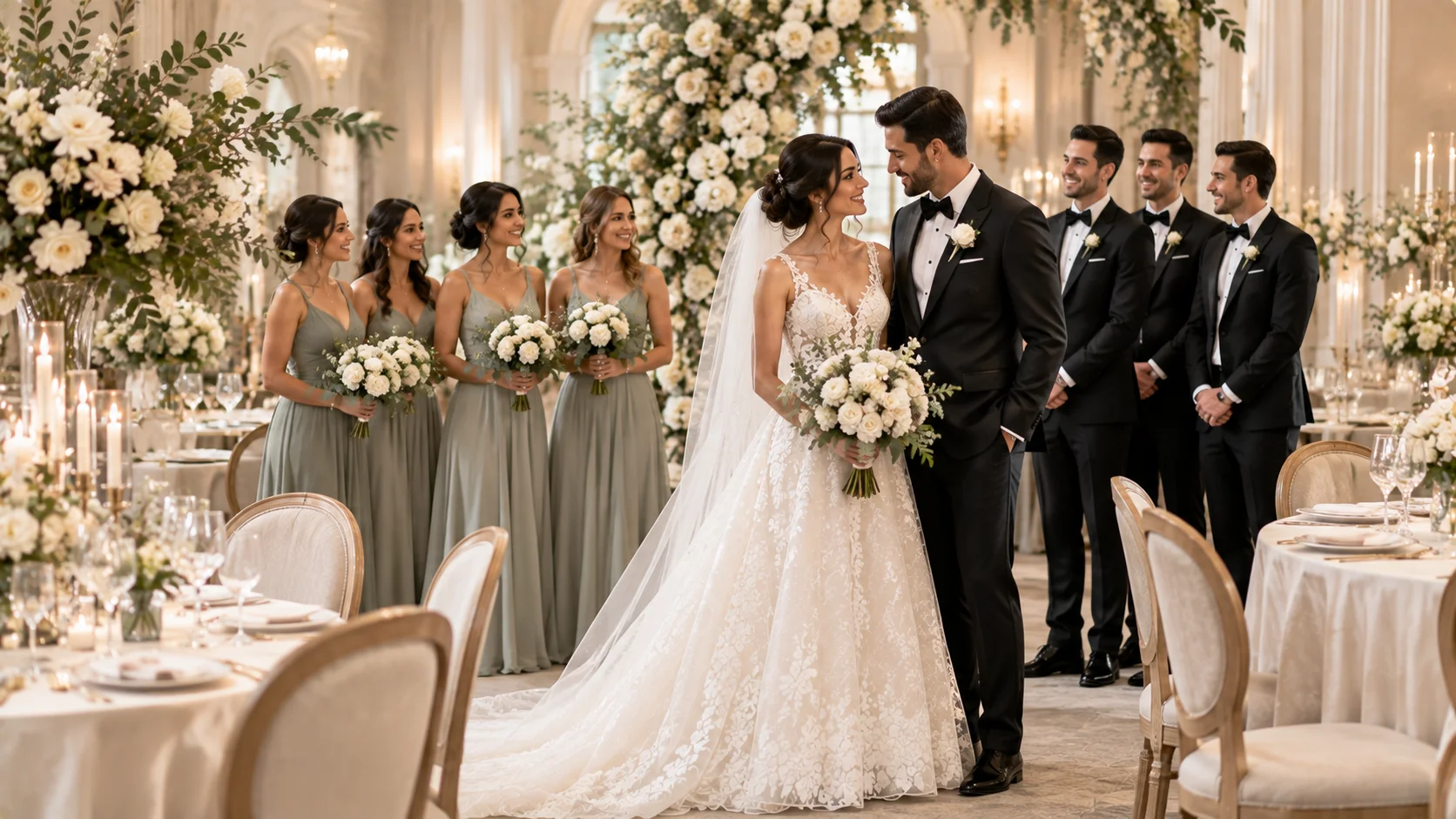
Soft pastels are often associated with spring, brighter shades can suit summer celebrations, earthy and richer tones are common for fall, and deeper or neutral palettes can work beautifully for winter. However, there is no rule that says a particular color belongs to only one season. The way you combine and style a color can change its overall appearance.
Your color palette should also work with the wider visual direction of your celebration. If you are planning the reception around a particular theme, you can compare your palette with these wedding reception theme ideas before committing to your final shades.
Let Your Personal Style Guide the Palette
Your wedding colors should feel connected to your taste. Think about the colors you naturally gravitate toward in clothing, home décor, flowers, or artwork.
Your bridal outfit is also part of this visual direction. If you are still deciding on your dress, our guide on how to choose a wedding dress can help you think about the relationship between your dress, accessories and overall wedding style.
You can also decide on the mood you want your wedding to have.
Consider understated neutrals and timeless combinations.
Soft pinks, creams, muted greens, or similar gentle shades can create a delicate feel.
Strong contrast or a restrained monochromatic palette may suit a contemporary setting.
Earthy shades, natural greens, and warm neutrals can complement a relaxed atmosphere.
Stronger colors can add energy and personality to the celebration.
These are starting points rather than rules. A wedding palette works best when it reflects the couple rather than simply copying a popular trend.
How Many Colors Should a Wedding Have?
There is no universal number of colors that every wedding must use. However, organizing your palette into different roles can make the planning process easier.
You might begin with one or two main colors, then add supporting shades and a neutral. An optional accent color can be used for smaller details.
The purpose is not to restrict your creativity. It is to give you a clear starting point when selecting flowers, stationery, attire, linens, and other décor.
Create a Wedding Color Mood Board
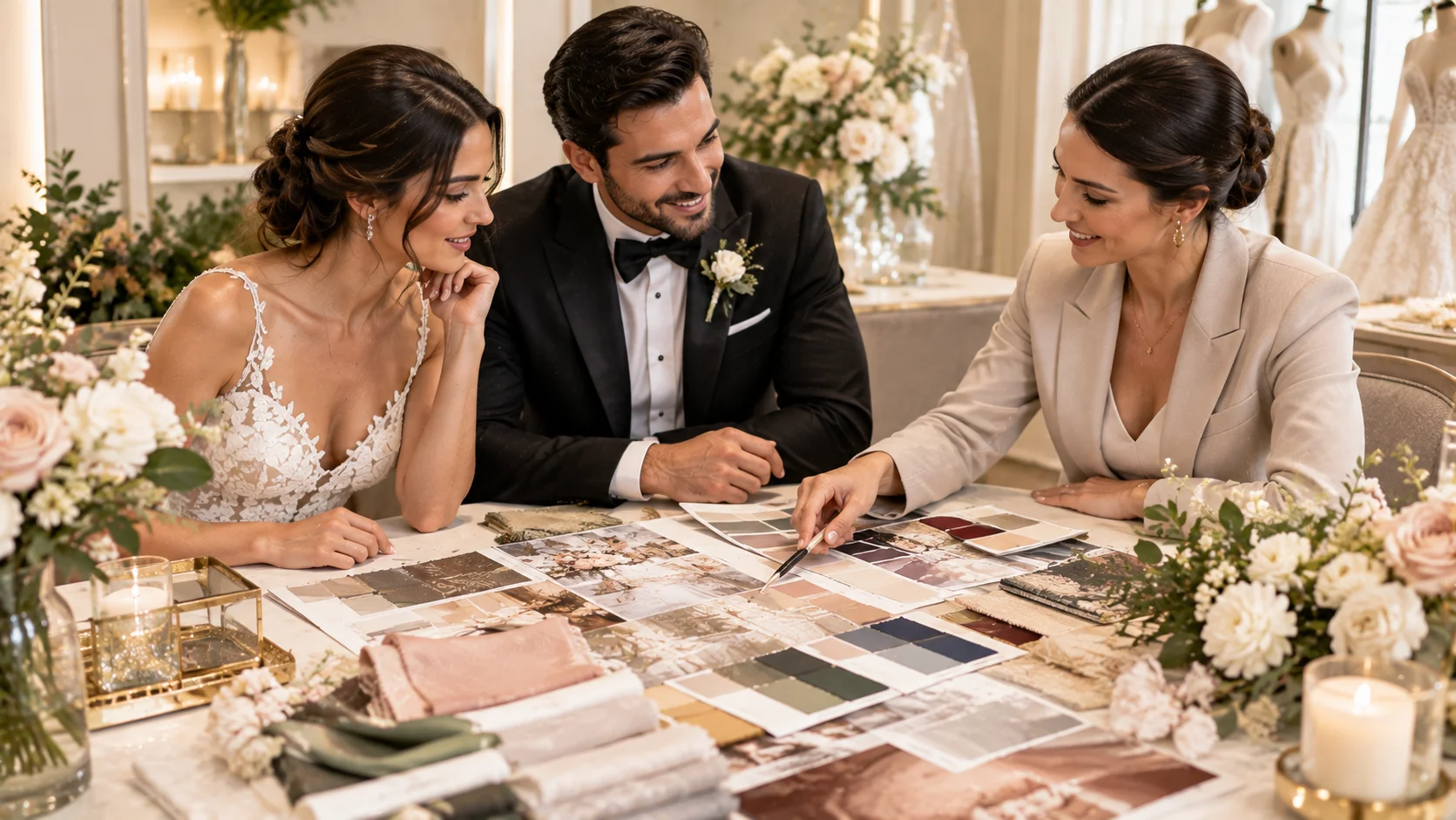
If you are unsure where to begin, create a mood board. This is one of the easiest ways to discover which colors you consistently like.
Collect images of:
- Wedding flowers
- Reception tables
- Bridesmaid dresses
- Wedding invitations
- Ceremony décor
- Wedding cakes
- Table linens
- Venues
- Bridal accessories
You can use a digital board or physical materials such as fabric samples and paper swatches.

After collecting enough inspiration, look for patterns. Are you repeatedly saving sage green? Do you prefer warm neutrals over cool gray? Are your favorite images soft and muted or colorful and high contrast?
Use Wedding Flowers as Color Inspiration
Flowers can be an excellent starting point if they are an important part of your wedding design.
If you already have a favorite flower, check what colors are realistically available and whether those shades work with your other choices. Your florist can also help you understand which blooms are available during your wedding season and how different flowers can be combined.
This matters because choosing a color on a screen is different from selecting an actual flower. Some flowers may have a range of natural shades, while others may not be available in the exact color you imagined.
Flowers should also connect naturally with your reception styling. If floral arrangements are going to be a major part of the celebration, consider them alongside your fun wedding reception ideas rather than choosing the flowers as a completely separate element.
Use Color Theory to Find Combinations That Work
You do not need to become a color expert to create a wedding palette, but basic color relationships can help.
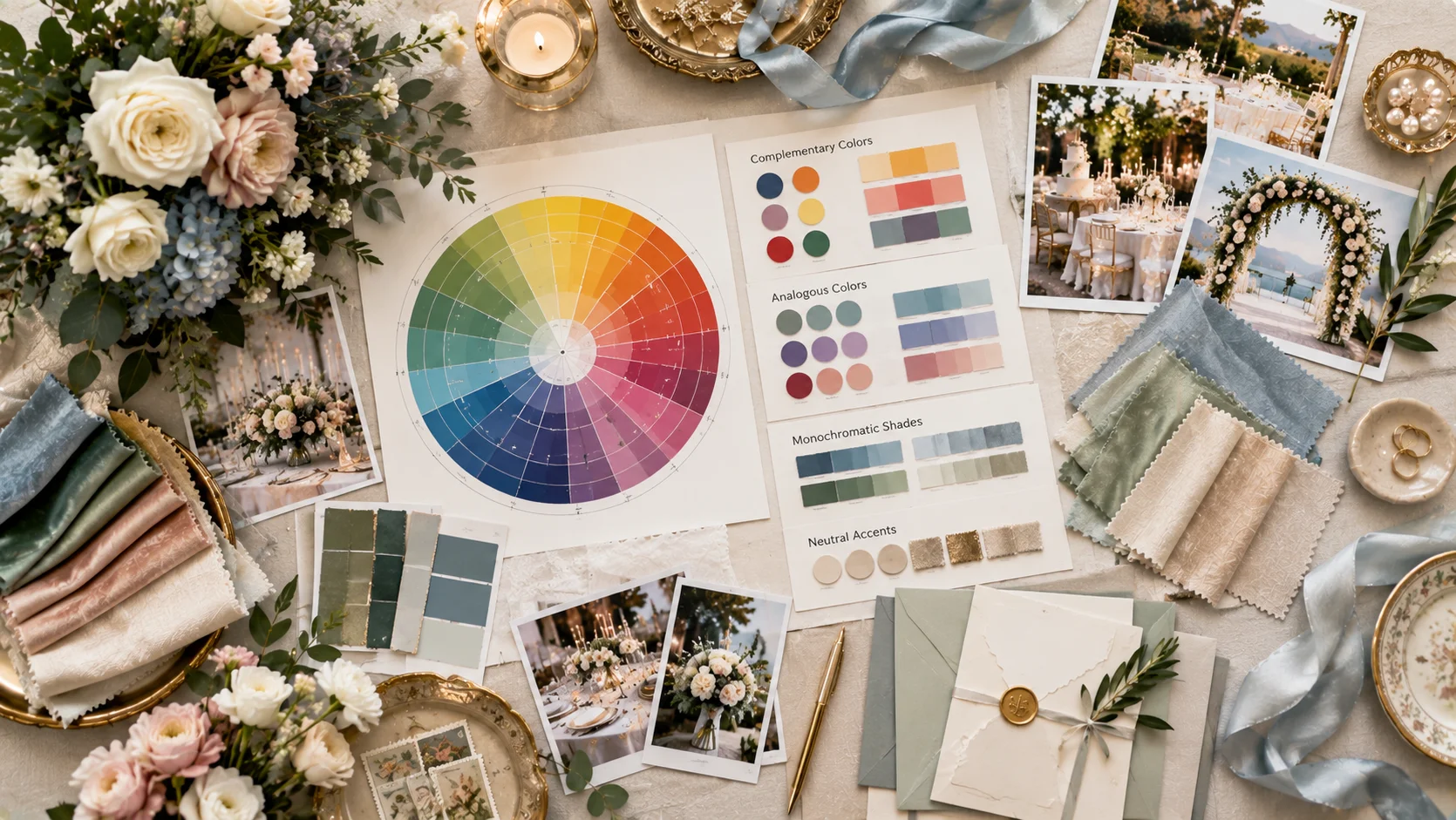
A complementary color scheme uses colors positioned opposite one another on the color wheel, creating contrast. An analogous palette uses neighboring colors, which can produce a more closely related look.
You can also combine different shades of the same color. For example, several variations of blue can create a cohesive palette without relying on many unrelated colors.
Complementary
Opposite colors can create a stronger contrast and a more noticeable visual effect.
Analogous
Neighboring shades can create a softer palette where colors naturally relate to each other.
Monochromatic
Several shades of one color can create a cohesive look without adding many unrelated colors.
If you are uncertain about a combination, compare the shades together rather than evaluating each one separately. A color that looks attractive by itself may not work as well next to another strong shade.
How to Match Wedding Colors With Your Décor
Once you have chosen your palette, decide where each color will appear. Your wedding does not need to use every shade equally.
Bridesmaid Dresses
One of your main or supporting colors can be used for bridesmaid dresses. If your palette contains several shades, you can also consider whether different tones work together rather than requiring every dress to be identical.
Wedding Flowers
Your bouquet, ceremony flowers, centerpieces, and other arrangements can introduce your main colors naturally. Greenery may also become a noticeable part of the overall design even when green is not an official wedding color.
Invitations and Stationery
Use your palette in invitations, menus, place cards, programs, signage, or your wedding website. You do not need to reproduce every wedding color on every piece of stationery. Sometimes one dominant shade with a neutral background creates a cleaner result.
Table Décor
Table linens, napkins, candles, plates, glassware, centerpieces, and other details can carry your chosen colors. Think about the table as a complete arrangement rather than selecting every item independently.
When planning the overall look, it also helps to think about how your wedding will appear in photographs. You can explore our wedding photo ideas for ways to make the setting, details and couple portraits work together visually.
Lighting
Lighting can change how colors appear. Warm candlelight, indoor lighting, and natural outdoor light can make the same shade look noticeably different.
How to Choose Wedding Colors for Different Seasons
Seasonal inspiration can help when you have no clear starting point.
Spring Wedding Colors
Spring palettes often feature softer shades such as blush, pale blue, soft green, lavender, or cream. These can create a light and romantic atmosphere.
Summer Wedding Colors
Summer gives you room to explore brighter or fresher combinations. You might use vibrant pinks, blues, greens, yellows, or lighter neutrals depending on your style and venue.
Fall Wedding Colors
Warm neutrals, earthy shades, burgundy, rust, mauve, and deeper greens are common sources of inspiration for fall celebrations.
Winter Wedding Colors
Winter palettes can include deeper greens, rich reds, navy, metallic accents, cream, or other sophisticated neutrals.
These color combinations are simply ideas to inspire you, not strict rules. A wide range of colors can suit any season when they are thoughtfully paired with the right shades, textures, flowers, and décor.
Test Your Wedding Color Palette Before Buying
Do not make major purchases based only on a digital mood board.
A color can look different when it is printed on paper, used in fabric, arranged as a flower, or viewed under different lighting. If possible, collect physical samples and compare them together.

Test your colors across several wedding elements, such as:
- Fabric
- Stationery
- Flowers
- Table linens
- Bridesmaid dresses
- Décor
- Lighting
Pay particular attention to the lighting at your venue. A palette that looks perfect in daylight may appear different during an evening reception.
Testing your colors ahead of time lets you make any necessary changes before placing large orders for stationery or wedding décor.
Once the main visual direction is settled, smaller styling details such as bridal hair can be coordinated with the same overall aesthetic. For inspiration, see our guide to easy updos for medium hair.
Popular Wedding Color Combinations for Inspiration
If you need a starting point, consider these combinations.
Blush, Cream, and Green
A soft combination that can create a romantic and natural appearance.
Sage, Blue, and Ivory
Sage and blue provide color while ivory gives the palette a softer neutral base.
Black, Gold, and Cream
A high-contrast combination that can suit a sophisticated or formal wedding.
Mauve, Navy, and Cream
These shades create a deeper palette with a balanced neutral element.
Earthy Neutrals
Beige, tan, brown, muted green, and cream can work well for couples who prefer natural and understated colors.
The key is not to choose a combination simply because it looks good in a photograph. Consider whether the palette fits your venue, flowers, outfits, and overall wedding atmosphere.
Common Mistakes to Avoid When Choosing Wedding Colors
A few simple checks can make the process easier.
A large collection of favorite shades can become difficult to coordinate. Start with a focused palette and expand only when necessary.
Strong existing colors can compete with your décor if they are not considered early.
Wedding color trends can provide inspiration, but your palette does not need to look like everyone else’s.
Screen colors and real materials can look different, particularly under different lighting.
If specific flowers are central to your design, discuss their seasonal availability and color options with your florist before finalizing the entire palette.
Frequently Asked Questions About Wedding Colors
How do you choose wedding colors?
Start by considering your venue, season, personal style, and the mood you want for your celebration. Then choose a few main and supporting shades and see how they work with flowers, attire, stationery, décor, and lighting.
How many colors should a wedding have?
There is no fixed requirement. A focused palette with main, supporting, neutral, and optional accent shades can make it easier to coordinate different wedding elements.
How do I choose wedding colors for my venue?
Start by looking at the venue’s existing colors, architecture, furniture, and surroundings. Choose shades that complement those features or create intentional contrast.
Should wedding flowers match the wedding colors?
Flowers do not need to match every color exactly. They can complement the palette, introduce another natural shade, or provide contrast. Your florist can help you determine which flowers and colors work together.
How do I make my wedding colors look cohesive?
Repeat your main colors thoughtfully across important elements such as flowers, attire, stationery, linens, and décor. You do not need to use every shade everywhere. Consistency in the overall visual direction is more important than exact repetition.
Final Thoughts
Choosing wedding colors does not have to start with finding the perfect color combination. Start with what you already know: your venue, season, personal style, favorite flowers, and the atmosphere you want to create.
Once you have your starting point, create a simple color palette, put together a mood board, compare real samples, and see how the shades work with your wedding details. Your final color scheme should look cohesive while still reflecting your personality and style as a couple.
For more bridal and event styling inspiration, explore DubaiStyle’s Bridal & Occasion Wear collection and our Style Guides. If you are planning a celebration in Dubai, the Dubai Shopping Guide can also help when you are sourcing fashion, accessories and other details.
Continue Exploring DubaiStyle
Keep building your wedding style with these related guides:
How to Choose a Wedding Dress Wedding Reception Theme Ideas Fun Wedding Reception Ideas Wedding Photo Ideas Easy Updos for Medium Hair Bridal & Occasion Wear Style Guides Dubai Shopping Guide
Pingback: Complete Wedding Checklist: Month-by-Month Planning Guide
Pingback: How to Choose Wedding Flowers: Bouquets, Colors & Seasonal Blooms
Pingback: How to Plan a Budget Wedding Without Sacrificing What Matters
Pingback: What Is Proper Wedding Gift Etiquette? Complete Guide
Pingback: Color Combinations for Clothes: Easy Matching Guide