

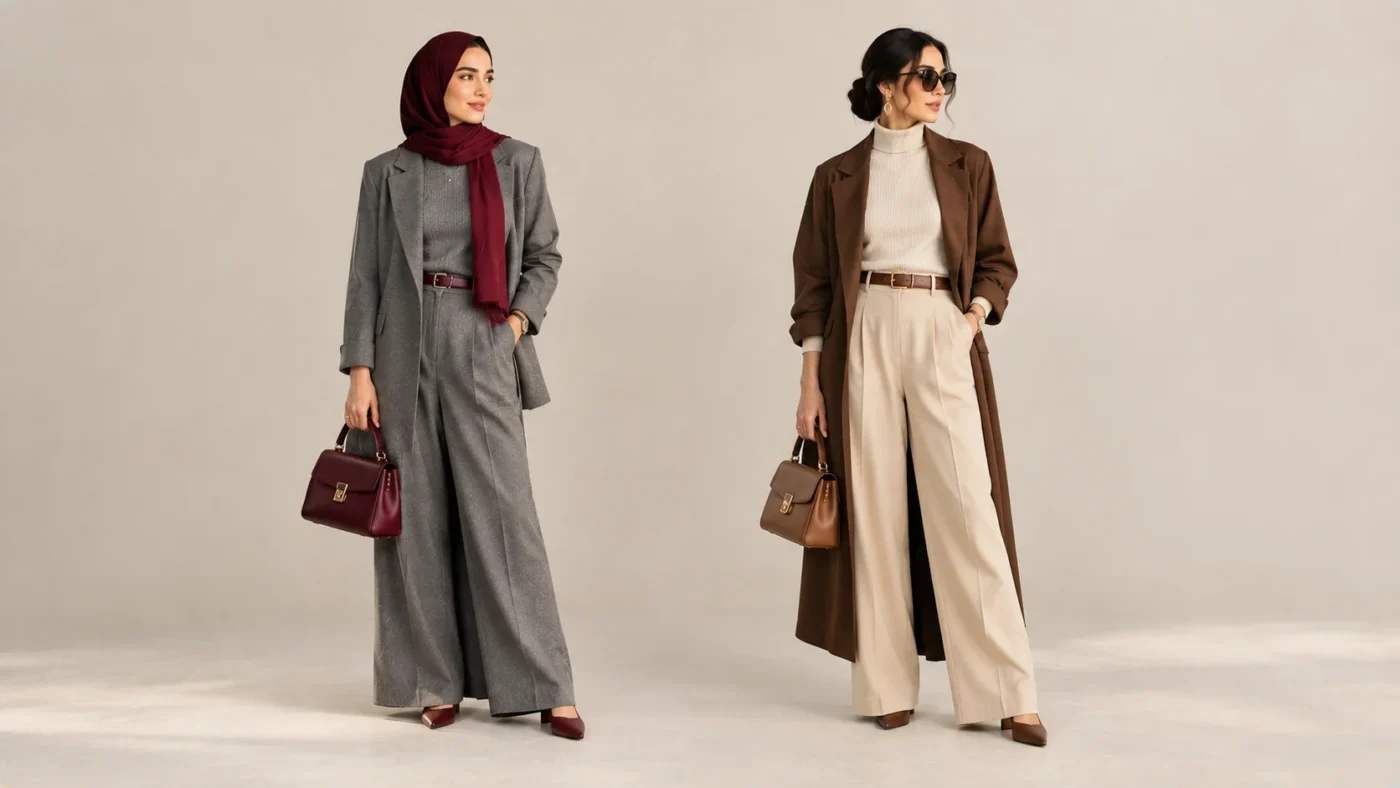
Choosing the right color combinations for clothes can make an outfit look more balanced, polished and intentional. You do not need a large wardrobe or complicated styling rules. Start with a strong base color, add a supporting shade and use an accent when you want more visual interest.
This guide explains how to match colors in clothes for everyday outfits, workwear, formal dressing and Dubai’s warm climate. For more practical fashion inspiration, explore the DubaiStyle Style Guides and the latest articles on the DubaiStyle blog.
Understanding Color Combinations for Clothes
A simple outfit usually works best when one color acts as the foundation while other colors support it. Think of this as a three-part system: a base color, a supporting color and an optional accent.
The main shade of your outfit, such as black, navy, beige, white, grey or brown.
A second shade that works naturally with the base without competing for attention.
A smaller touch of color used through accessories, shoes, bags or statement pieces.
Reliable Color Combinations for Clothes
If you want easy clothing color combinations, begin with shades that naturally balance one another. These pairings can work across casual, work and formal wardrobes.
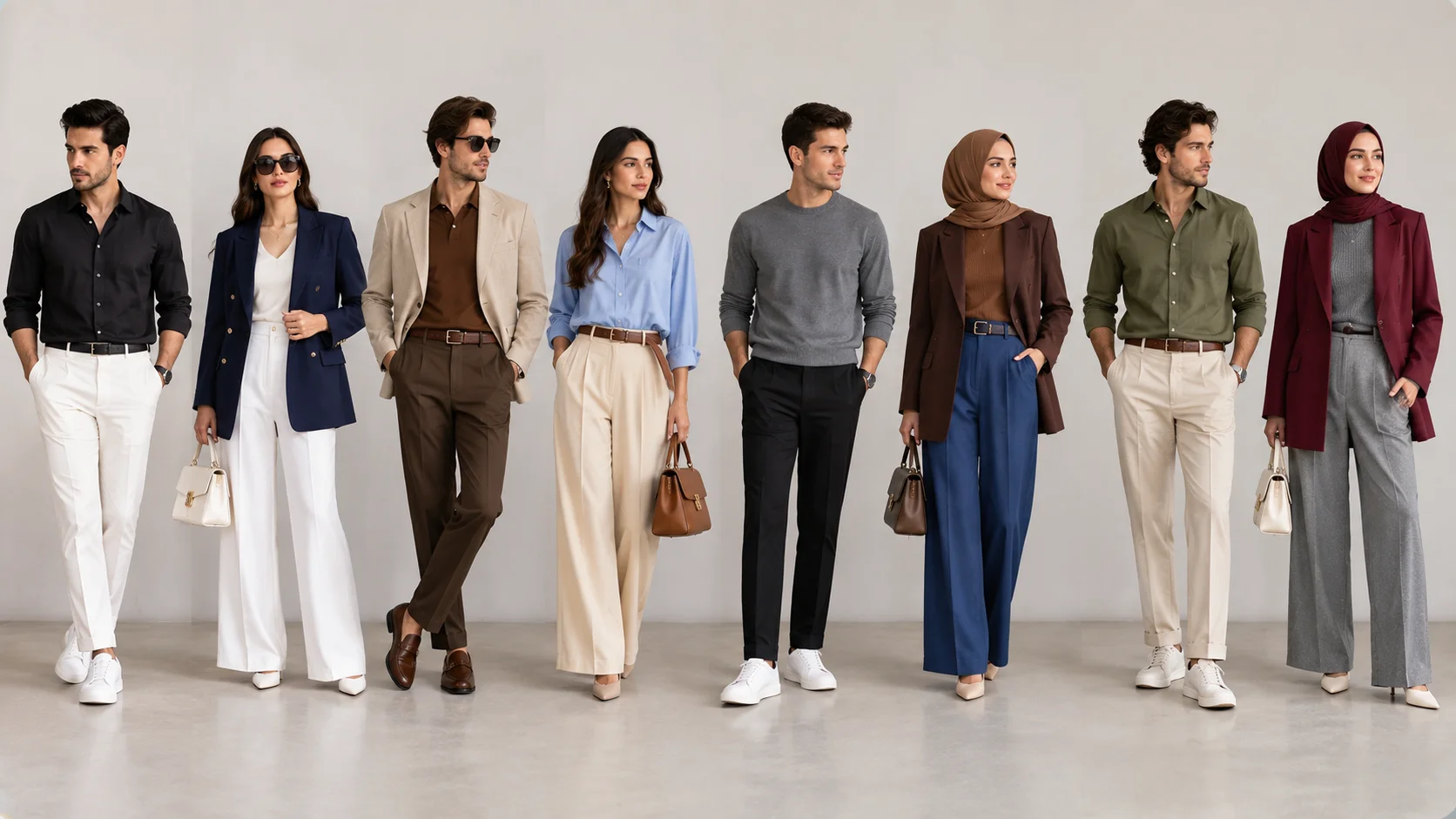
| Base Color | Supporting Color | Style Effect |
|---|---|---|
| Black | White | Clean and classic |
| Navy | White | Fresh and structured |
| Beige | Brown | Warm and understated |
| Blue | Beige | Relaxed and balanced |
| Grey | Black | Modern and refined |
| Brown | Blue | Rich and versatile |
| Olive | Beige | Earthy and relaxed |
| Burgundy | Grey | Deep and sophisticated |
How to Choose Color Combinations for Your Outfit
Matching colors becomes easier when you build an outfit in stages instead of choosing every piece independently.
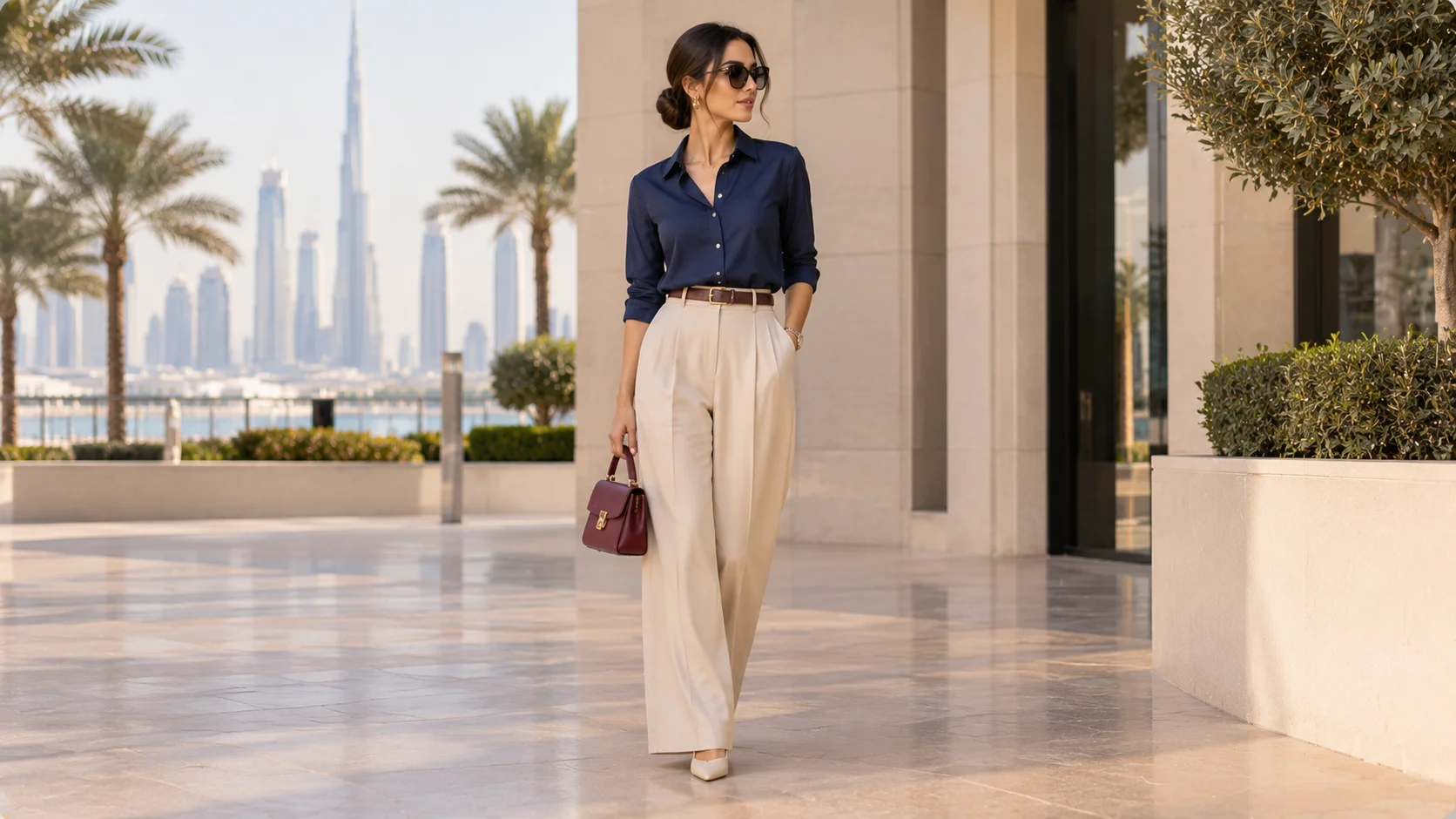
Choose one dominant shade first. Navy, black, beige, grey, white and brown are easy starting points because they can support many secondary colors.
Pick a second color that creates contrast without overpowering the base. Navy with white or beige with brown are simple examples.
Use a smaller accent through a handbag, shoes, scarf, belt or jewellery when the outfit needs more visual energy.
Color Theory for Clothing
Basic color theory can help when you want more contrast or personality in your wardrobe. Three useful approaches are complementary, analogous and monochromatic color combinations.
These sit opposite each other on the color wheel. Examples include blue and orange, purple and yellow, and red and green. Use them carefully when you want noticeable contrast.
These sit close together on the color wheel, such as blue and green, yellow and orange, or pink and purple. They usually create a softer visual transition.
A monochromatic outfit uses different shades of the same color, such as light blue, medium blue and navy or cream, beige and camel.
Color Combinations for Traditional and Formal Wear
Traditional and occasion dressing often gives you more room to use richer shades and metallic details. Abayas, kanduras and evening outfits can be styled around a restrained base color with gold or other metallic accents.
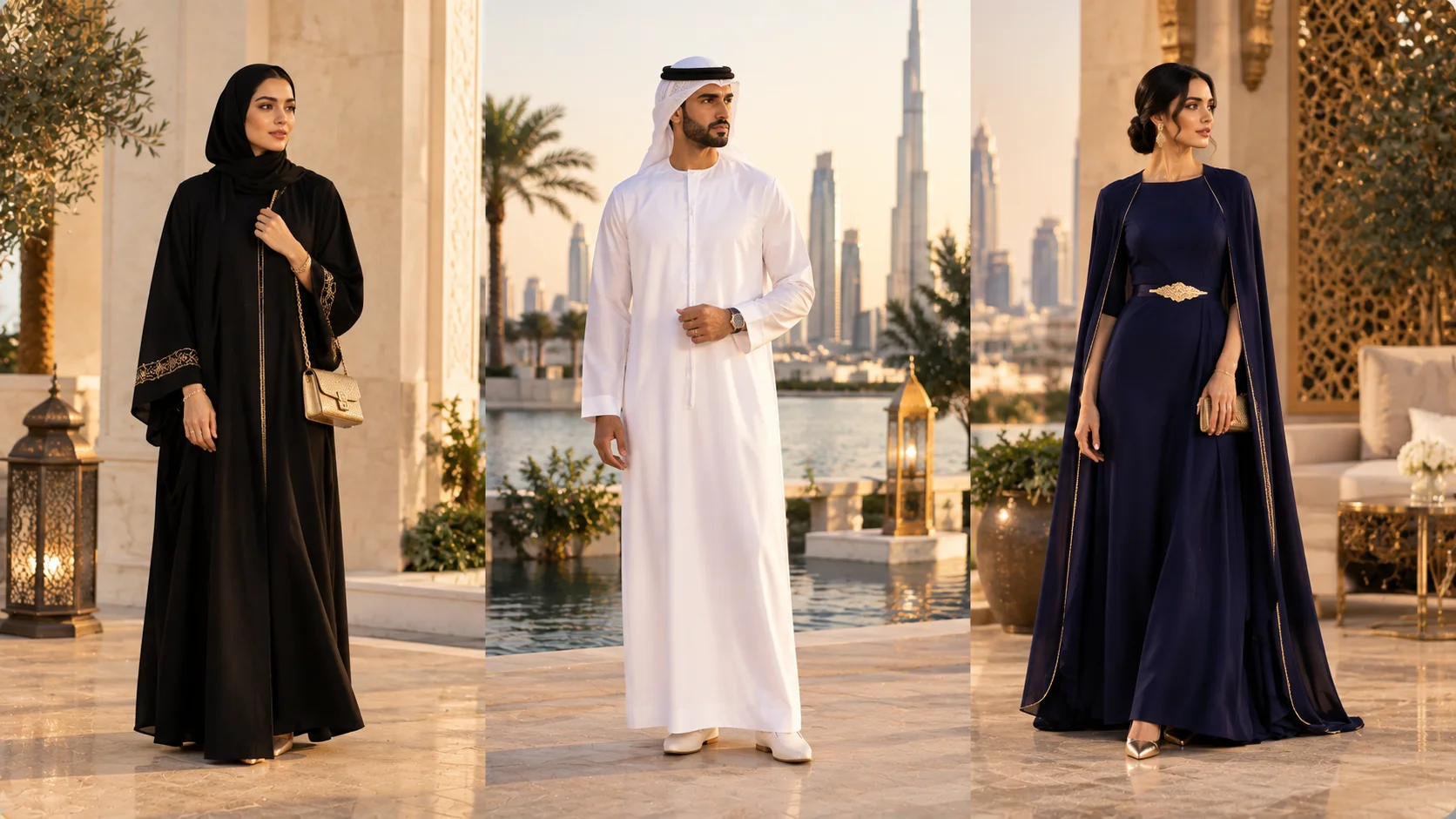
For wedding-related dressing, color coordination can also work alongside your overall event theme. See our guides on how to choose wedding colors, how to choose a wedding dress and bridal and occasion wear for more ideas.
Neutral and Bright Color Combinations
Neutral shades provide a useful foundation when you want to introduce brighter colors without making the outfit feel visually crowded.
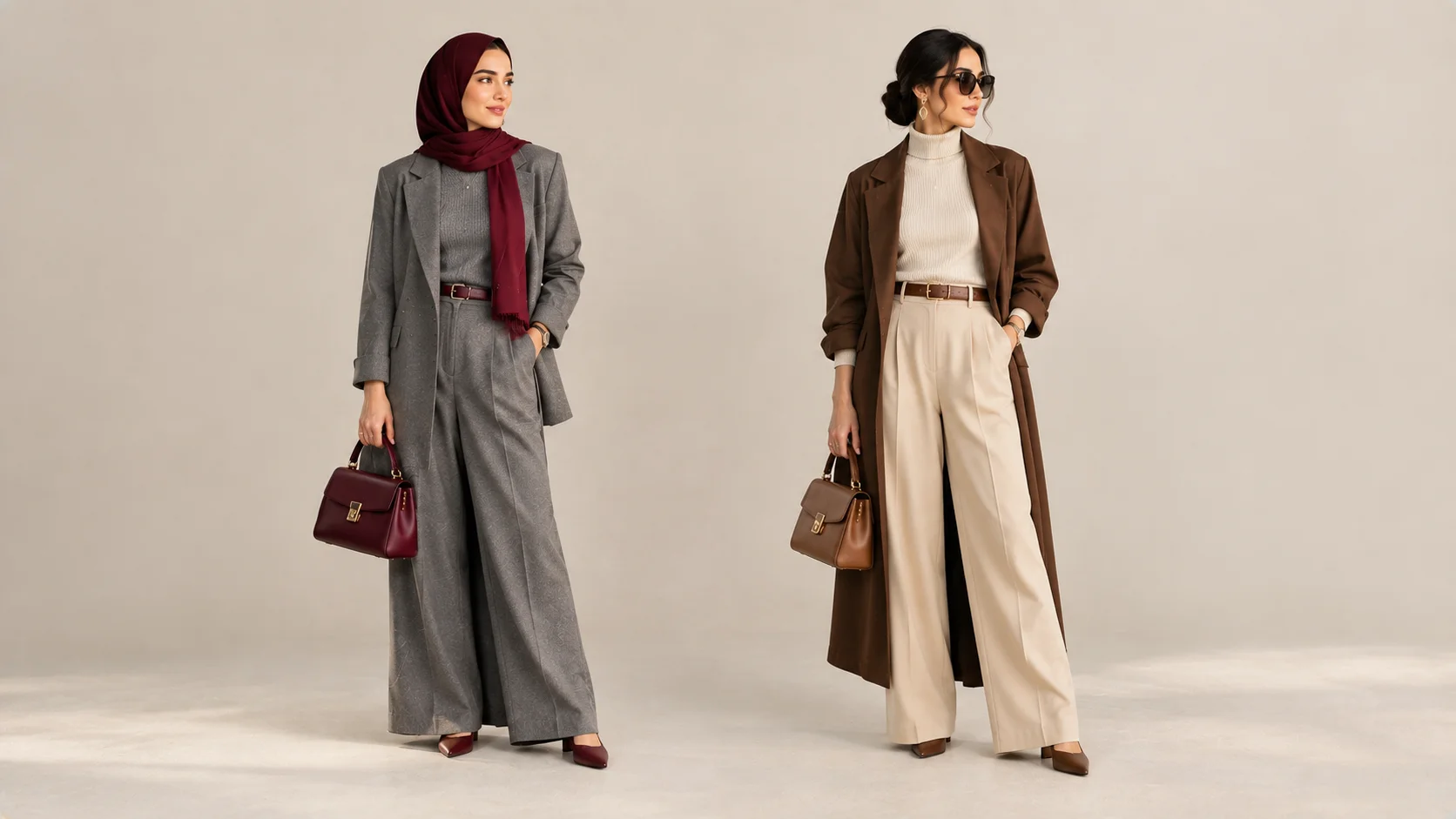
Neutral + Bright
A strong contrast that works particularly well when red is used selectively.
A balanced combination with a deeper accent.
A contrasting pairing that adds energy to a structured outfit.
A fresh combination suited to relaxed daytime styling.
Neutral + Neutral
Warm, earthy and easy to coordinate.
Simple and contemporary with a controlled contrast.
Clean and versatile for everyday and work dressing.
Soft tonal dressing with subtle depth.
How Many Colors Should You Wear?
There is no strict rule, but using two or three main colors is an easy way to keep an outfit visually organized. If you add a fourth shade, make it a small detail rather than another dominant color.
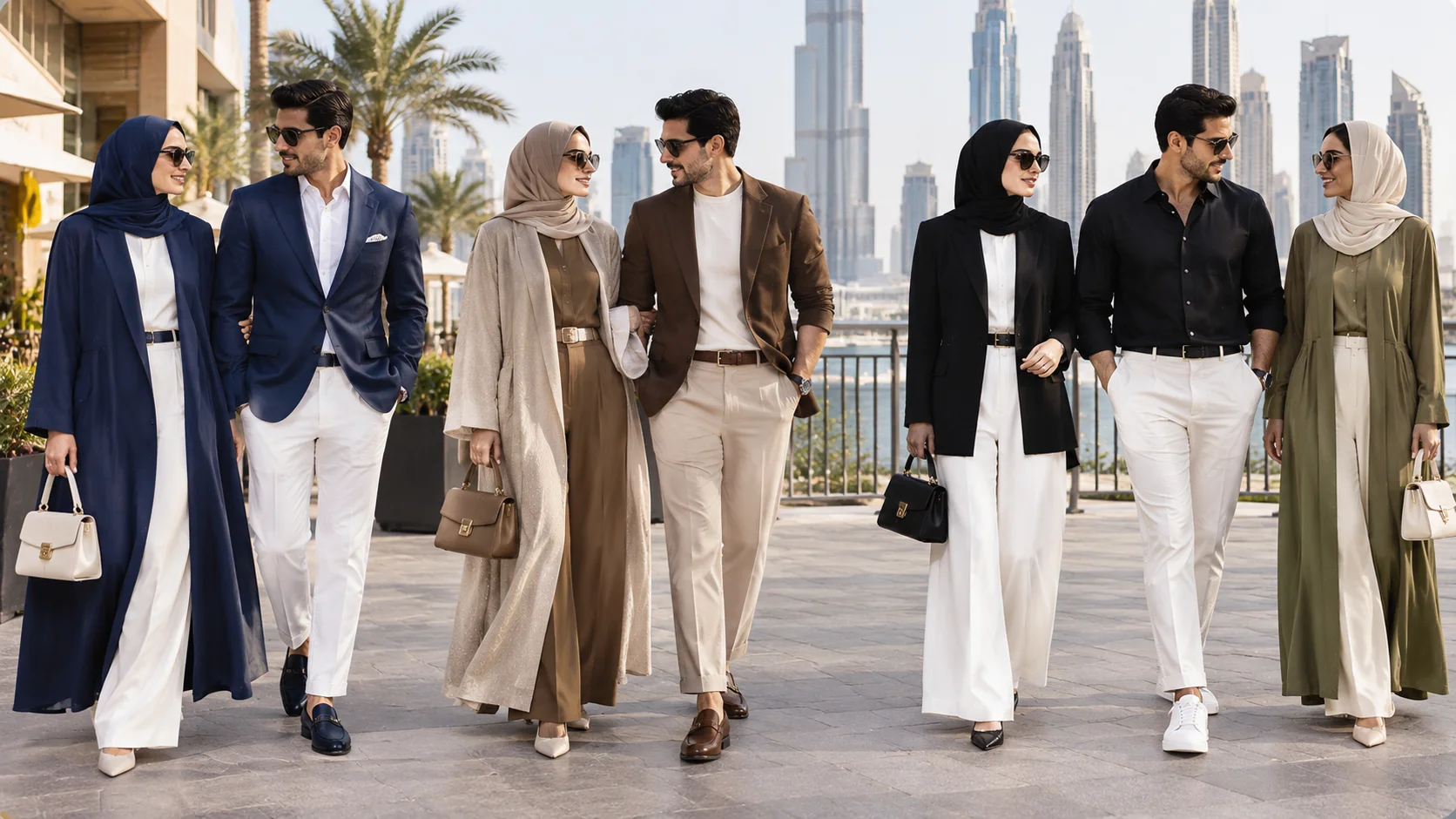
Color Combinations for Casual, Work and Formal Occasions
The same color can look completely different depending on the occasion. Fabric, tailoring, accessories and the amount of contrast all influence the final effect.
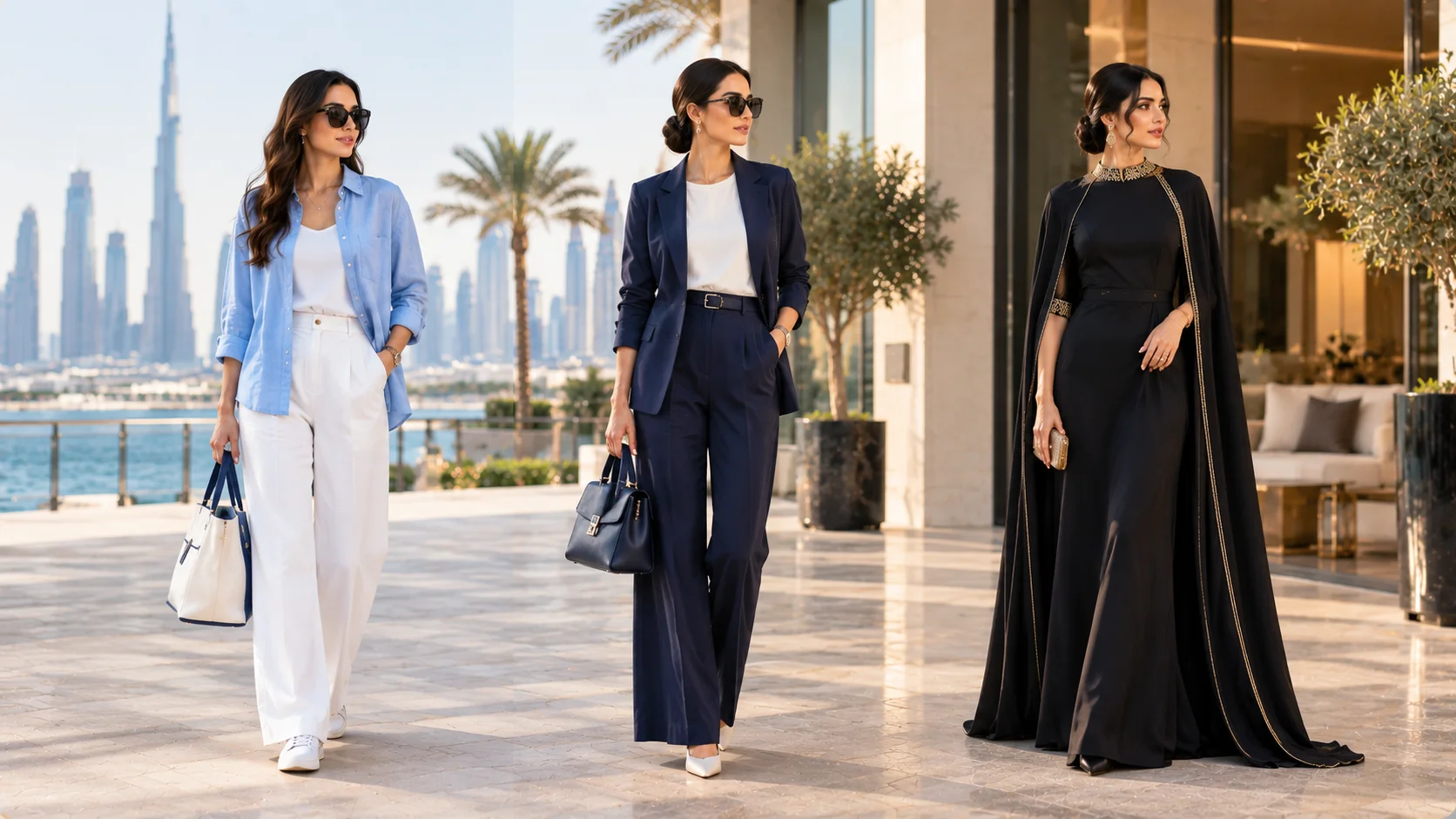
Blue + white, beige + brown, olive + cream and black + grey are practical combinations for everyday dressing.
Navy + white, grey + black, beige + navy and burgundy + grey create a more structured appearance.
Black, navy, grey, white, cream and burgundy can form the foundation of formal outfits, with accessories adding controlled contrast.
If you are building outfits for different seasons or occasions, explore the fashion trends section and Dubai fashion for more styling inspiration.
Choose Clothing Colors for Your Skin Tone and Personal Style
Color matching is not only about rules. Your skin tone, contrast level, personal preferences and the way you normally dress can all influence which shades feel natural on you.
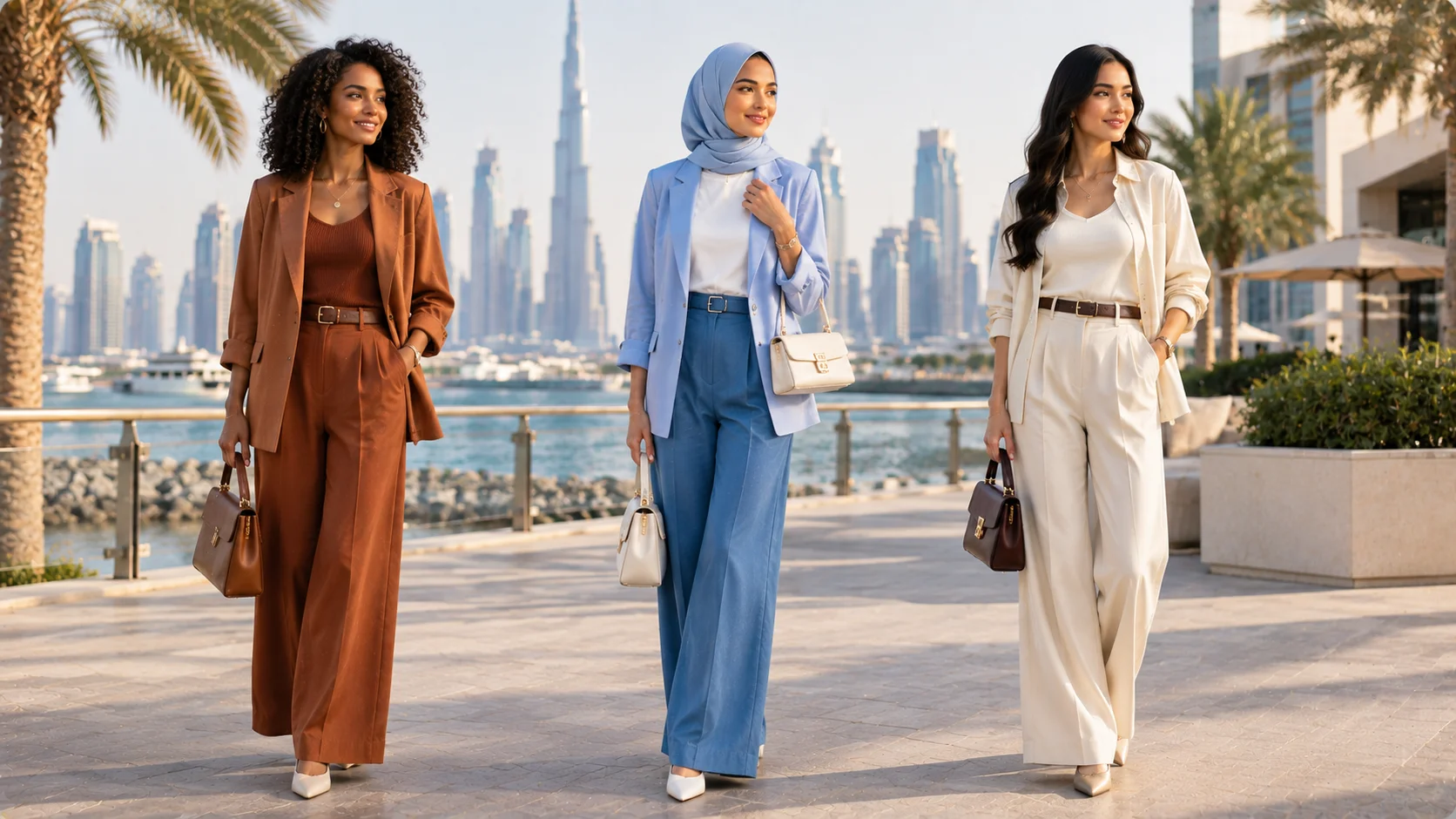
Instead of following a rigid color rule, compare similar shades and notice which ones create the balance you prefer. If you like understated outfits, neutrals and monochromatic combinations may suit your wardrobe. If you enjoy stronger contrast, use complementary colors or brighter accents in smaller areas.
Common Color-Matching Mistakes
Several bright shades competing for attention can make an outfit look disconnected.
A bright accent usually works better when it occupies a smaller area than the main color.
A color combination suitable for casual wear may need more restraint for work or formal events.
Shoes, bags and accessories do not always need to be the exact same shade as your clothing.
The same color can appear different depending on texture, sheen, weave and lighting.
Look at the complete outfit together rather than judging each clothing piece on its own.
Frequently Asked Questions About Color Combinations for Clothes
Common combinations include black and white, navy and white, beige and brown, blue and beige, grey and black, olive and cream, and burgundy and grey.
Easy combinations depend on the occasion, but neutral pairings such as navy and white, beige and brown, and black and grey are useful starting points.
White, beige, grey and selected warmer accent colors can work well with navy. Navy and white is particularly easy to style for work and everyday outfits.
Brown, cream, camel, navy, white and olive can all complement beige depending on the outfit and occasion.
Light neutrals such as white, cream, beige and soft grey can be practical choices for warm, bright conditions. Fabric and breathability also matter when dressing for Dubai.
There is no universal color rule for every wedding. Check the invitation and venue guidance first, then consider the couple’s dress code and the formality of the event. For more wedding styling ideas, browse wedding planning tips and the bridal and occasion wear collection.
Start with one base color, add a supporting color and then introduce a small accent if needed. You can also use complementary, analogous or monochromatic color relationships to build contrast or harmony.
Final Thoughts
“`Good color combinations for clothes do not have to be complicated. Start with versatile base shades, add one supporting color and use accents selectively. Once you understand how neutral, complementary, analogous and monochromatic combinations work, it becomes much easier to create outfits that feel coordinated.
For more Dubai-focused styling inspiration, continue exploring the DubaiStyle blog, browse the Style Guides or discover more ideas in our Fashion Trends section.
“`
Pingback: How to Build a Minimalist Wardrobe in Dubai: A Simple Step-by-Step Guide
Pingback: What to Wear to a Wedding as a Guest in Dubai: Complete Guide
Pingback: Best Fabrics for Summer in Dubai: What Actually Keeps You Cool
Pingback: Dubai Fashion Week 2026: What to Wear & Outfit Guide
Pingback: Modern Abaya Styles in Dubai | Dubai Style