

What to Wear in Dubai in Winter: November to February
Dubai’s winter is warm by most international standards, but the temperature changes noticeably between daytime and evening. Typical seasonal temperatures sit around 31°C in November, 26°C in December, 24°C in January and 25°C in February during the day, while average nighttime temperatures can fall to approximately 21°C, 16°C, 14°C and 15°C respectively. That difference is the key to dressing well: instead of packing heavy winter clothing, build outfits around breathable fabrics, light layers and one easy-to-remove outer piece.
From daytime shopping and outdoor cafés to desert evenings, beach walks and rooftop dinners, the right Dubai winter wardrobe needs to handle several temperatures in one day. This guide breaks down what to wear from November through February, including monthly outfit ideas, fabrics, evening layers, desert dressing and a practical packing list. For broader advice on local dressing, see our complete guide to what to wear in Dubai.
These figures represent typical seasonal conditions rather than a date-specific weather forecast. Actual temperatures can vary by day and location.
What Should You Wear in Dubai in Winter?
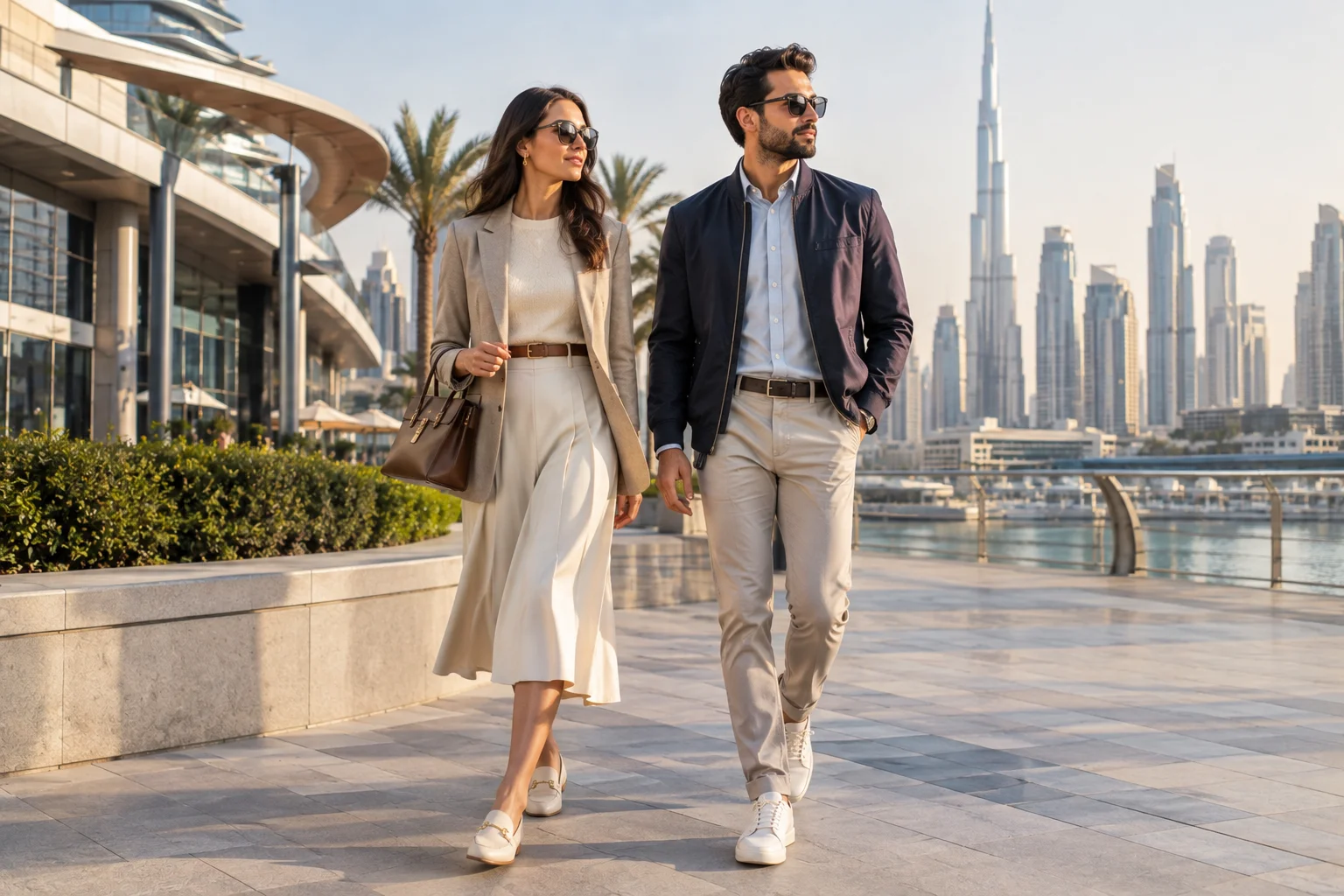
The easiest way to dress for Dubai’s winter is to think in layers rather than traditional cold-weather clothing. A lightweight top works for the warmer part of the day, while a cardigan, blazer, overshirt or light jacket can be added when temperatures drop after sunset.
For everyday city outfits, choose breathable shirts, cotton tops, lightweight knits, relaxed trousers, jeans, midi skirts and versatile dresses. Closed shoes are useful for cooler evenings, while loafers, clean sneakers and sandals can work during warmer daytime hours.
Breathable Base
Start with cotton, linen blends or other lightweight fabrics that remain comfortable during warmer afternoons.
Light Mid-Layer
Add a thin knit, cardigan, overshirt or relaxed blazer when you move into air-conditioned spaces or cooler evenings.
Easy Outer Layer
Keep one lightweight jacket or coat available for January evenings, outdoor dining and desert activities.
How Cold Does Dubai Get in Winter?
Dubai does not usually require the heavy coats, thermal layers or snow-weather clothing associated with colder destinations. The bigger styling challenge is the contrast between warm daytime conditions, cool nights and strong indoor air conditioning.
November generally feels warm during the day and comfortable after sunset. December becomes noticeably cooler, particularly at night. January is usually the coolest part of this four-month period, while February starts warming up again without completely losing its cooler evenings.
What Should You Wear Month by Month?
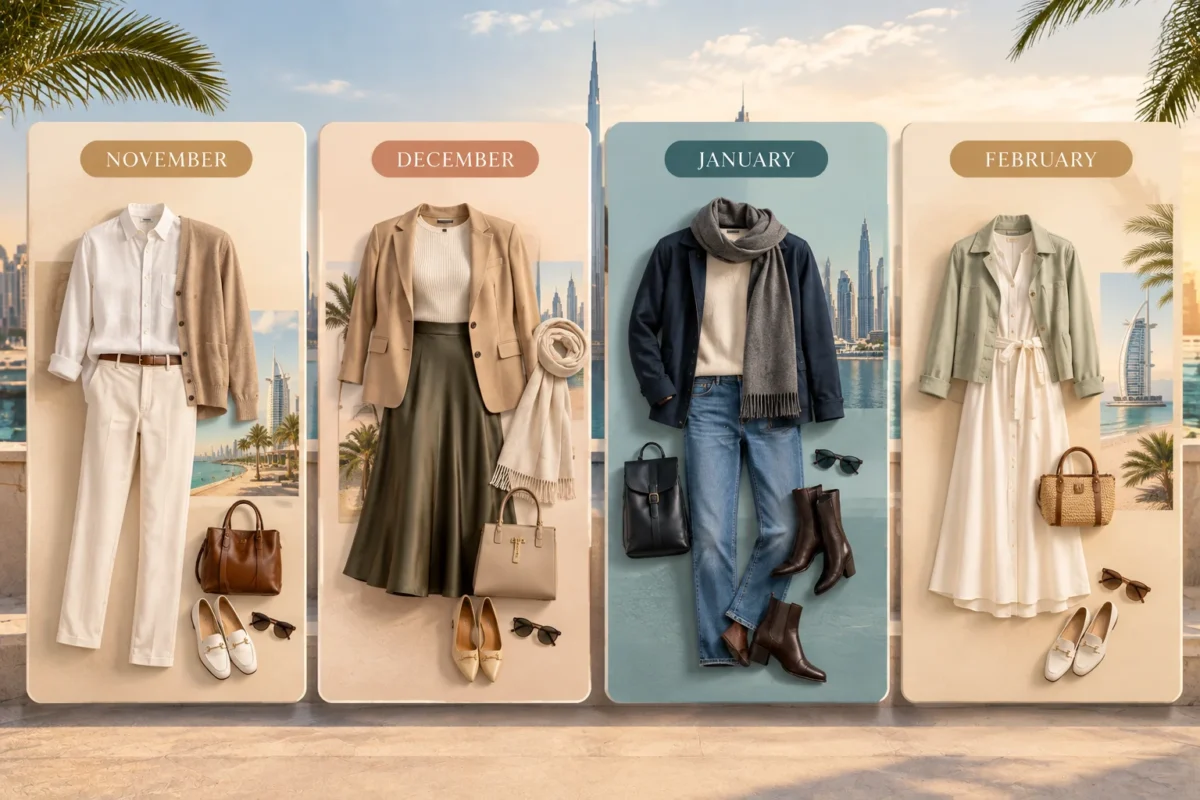
Your Dubai winter wardrobe can stay compact if you adjust the weight of your layers as the season progresses. The following month-by-month formulas make it easier to plan outfits without overpacking.
November
Around 31°C day / 21°C nightNovember still feels warm for much of the day. Choose linen or cotton shirts, lightweight trousers, midi dresses and breathable tops. Keep a thin cardigan or relaxed blazer nearby for later hours and heavily air-conditioned interiors.
December
Around 26°C day / 16°C nightDecember is ideal for polished layering. Try a fine knit with tailored trousers, a midi skirt with a long-sleeve top, or a lightweight dress finished with a blazer or wrap for evening plans.
January
Around 24°C day / 14°C nightJanuary usually calls for the most useful outer layer of the season. Jeans, sweaters, tailored trousers, ankle boots and lightweight jackets become especially practical after sunset. For denim inspiration, explore these sweater and jeans outfits.
February
Around 25°C day / 15°C nightFebruary gradually shifts toward warmer daytime dressing. Lightweight dresses, cotton shirts, relaxed trousers and breathable tops work well, with a light jacket or cardigan available for cooler evenings.
What Should You Wear on Winter Days?
Daytime dressing in Dubai winter should remain light and breathable. Even during the cooler months, the sun can make outdoor conditions feel considerably warmer than the evening. A comfortable day outfit should therefore be easy to layer rather than heavily insulated.
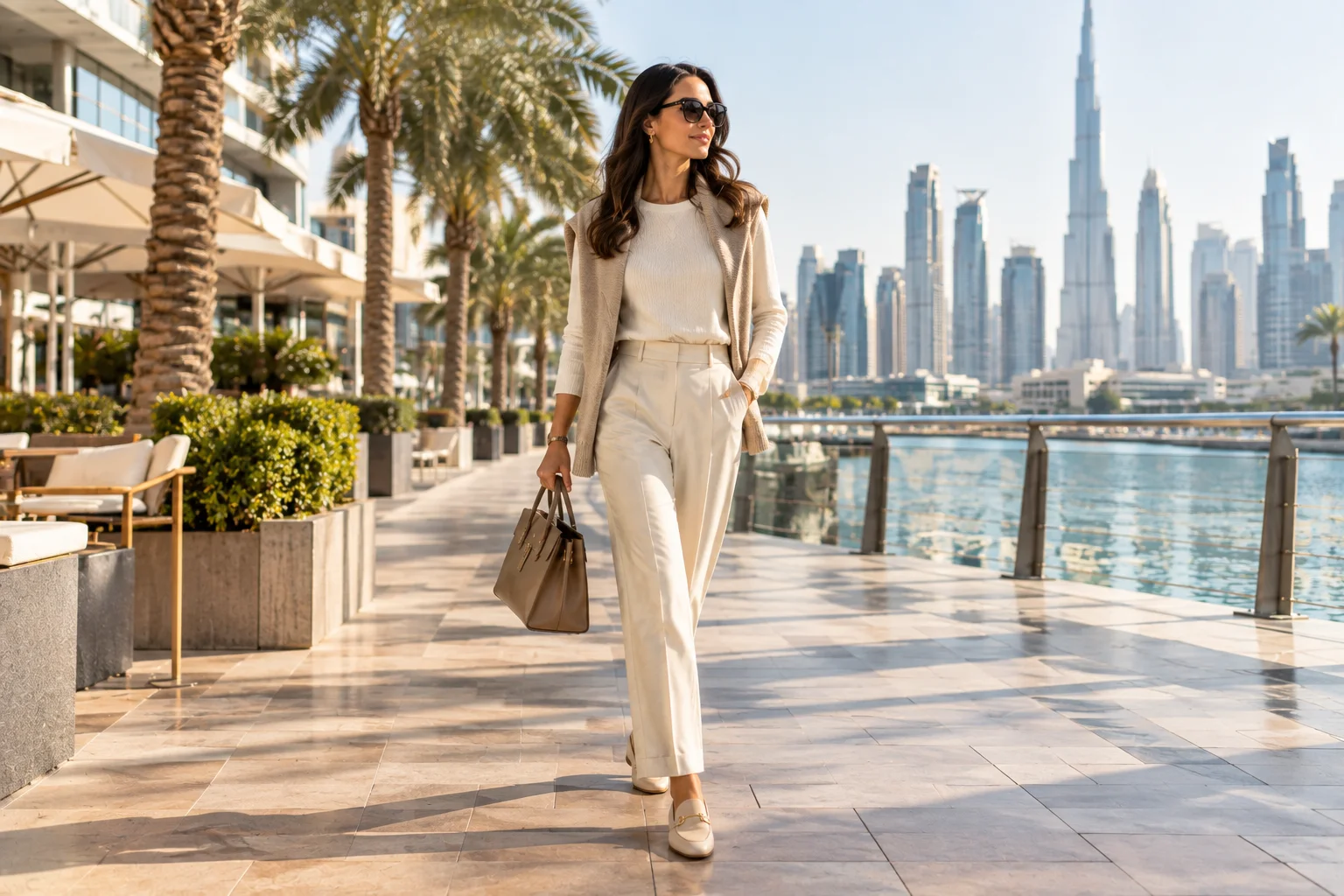
For Women
- Lightweight midi or maxi dresses
- Cotton or linen-blend shirts
- Wide-leg or tailored trousers
- Fine-knit tops
- Light cardigans and blazers
- Clean sneakers, loafers or flats
For Men
- Breathable button-down shirts
- Oxford or cotton overshirts
- Chinos or tailored trousers
- Dark or clean-cut denim
- Fine-gauge sweaters
- Loafers, sneakers or smart casual shoes
What Should You Wear on Winter Evenings?
Evenings are where Dubai winter layering becomes most useful. Restaurants, rooftops, waterfront areas and outdoor cafés can feel noticeably cooler once the sun goes down. Instead of changing your entire outfit, add a refined outer layer.

For women, a blazer, elegant wrap, cropped jacket or lightweight coat can work over a dress, skirt or tailored trousers. For men, a structured overshirt, fine sweater, lightweight jacket or unlined blazer can add warmth while keeping the outfit sharp.
If your evening includes a rooftop restaurant or an outdoor venue, closed shoes can also make the outfit more comfortable. The goal is polished layering rather than bulky winter dressing.
What Should You Wear to the Desert or Beach in Winter?
Desert and beach plans require a slightly different approach because the temperature can feel very different once the sun changes position. A light daytime outfit may be enough for a sunny beach afternoon, while a desert evening can call for a jacket, scarf and closed shoes.
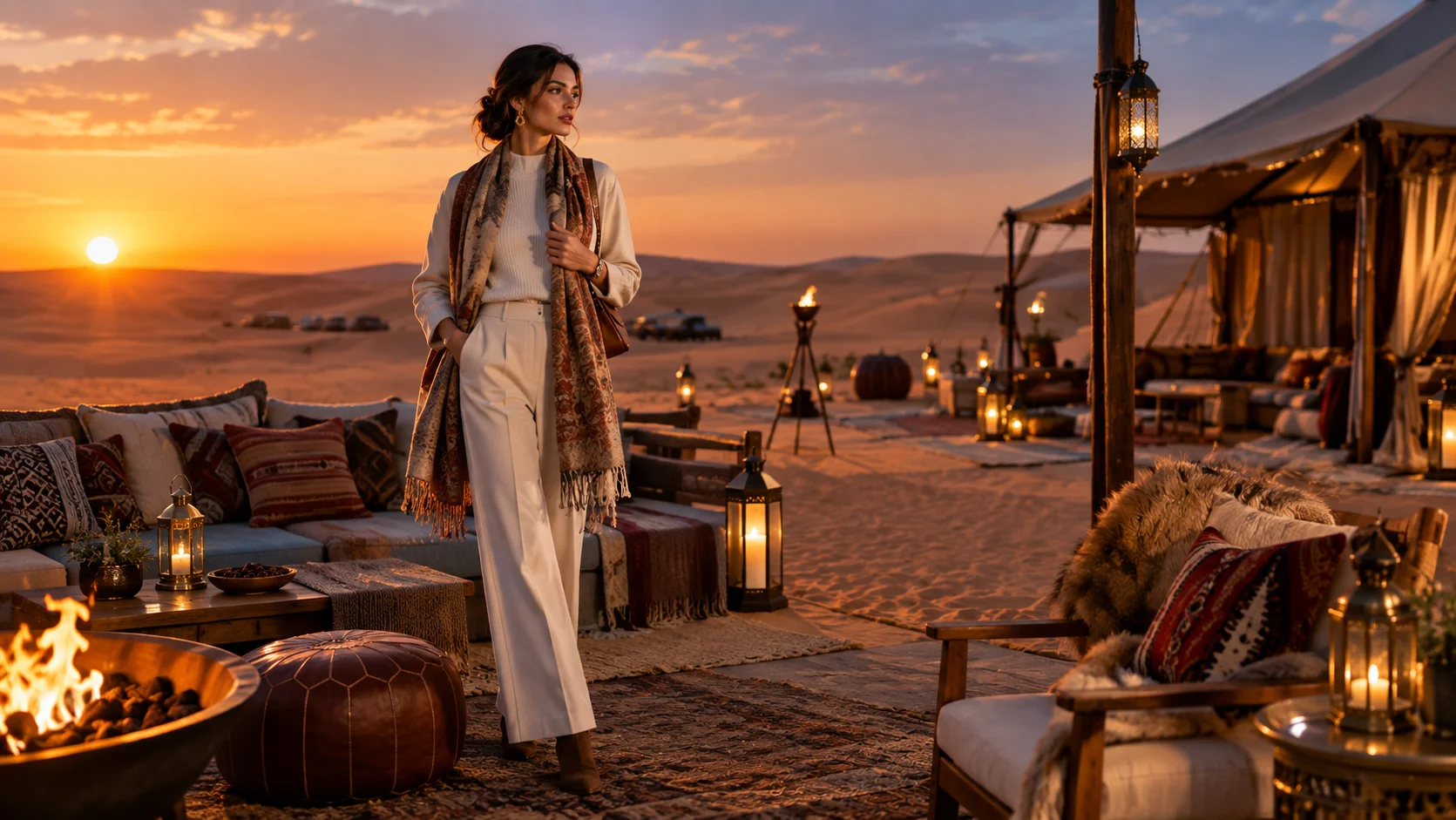
Desert Dressing
- Light long-sleeve top
- Relaxed trousers or comfortable jeans
- Light jacket or overshirt
- Scarf for evening warmth
- Closed, comfortable shoes
Beach Dressing
- Breathable cotton or linen pieces
- Relaxed cover-up
- Light trousers or shorts where appropriate
- Sandals or comfortable footwear
- Light layer for sunset
For public places, malls, cultural attractions and family settings, it is useful to keep a modest cover-up available. A lightweight shirt, cardigan, long overshirt or scarf can make transitioning between different environments much easier.
Which Fabrics Work Best in Dubai’s Winter?
Fabric choice matters more than simply choosing something labelled “winter.” Dubai’s winter can still include warm afternoons, so fabrics that breathe and layer easily are generally more versatile than thick materials.
- Cotton: dependable for shirts, tops, dresses and everyday layers.
- Linen blends: useful during warmer daytime periods because they remain light and breathable.
- Fine-gauge knits: ideal when you want warmth without the bulk of a heavy sweater.
- Light wool blends: useful for selected evening pieces during the cooler part of the season.
- Denim: practical for January and cooler evenings, especially when paired with lighter tops.
- Viscose and lightweight blends: useful for fluid dresses and polished layering pieces.
If you are also planning a Dubai trip outside winter, our guide to the best fabrics for summer in Dubai can help you build a more complete seasonal wardrobe.
How to Build a Stylish Dubai Winter Color Palette
Winter does not mean your Dubai wardrobe needs to become dark or heavy. Neutral shades such as cream, beige, camel, white, charcoal, navy and black create an easy base, while muted olive, burgundy, chocolate or soft blue can add seasonal depth.
A simple approach is to choose two or three core neutrals and then introduce one accent color through a jacket, bag, shoes, scarf or knit. For more outfit combinations, explore our guide to color combinations for clothes.
What Should You Pack for Dubai in Winter?
A smart Dubai winter suitcase does not need to be large. The most useful strategy is to pack pieces that can be combined into daytime and evening outfits. A few lightweight layers can create considerably more combinations than several heavy winter garments.
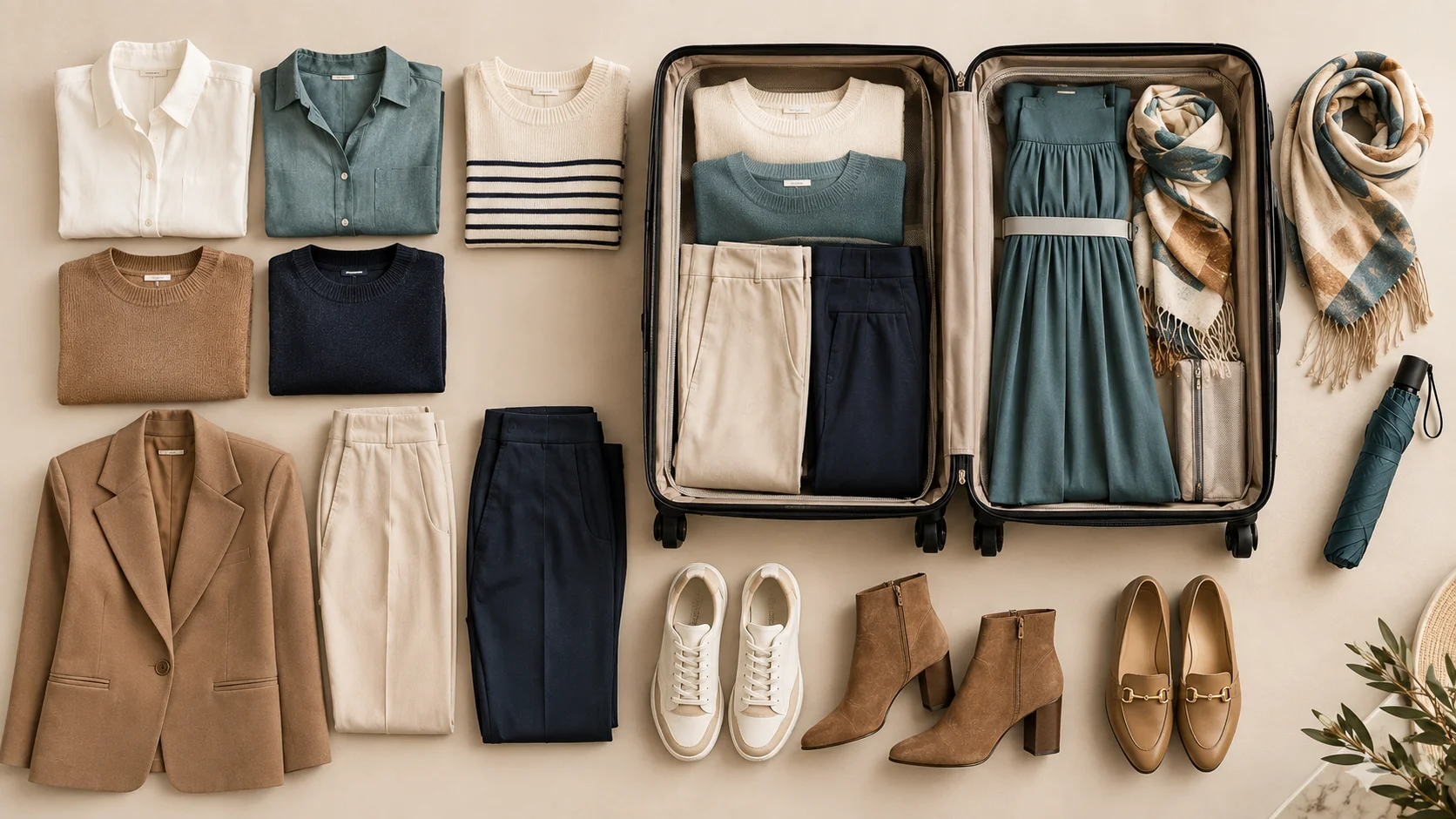
Clothing
- 3–5 breathable tops
- 1–2 lightweight knit sweaters
- 1 cardigan or overshirt
- 1 blazer or light jacket
- 2–3 pairs of trousers or jeans
- 1–2 dresses or skirts if desired
- 1 lightweight scarf
Footwear & Extras
- Comfortable everyday sneakers
- Loafers or smart casual shoes
- Optional ankle boots for cooler evenings
- Sunglasses
- Small crossbody or everyday bag
- Light cover-up for more conservative settings
If you prefer a smaller, more coordinated suitcase, the Dubai minimalist wardrobe guide is useful for creating multiple outfits from fewer pieces.
Where Can You Shop Winter Pieces in Dubai?
Dubai has a wide range of shopping options, from large malls and international fashion retailers to independent boutiques and local labels. For a winter wardrobe, look for lightweight knitwear, tailored separates, breathable shirts, versatile jackets and shoes that can transition from daytime to evening.
When shopping specifically for Dubai, avoid buying a heavy winter wardrobe simply because the collection is labelled “winter.” Instead, look for lighter versions of classic cold-season pieces that can be layered according to the temperature.
For locations, shopping areas and a broader overview of where to find fashion in the city, explore our Dubai shopping guide.
How Should You Dress if Ramadan Falls in February?
When Ramadan overlaps with the cooler months, you can keep the same practical winter layering strategy while paying extra attention to modesty in public and family-oriented settings.
Longer silhouettes, relaxed tailoring, covered shoulders and breathable fabrics are easy choices. Maxi dresses, long skirts, wide-leg trousers, long-sleeve shirts, elegant abayas and lightweight layering pieces can all work beautifully while remaining comfortable.
For more detailed ideas on combining seasonal fashion with Ramadan and Eid dressing, see the Ramadan & Eid style guide.
What Should You Avoid Wearing in Dubai Winter?
The main mistake is dressing for a much colder climate than Dubai actually has. Very thick coats, heavy thermal layers and bulky sweaters can become uncomfortable quickly when the sun is out.
- Avoid building every outfit around a heavy coat.
- Avoid thick layers that cannot be removed easily during the day.
- Avoid uncomfortable footwear if you expect to walk through large malls or tourist areas.
- Avoid packing only short-sleeve pieces if you have evening or desert plans.
- Avoid assuming that daytime temperatures will remain the same after sunset.
The most useful wardrobe is flexible: light enough for daytime, layered enough for evening and polished enough to move between casual, cultural and more formal settings.
Dubai Winter Outfit Formula at a Glance
Daytime
Breathable top + relaxed trousers, jeans, skirt or dress + comfortable shoes.
Evening
Day outfit + fine knit, blazer, cardigan, overshirt or light jacket.
Desert
Long-sleeve base + comfortable trousers + light jacket + scarf + closed shoes.
Elegant Plans
Tailored separates or a refined dress + structured outer layer + polished footwear.
Frequently Asked Questions
Is Dubai cold in winter?
Dubai is generally warm during the day in winter, but temperatures become cooler after sunset. January is typically the coolest month of the November-to-February period, making a light jacket or sweater useful for evenings.
What should I wear in Dubai in December?
Lightweight trousers, breathable tops, fine knits, dresses, skirts and a blazer or cardigan are practical choices. December evenings can feel cool enough for an additional layer.
What should I wear in Dubai in January?
January is usually the coolest part of Dubai’s winter. Jeans, tailored trousers, sweaters, long-sleeve tops and lightweight jackets work well, especially for evening plans.
Do I need a winter coat in Dubai?
A heavy winter coat is generally unnecessary for typical Dubai winter conditions. A lightweight jacket, blazer, cardigan or thin coat is more versatile for cooler evenings.
What should I wear in the Dubai desert in winter?
Wear comfortable breathable clothing during the day and carry a light jacket or scarf for the evening. Closed comfortable shoes are useful for desert activities.
Can I wear jeans in Dubai during winter?
Yes. Jeans are particularly practical during the cooler winter months, especially in January and during evening activities. Pair them with a lightweight sweater, shirt or jacket.

Your Dubai Winter Outfit in One Formula
Think breathable base + lightweight mid-layer + removable outer layer. November can stay relatively warm, December and February are ideal for flexible layering, and January usually deserves the warmest combination. With a compact mix of cottons, fine knits, tailored trousers, denim, dresses, a blazer or light jacket and comfortable shoes, you can cover most Dubai winter plans without overpacking.
