
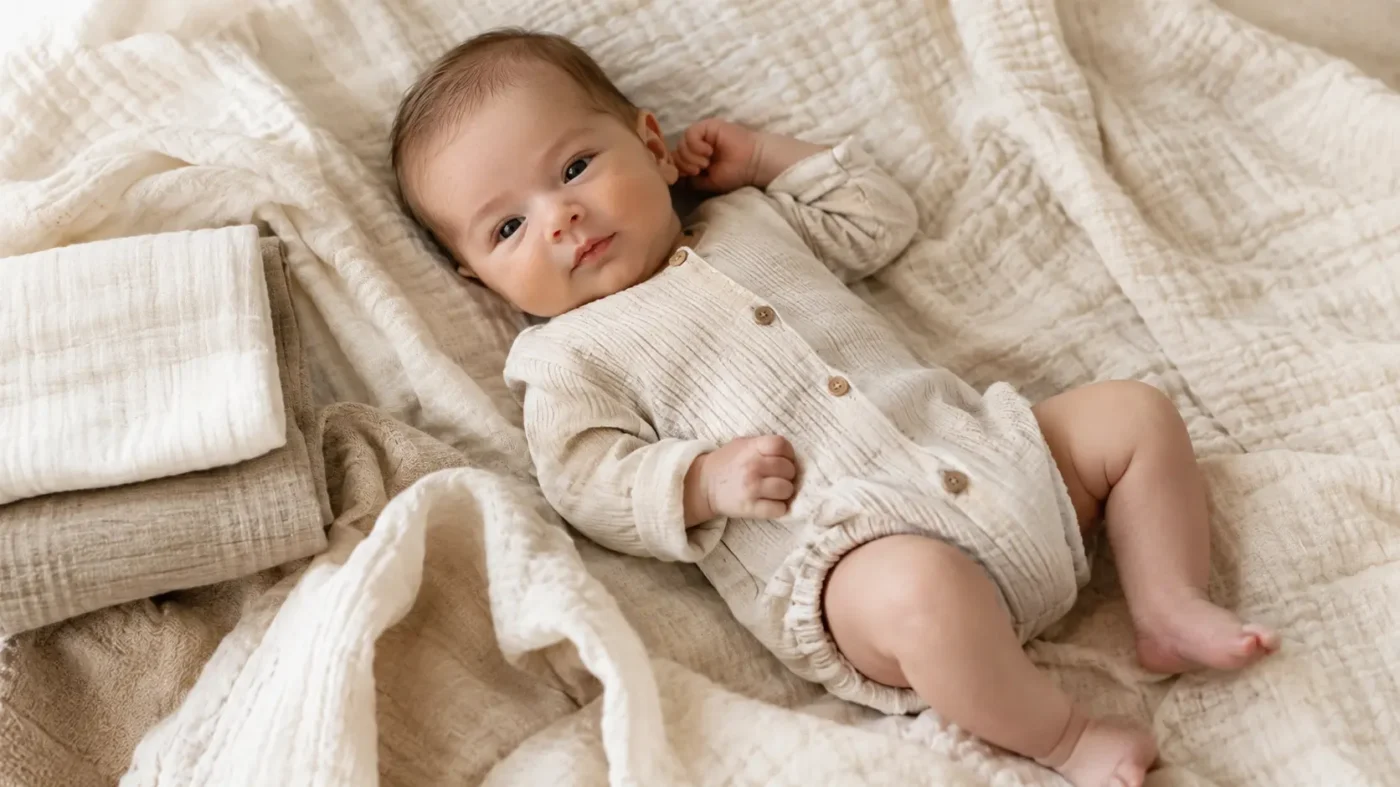
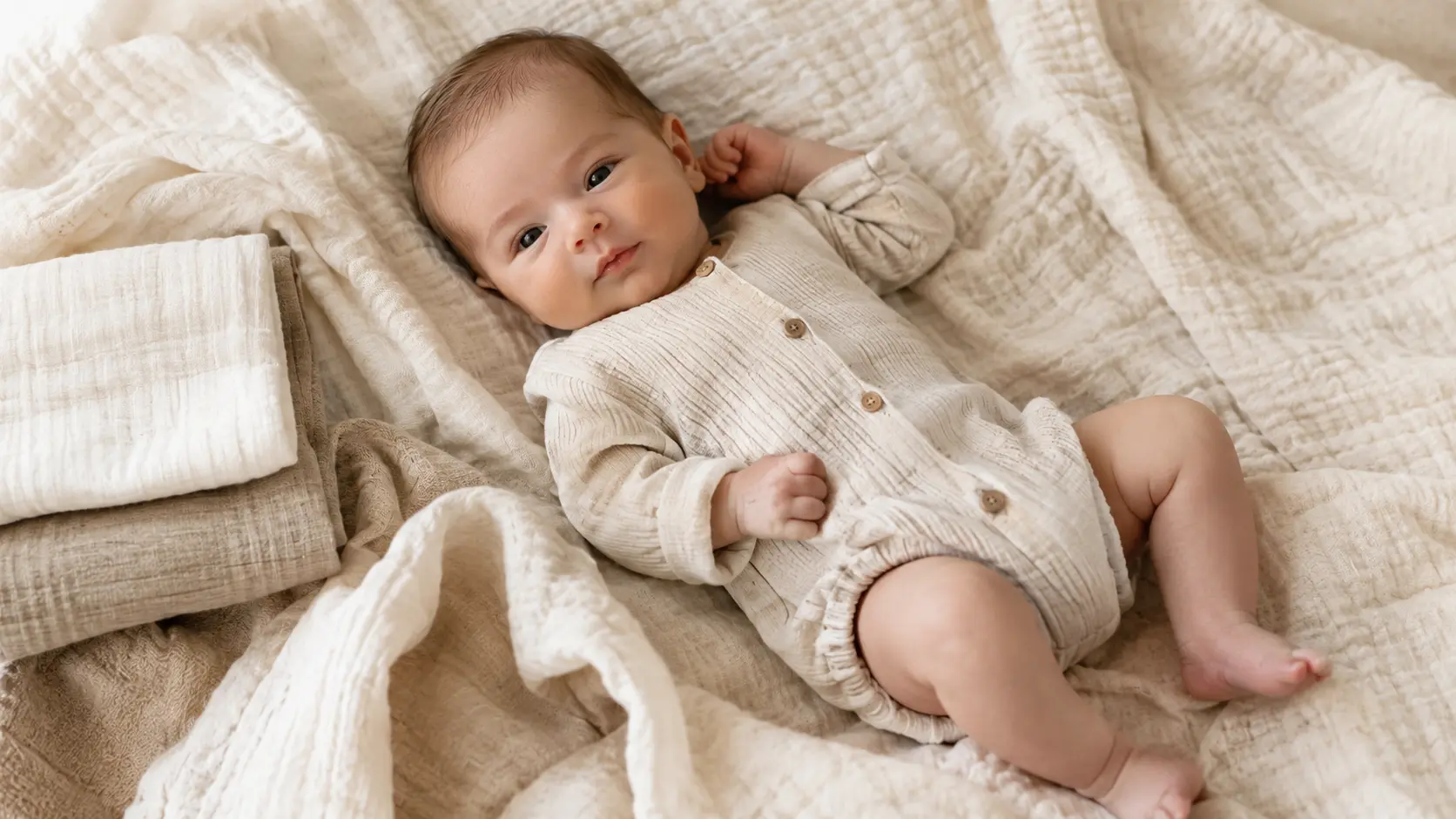
Best Fabric for Baby Clothes: A Complete Guide for Parents
A practical guide to choosing comfortable, breathable and easy-care fabrics for newborns and babies through every season.
Picking clothes for a new baby is exciting, but the fabric matters more than the print or the color. A baby’s skin is thinner and more reactive than an adult’s skin, and it responds quickly to heat, sweat and rough materials. This guide covers which fabrics work well for babies, which ones to limit and what else to check before you buy.
What Makes Baby Skin Different From Adult Skin
A baby’s skin has not finished developing its natural protective barrier. It absorbs moisture and outside irritants more easily than adult skin and can take longer to recover from irritation once it starts. This is why the fabric sitting against a baby’s skin for hours at a time, whether during sleep or daily wear, can affect comfort.
How Baby Skin Reacts Differently to Fabric
Babies cannot regulate body temperature as well as adults can. A fabric that traps heat can leave a baby uncomfortable, especially during sleep when they are covered for long stretches. A stiff or synthetic fabric can also rub against the skin and cause friction, particularly around sensitive areas such as the neck, wrists and thighs.
What Happens When the Wrong Fabric Is Used
The wrong fabric choice can contribute to heat rash, itching and disrupted sleep. A baby who is uncomfortable in their clothing may wake more during the night and settle less easily during the day. Choosing breathable, soft materials is therefore a useful first step when building a baby’s wardrobe.
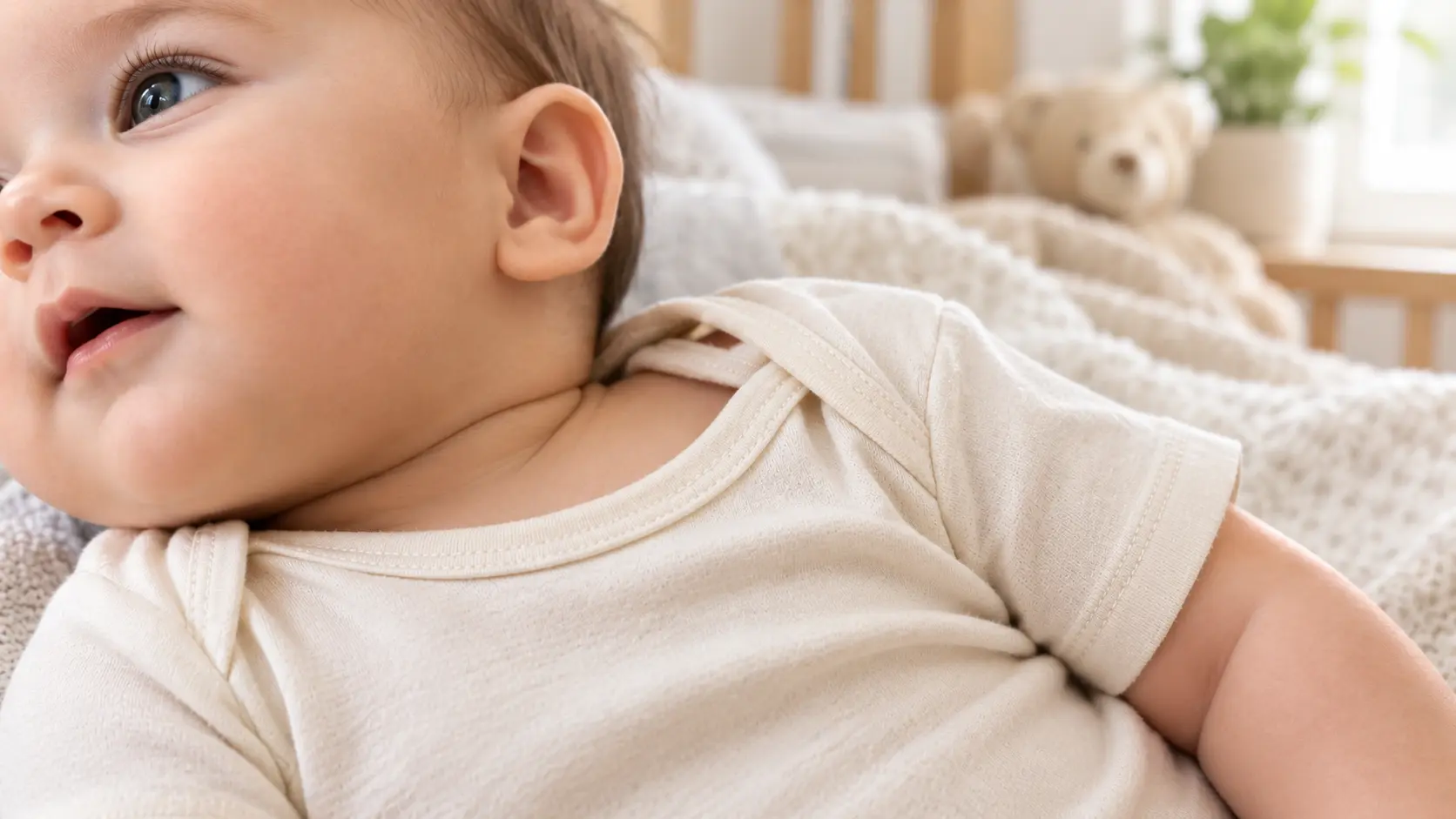
The Best Fabrics for Baby Clothes
Some fabrics suit a baby’s skin better than others. The right choice depends on the garment, the season and how sensitive your baby’s skin is.
Organic Cotton
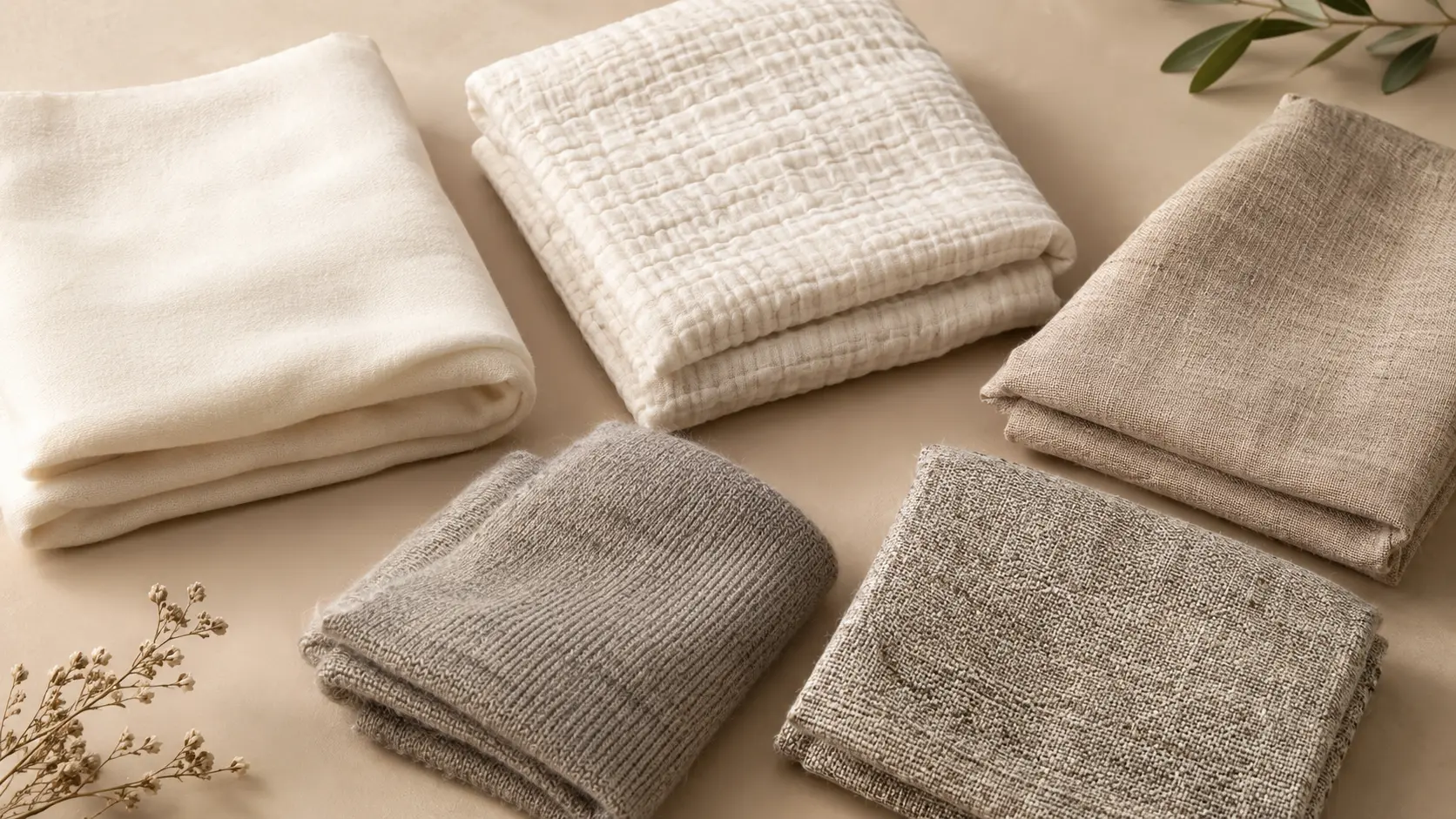
Organic cotton is soft and breathable and absorbs moisture well. It works across bodysuits, sleepwear and everyday tops and holds up well to frequent washing.
Cotton Muslin
Muslin is a loosely woven type of cotton. Its open weave makes it lightweight and breathable, which is why it is commonly used for swaddles, wraps and warm-weather clothing.
Linen
Linen comes from the flax plant and is naturally breathable and moisture wicking. It works particularly well for warm-weather outfits and becomes softer after washing.
Merino Wool
Fine merino wool helps regulate temperature and works well for sleep sacks and layering pieces during colder months. It generally needs a gentler wash routine.
Hemp Blends
Hemp is a strong, breathable fiber. Blended with organic cotton, it becomes more comfortable for everyday use while retaining useful durability for outer layers.
If you are comparing fabrics before buying new pieces, Dubai Style’s Dubai Shopping Guide is another useful place to explore practical shopping ideas and style-focused guidance.
Fabric Comparison at a Glance
| Fabric | Key Property | Best For | What to Check |
|---|---|---|---|
| Organic Cotton | Soft and breathable | Everyday wear, bodysuits | GOTS or OEKO-TEX certification |
| Cotton Muslin | Lightweight, open weave | Swaddles, summer clothing | Certification and wash care |
| Linen | Breathable, moisture wicking | Warm-weather outfits | Softens after a few washes |
| Merino Wool | Temperature regulating | Cold weather, sleep sacks | Gentle wash cycle |
| Hemp Blend | Durable, breathable | Outerwear, hand-me-downs | Cotton blend ratio |
Fabrics to Avoid for Baby Clothing
Some fabrics are common in kidswear even though they may be less comfortable against a baby’s skin, especially in warm conditions or during sleep.
Synthetic Fabrics
Polyester, nylon and fleece are widely used because they are inexpensive and easy to care for, but they can trap heat and moisture against the skin. This can contribute to discomfort, particularly overnight or in warm weather.
Many fabrics also appear under softer-sounding names on labels, so checking the actual fiber content is more useful than relying on the marketing description.
Harsh Dyes and Chemical Finishes
Bright dyes and finishes such as wrinkle-resistant or stain-resistant treatments can sometimes irritate sensitive skin. Checking for recognized textile certifications can make it easier to assess how a finished fabric has been tested.

Certifications Worth Checking For
Two certifications are useful to look for when buying baby clothes . They can provide additional information about how textiles have been tested and processed.
Global Organic Textile Standard
GOTS covers organic textile requirements as well as processing and manufacturing criteria, including restrictions on certain chemicals.
OEKO-TEX Standard 100
OEKO-TEX Standard 100 indicates that the finished textile has been tested against a defined list of harmful substances.
Neither certification guarantees that a fabric will suit every baby, since sensitivity varies from child to child. Both can nevertheless provide useful information when comparing textile products.
Choosing Fabric by Season
Muslin & Linen
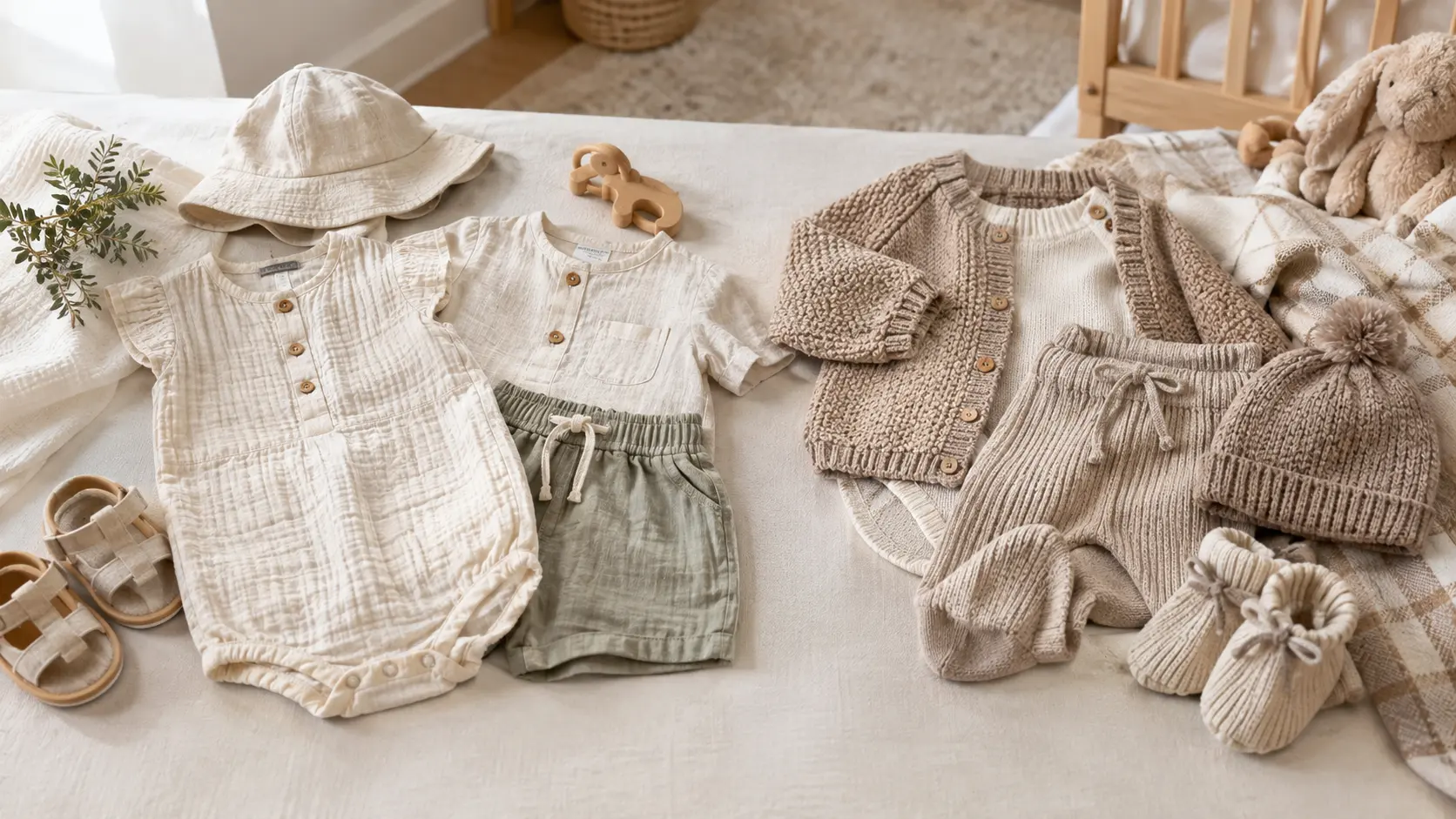
Muslin and linen are lightweight and breathable. They can help reduce sweat buildup and are useful for warm-weather clothing.
Merino & Cotton Knits
Merino wool and cotton knitwear work well for cooler months because they can be layered according to the temperature.
Cotton knitwear is also useful throughout the year because it layers easily. For more seasonal styling inspiration, explore Dubai Style’s Style Guides for additional wardrobe ideas.
Other Things to Check Before You Buy
Fabric type is not the only factor that affects comfort and safety. Small construction details can make a difference in how practical a garment is for everyday babywear.
Baby clothes go through the laundry far more often than many adult garments. A fabric that keeps its shape and softness after repeated washing is therefore easier to manage over time.
Explore more fashion and lifestyle guides
For more wardrobe and shopping inspiration, browse the Dubai Style Journal or explore the wider Lifestyle section for practical everyday stories.
Find Organic Muslin and Knitwear at Yes Mila
Yes Mila’s collections include organic muslin pieces and knitwear made with natural fibers, designed for everyday wear through New Zealand’s changing seasons. Browse the Organic Muslin collection for lightweight everyday pieces or the Knitwear collection for warmer layering options.
Frequently Asked Questions
Is organic cotton better than regular cotton for babies?
Organic cotton can be a useful choice for babies with sensitive skin. It is grown under organic farming standards and can be available with textile certifications that provide additional information about processing and finished-fabric testing.
What is the safest fabric for newborn skin?
Organic cotton and cotton muslin are common choices because both are soft and breathable. The most suitable fabric can still vary from one baby to another, so comfort and individual skin sensitivity should guide the final choice.
Can babies wear wool without irritation?
Yes, fine wool such as merino can be comfortable for many babies. Its suitability depends on the individual child, the garment construction and whether the wool feels soft rather than scratchy against the skin.
How do I know if a fabric is suitable for my baby?
Check the care label for the actual fiber content first. You can then look for certifications such as GOTS or OEKO-TEX Standard 100 where available and consider the garment’s seams, trims, fit and washing requirements.
Choose Softness, Breathability and Practicality
Organic cotton, muslin, linen, merino wool and hemp blends are useful choices for baby clothing, while synthetic fabrics and heavily treated materials may be less suitable for regular contact with sensitive skin.
Checking certification labels and paying attention to seams, trims, fiber content and wash durability can make shopping easier. The right fabric ultimately depends on the season, garment and your baby’s individual comfort.

Pingback: How to Build a Minimalist Wardrobe in Dubai: A Simple Step-by-Step Guide - Dubai Style
Pingback: What to Wear to a Wedding as a Guest in Dubai: Complete Guide - Dubai Style
Pingback: Best Fabrics for Summer in Dubai: What Actually Keeps You Cool