


Dubai Style starts with what you see on the street. A long black robe, a white ankle-length one, a light scarf: each has a name, a purpose and a few rules for visitors.
Key Facts for Visitors
- Abaya, kandura, sheila: the abaya is a robe for women, the kandura is a robe for men, and the sheila is a women’s headscarf.
- No costume needed: tourists don’t have to wear any of them. Modest, breathable clothes work in public.
- Mosques ask for more: cover arms and legs, and women cover their hair.
- Ask before photos: always request permission before photographing a person.
- Ramadan: dress more modestly in public during the holy month.
The Four Pieces of Traditional Dubai Wear
Abaya
- Worn by
- Many Emirati women
- What it is
- A long, loose outer robe from shoulders to ankles
- Usual look
- Black, plain or with embroidered trims
- Best fabrics
- Light crepe and breathable blends
- Visitor tip
- Not required for tourists
Kandura
- Worn by
- Emirati men
- What it is
- An ankle-length robe with long sleeves and a simple collar
- Usual look
- White, with darker shades in winter
- Best fabrics
- Light cotton in summer, heavier weaves in winter
- Visitor tip
- Admire it, don’t wear it as a costume
Sheila
- Worn by
- Many Emirati women
- What it is
- A light headscarf draped over the hair and shoulders
- Usual look
- Usually black
- Best fabrics
- Soft chiffon and crepe
- Visitor tip
- Carry a scarf for mosque visits
Ghutra
- Worn by
- Emirati men
- What it is
- A headcloth held in place by a black cord called an agal
- Usual look
- Often white
- Best fabrics
- Light, breathable cloth
- Visitor tip
- Ask before touching or photographing
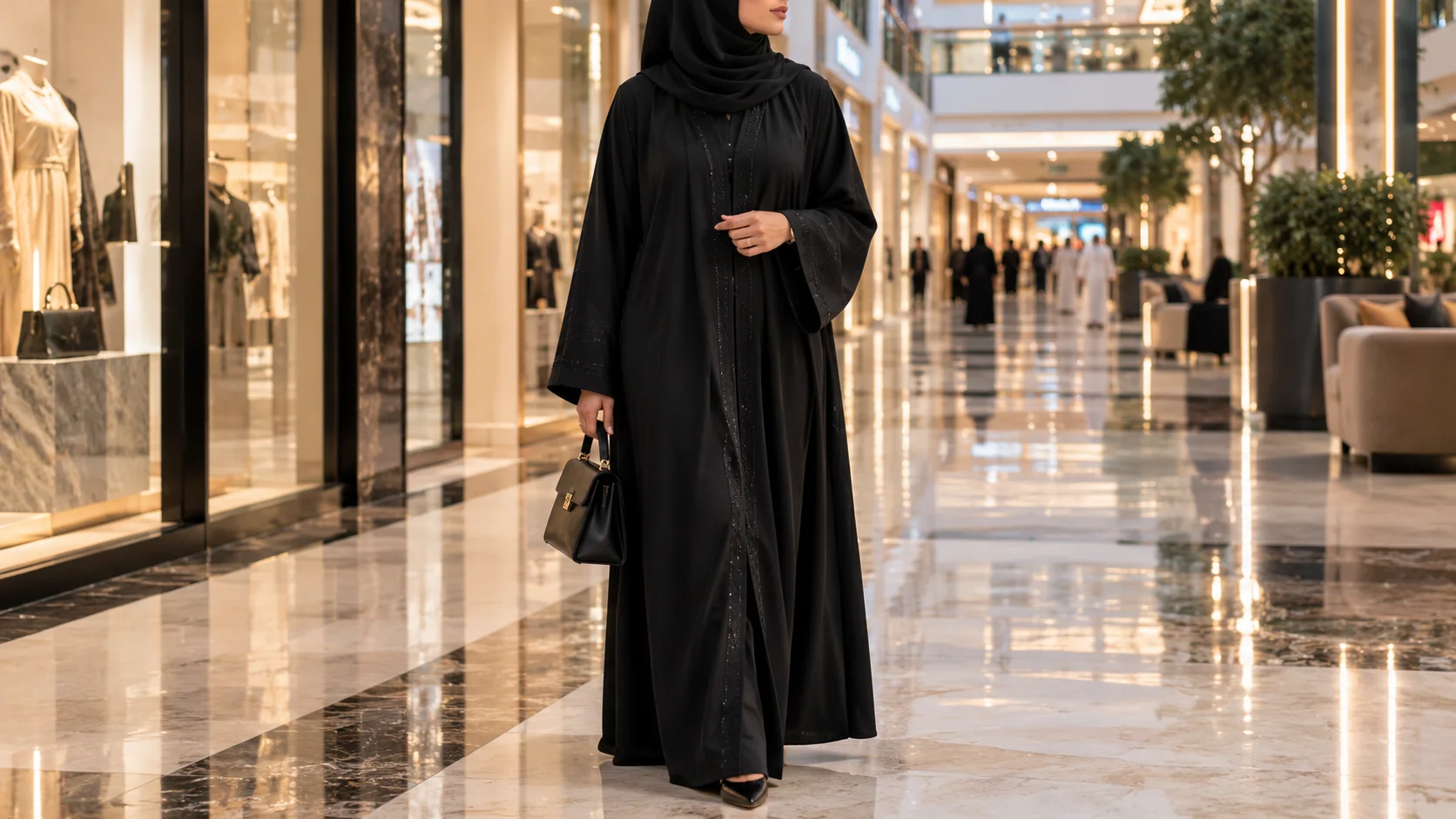
What Is an Abaya?
An abaya is a long, loose outer robe worn by many women in the UAE. It’s usually black, covers the body from shoulders to ankles and opens at the front or closes like a cloak. Many women wear it over everyday clothes in public.
Many women wear the abaya for daily life, work and celebrations. Abayas come in many designs. Some are plain black. Others carry embroidery, soft colours or bold trims.
Fabric matters in the heat. Light crepe and breathable blends keep the wearer cool, while heavy synthetics trap heat.
Want style ideas? Our guide to modern abaya styles in Dubai covers cuts, colours and trends.
What Is a Kandura?
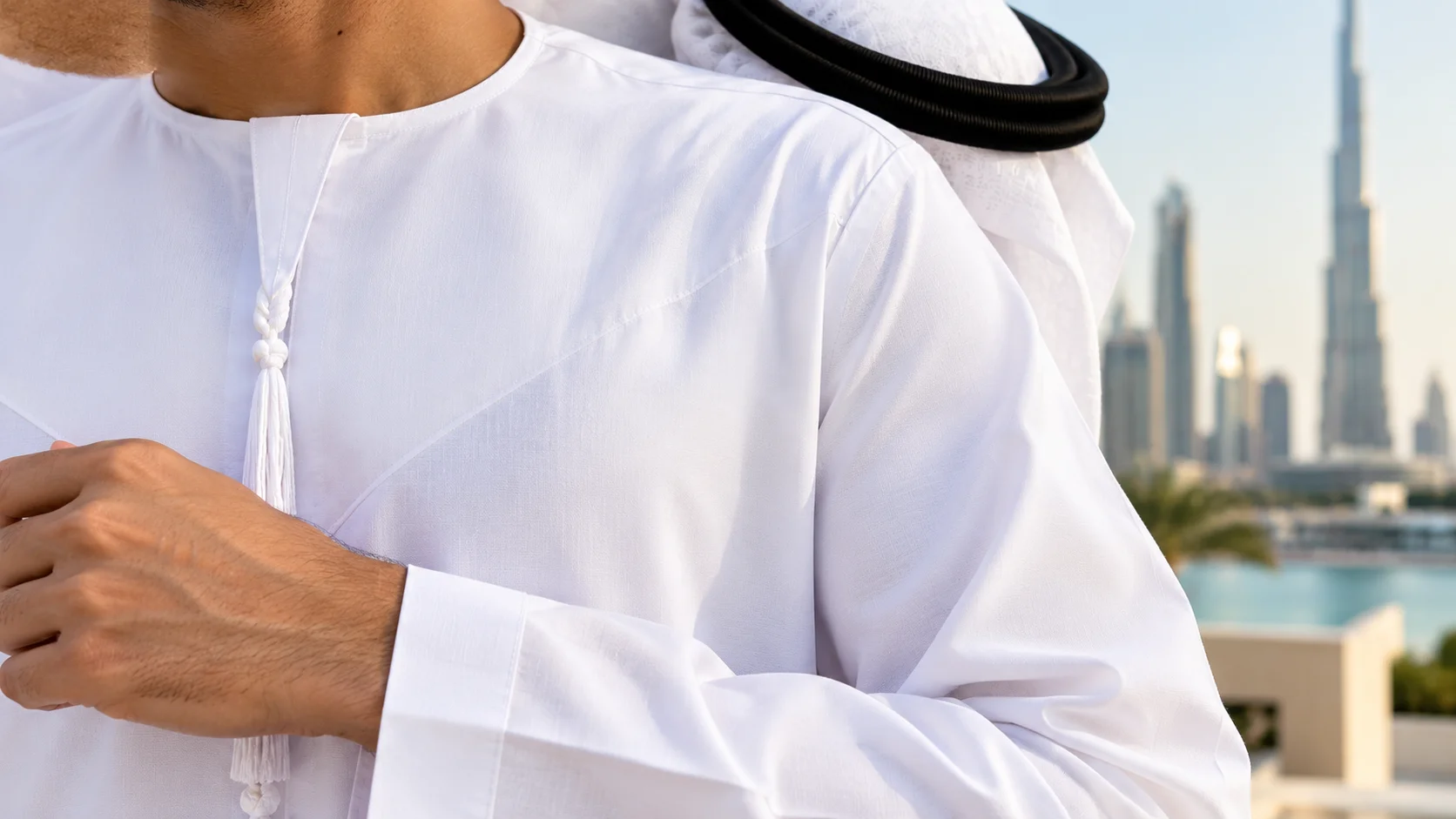
A kandura is the ankle-length white robe worn by Emirati men. It has long sleeves, a simple collar and often a small tassel at the neck, and men usually wear it with a ghutra headcloth. Light cotton keeps it cool in summer, and darker wool versions appear in winter.
You’ll see the kandura at work, in malls and at formal events. It works as both daily wear and dress wear.
Tailors cut each one to fit. A well-made kandura hangs cleanly from the shoulders.
Look closely and you’ll spot small details. Collars, cuffs and tassels differ from one tailor to the next.
The ghutra completes the look. A black cord called an agal holds it in place. Cooler months bring heavier fabrics, so darker wool versions appear in winter.
What Is a Sheila?
A sheila is the headscarf worn by many Emirati women, usually in black. It’s light in weight, draped over the hair and shoulders, and pinned neatly in place. Women often wear it with an abaya, and spellings such as shayla appear in shops.
The sheila frames the face and sits lightly on the shoulders. Women wear it in different ways, from loose drapes to neat, pinned looks.
Fabric makes the difference. Soft chiffon and crepe stay light in the heat. Heavy materials trap warmth, which nobody wants at midday.
Spellings vary by shop and brand. Search for both sheila and shayla when you shop.
Why Do Emirati People Wear Traditional Dress?
Many Emirati people wear traditional dress because it suits the desert climate and reflects national identity. Loose, light layers shield the body from sun and heat. People also wear it for work, family gatherings and national occasions as a mark of culture.
The design solves a real problem. Loose cuts let air move around the body. Light colours, especially white, reflect sunlight.
Dress also carries meaning. It links people to family, place and history. Many wear it with pride, so treat it with the same respect you’d give any national dress.
Do Tourists Need to Wear an Abaya in Dubai?
No, tourists don’t need to wear an abaya in Dubai. Visitors should dress modestly in public, with shoulders and knees covered in malls, souks and cultural sites. Resorts, pools and beaches allow relaxed clothing, while mosques ask for more cover.
Dubai is a global city. You’ll see visitors in everything from beachwear to business suits. The rule is context.
Cover more in public spaces and religious sites. Relax at resorts and beaches. A simple test works well: if you’d feel comfortable meeting a business client in the outfit, it usually suits public places. Our what to wear in Dubai guide lists outfits for each setting.
Ramadan calls for extra care. Dress more modestly in public during the holy month. Our Ramadan and Eid style guide explains how.
What Can Visitors Wear Instead of Traditional Dress?
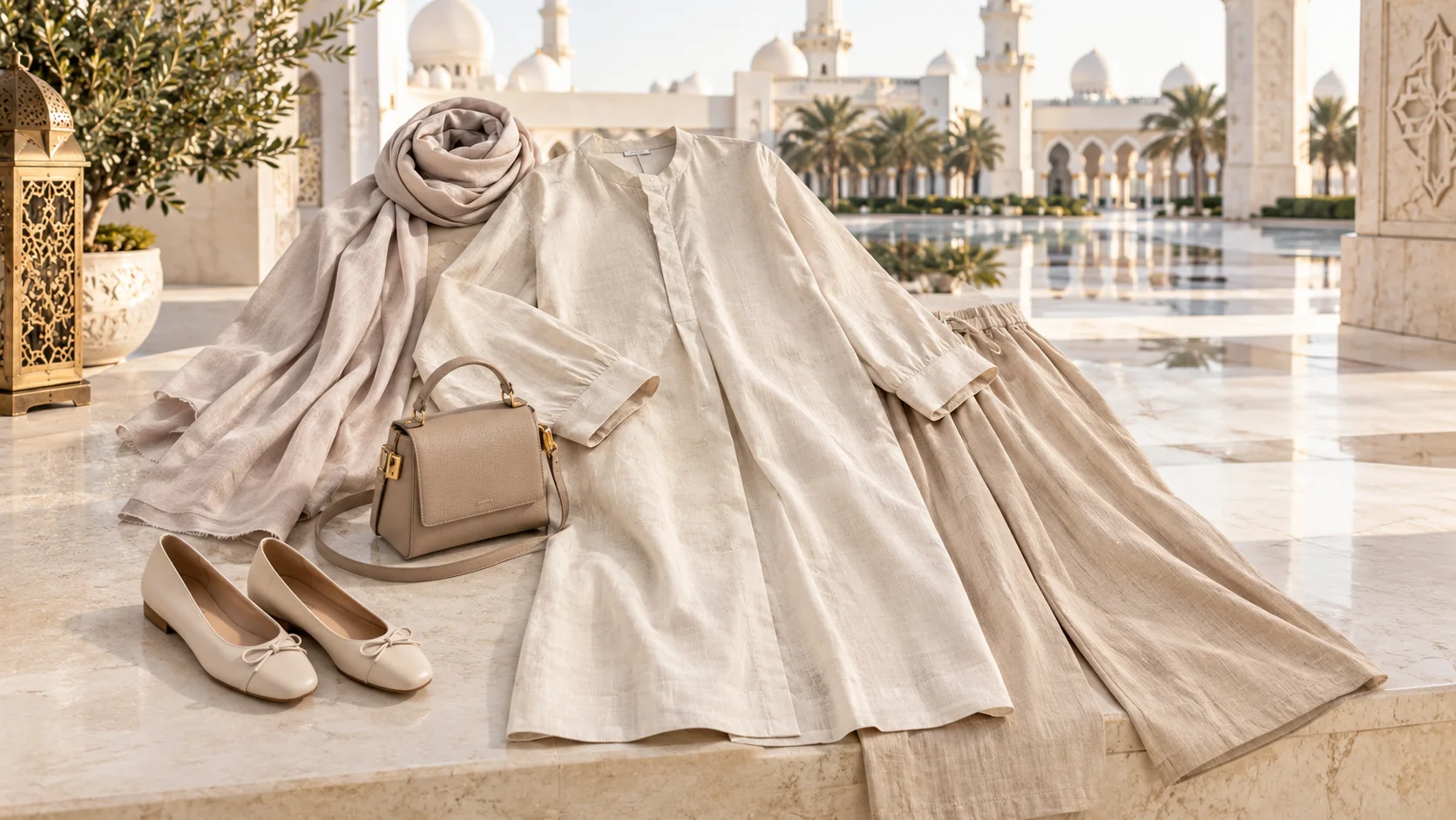
Visitors can wear loose, breathable clothes that cover shoulders and knees. Women can choose a midi skirt or wide-leg trousers with a sleeved top, and men can wear chinos and a cotton shirt. A light scarf and a thin jacket handle mosques and cold air conditioning.
Think of it as the cover and cool rule. Choose linen, cotton or viscose. Sleeves and hems cover you, and the weave lets air through.
Pick neutral colours such as white, sand, navy and black. They mix easily and look respectful in any setting.
Add a light scarf and a long cardigan if you’re a woman. Add a thin jacket if you’re a man. These pieces cover you at mosques and keep you warm in cold dining rooms.
What Should Visitors Wear to a Mosque in Dubai?
Visitors to a mosque should cover their arms and legs, and women should cover their hair. Women usually wear a long, loose outfit and men wear long trousers and a sleeved top. Some mosques lend abayas and robes at the entrance, so check the rules before you go.
A light scarf and a long, loose layer fit easily in a day bag. Keep them handy if you plan a mosque or cultural centre visit.
Rules vary by site. Check the official visitor page first. Expect to remove your shoes at prayer areas. Pack your scarf the night before so you’re never caught out.
How Should You Show Respect for Traditional Dress?
Show respect by asking before you photograph anyone in traditional dress. Treat these garments as everyday clothing, not costumes. Wear them yourself only for a good reason, such as a mosque visit or a cultural event, and buy from reputable local shops.
- Ask first. Always request permission before taking a photo of a person. A friendly question usually earns a friendly answer.
- Skip the costume. Don’t wear a kandura or abaya as a party outfit.
- Keep hands to yourself. Never touch another person’s headwear.
- Follow staff guidance. Cultural sites and mosques set their own rules.
Attending an Emirati wedding? Read our guide to wedding guest attire in Dubai before you pick an outfit.
Where Can You Buy Traditional Wear in Dubai?
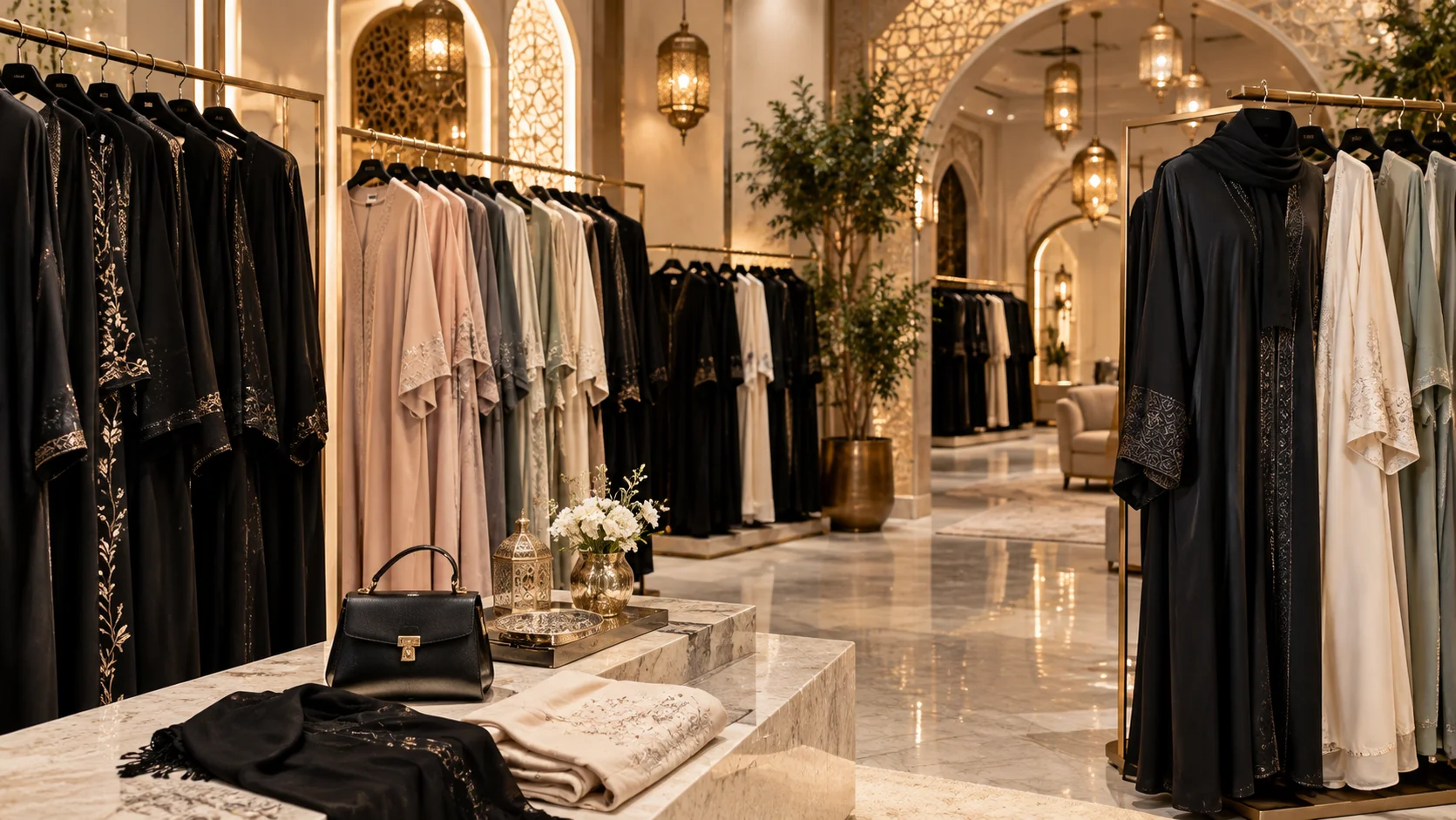
You can buy abayas, kanduras and sheilas in Dubai malls, souks and specialist boutiques. Malls offer clear prices and easy browsing. Souks offer more variety and room for polite bargaining. Tailors can adjust the fit, so allow a few days for alterations.
Prices vary widely by fabric and tailoring. Try a piece on before you buy. Check the fit across the shoulders and the length. Ask how to wash it.
Our Dubai shopping guide shows where to start in malls and souks.
Your Quick Respect Checklist
- Do you carry a light scarf for mosque visits?
- Is your outfit modest enough for malls and souks?
- Did you ask before taking a photo of anyone?
- Are you treating traditional dress as clothing, not a costume?
- Did you check the dress rules at each cultural site?
Say yes five times, and you’re set. Dubai welcomes visitors who dress with care.

Pingback: Men's Kandura and Smart Casual Style in Dubai | Dubai Style